A Mountain Healer with a Mean Look and a Gentle Heart
by Hannah Cedars, The Appalachian Sage
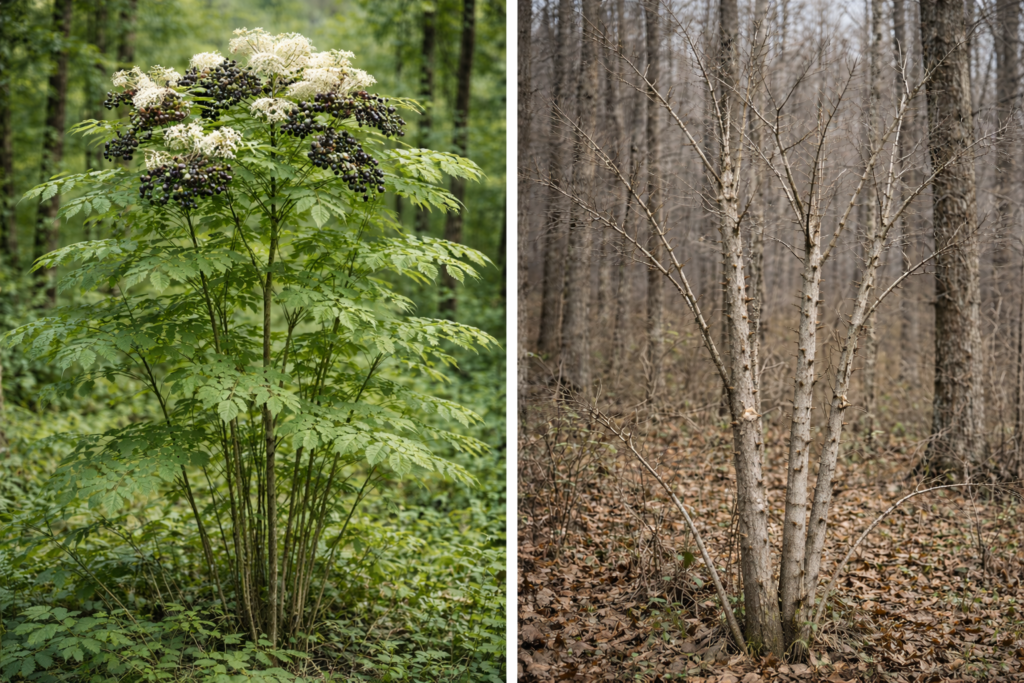
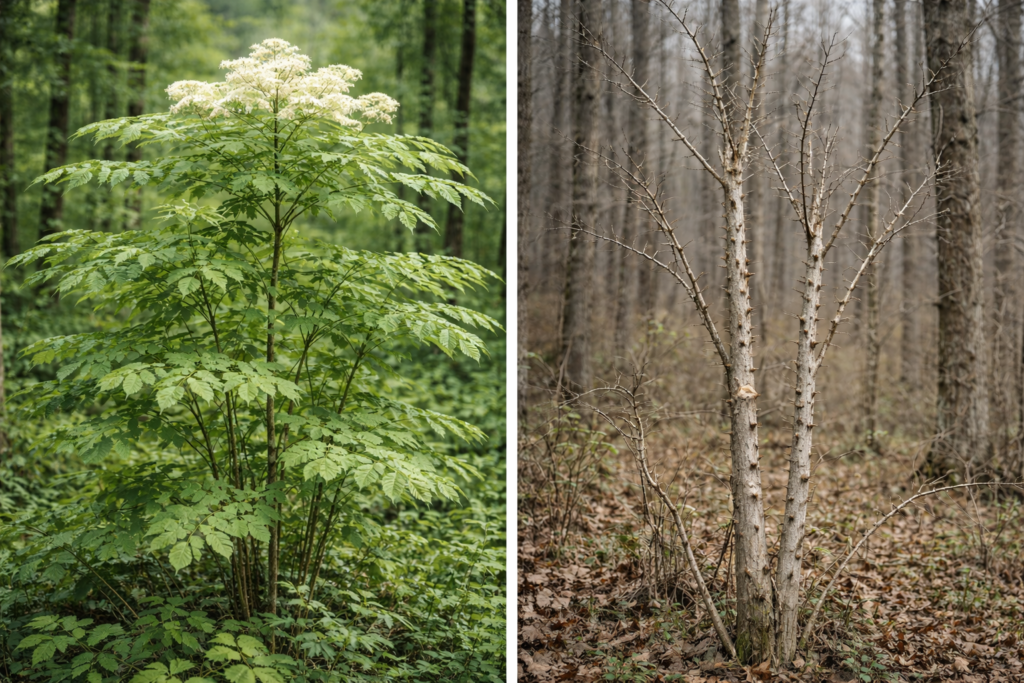
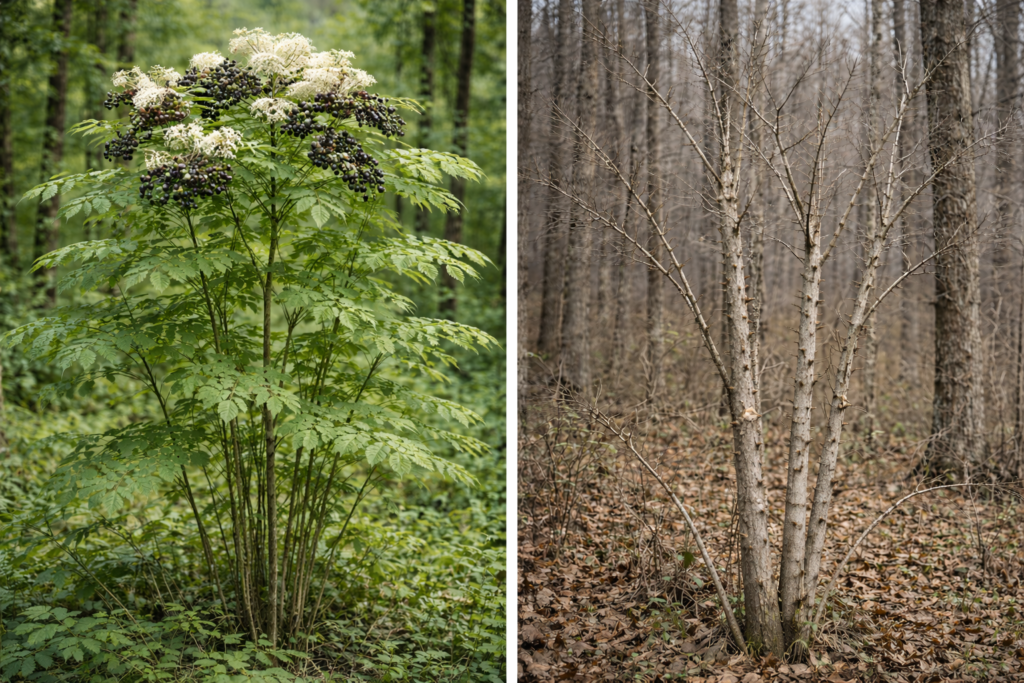
There’s a plant in the Appalachian mountains that’ll make you stop in your tracks the first time you see it. Tall, thorny, and wild as a briar fence — folks call it Devil’s Walking Stick.
But if you grew up in the hills like I did, you learn real quick that the meanest-looking plants often carry the sweetest medicine.
And in my family, this one carried a whole lot more.
Devil’s Walking Stick was never a soft herb. It was a plant of strength — thorned, guarded, protective. The same way some mountain people were. This is not a simple healing plant, no, no, no……It was handled WISELY by ONLY experienced mountain healers. It’s a serious plant to handle. Mountain healers used it for medicine and Moonshiners loved it as a walking stick to help them through the mountain at night.
🌾 A Moonshiner’s Favorite Walking Stick
My Paw — an old moonshiner from back in the 30’s with a good heart and a little mischief in him — had a deep respect for the mountain plants. He said the land talked to a man if he knew how to listen.
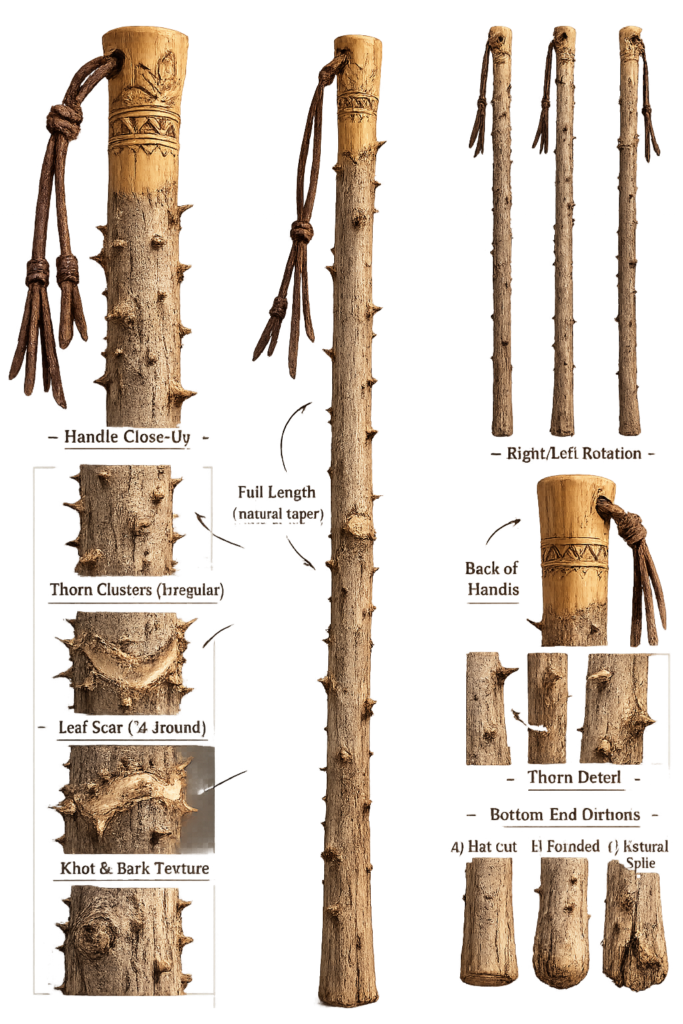
One day he cut a long, straight shoot of Devil’s Walking Stick. I was with him the day he cut that stick…. I got nicked a few times with the thorns in the car because I didn’t stay away from it like he warned me too.
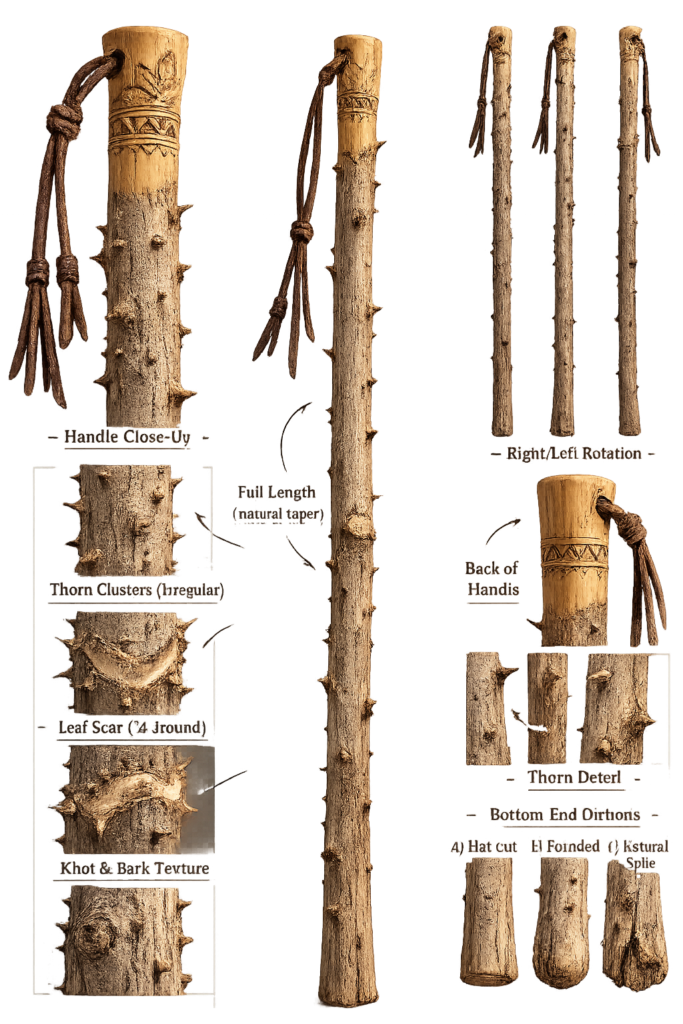
He skinned it clean, scraped it smooth, carved a handle over a few nights after working in the field all day, and polished it until it shined like old bone.
That walking stick went everywhere with him — up hollers, down ridges, across creek beds, and into places most folks wouldn’t dare go after dark. He didn’t need it, but he was so proud of it. Paw carried a garden snake in one pocket during the Spring and carried that Devil’s Walking Stick that he had carved a head on and used as a cane in his hand all year long when he wasn’t working. He didn’t need the support, but he loved to carve and he was proud of that stick handle….
He did use that special walking canewhen walking in the mountains , up the steep side of the holler, and on Sunday, he took it to church with him. He said that stick kept him steady when the mountains were slick and the nights were long, but he liked it to spark conversations everywhere he went….the thorns were an attraction.
Said it had power, too — because anything that can grow fierce enough to protect itself is worth having on your side.
🌿 WHAT IS DEVIL’S WALKING STICK?
Botanical name: Aralia spinosa
Also called: Prickly Ash, Angelica Tree, Hercules’ Club
Despite all the thorny drama on its stem, this plant is a traditional Appalachian healer with a long reputation in folk medicine.
Traditional Uses Included:
- Pain relief
- Rheumatism support
- Anti-inflammatory properties
- Topical healing for sores and infections
- Energy and strengthening tonics made from the roots
In Cherokee and Appalachian herbal practice, Devil’s Walking Stick was sometimes seen as a plant that “strengthens the weak places,” both in the body and the spirit. The Cherokee even used a drop or two for baby colic.
🌿 THE HEALING COMPONENTS OF DEVIL’S WALKING STICK (ARALIA SPINOSA)
Most folks see nothing but thorns and trouble when they look at Devil’s Walking Stick — but inside this fierce, armored plant is a whole pharmacy of natural compounds. Our ancestors didn’t know the chemical names, but they knew the effects. And now, when we look through a modern herbal lens, the chemistry perfectly explains the old mountain uses. Many called this plant, “HERCULES CLUB’, a very fitting name for such a potent plant.
Below are the main healing constituents found in Devil’s Walking Stick and what each one traditionally offered the body.
⭐ 1. SAPONINS — The Deep Soothers
These are one of the dominant compounds in Aralia spinosa.
Traditional Actions:
- Reduce joint and muscle inflammation
- Loosen thick mucus and support the lungs
- Stimulate circulation
- Gently energize the body
- Relieve rheumatism and cold-weather stiffness
What Modern Science Says:
Saponins help calm inflammatory pathways in the body — which is exactly why the roots were brewed for arthritis, chest congestion, and low stamina. They behave somewhat like mild corticosteroids found in other medicinal plants.
No wonder Rheumatism Tea was one of the most common uses.
⭐ 2. TRITERPENOIDS — The Repairmen
This group includes oleanolic acid, a highly-studied natural anti-inflammatory.
Traditional Actions:
- Pain relief for joints and muscles
- Tissue repair for scrapes, sprains, and bruising
- Immune support
- Liver strengthening (folk tonics often reflected this)
- General “body fortifier”
What Science Confirms:
Triterpenoids protect cells from irritation and oxidative damage. They also help calm the same pathways targeted by modern anti-inflammatory drugs — but gently, plant-style.
This explains why poultices made from the bark were used to reduce swelling and draw out infection.
⭐ 3. POLYACETYLENES — The Natural Disinfectants
These are strong, bioactive plant chemicals that occur in only certain powerful herbs.
Traditional Actions:
- Fight bacteria
- Fight fungal infections
- Clean wounds
- Support healing of boils, sores, and abscesses
What Science Confirms:
Polyacetylenes are known to have potent antimicrobial properties. In Appalachian folk practice, Devil’s Walking Stick poultices were used for “bad wounds,” the kinds that needed drawing out or cleaning up.
This was not superstition — it was chemistry.
⭐ 4. VOLATILE OILS (AROMATIC COMPOUNDS) — The Comforters
These are the natural plant oils released when bark or root is warmed or crushed.
Traditional Actions:
- Soothe nerve pain
- Lightly numb sore areas
- Open the lungs
- Ease tension and discomfort
- Support warmth and circulation
Scientific Insight:
These oils behave similarly to those found in angelica, spikenard, and ginseng relatives (Aralia is in the ginseng family). They calm irritated tissues and gently help the body relax.
This matches why mountain healers used root liniments for sore backs and stiff necks.
⭐ 5. GLYCOSIDES — The Balancers
A broad class of compounds that affect inflammation, circulation, and overall metabolic energy.
Traditional Actions:
- Boost stamina
- Improve vitality
- Support steady circulation
- Calm inflammatory reactions
Scientific Insight:
Glycosides help regulate how the body responds to irritation and stress. They also support the cardiovascular system in mild, supportive ways.
This helps explain why older generations used Devil’s Walking Stick as a long-term “strengthening tonic” for people who were run down or recovering from sickness.
⭐ 6. FLAVONOIDS — The Protectors
These are plant antioxidants found in many healing herbs.
Traditional Actions:
- Support wound healing
- Reduce irritation
- Strengthen blood vessels
- Improve resilience and recovery
- Protect tissues
Scientific Insight:
Flavonoids fight oxidative stress and help stabilize capillaries. They add to the plant’s anti-inflammatory reputation and explain why it was considered restoring to “weak places” in the body.
⭐ 7. COUNTER-IRRITANT PROPERTIES (FROM THE BARK & THORNS)
This is not a chemical class — it’s a traditional healing action caused by the unique makeup of the prickled bark.
Traditional Actions:
- Drew blood flow to an injured area
- Distracted the nerves from deeper pain
- Helped break up stagnant, cold tissue
Old-timers would say:
“It pulls the hurt toward the skin so the body can push it out.”
This perfectly describes counter-irritant therapy, which modern herbalists still recognize.
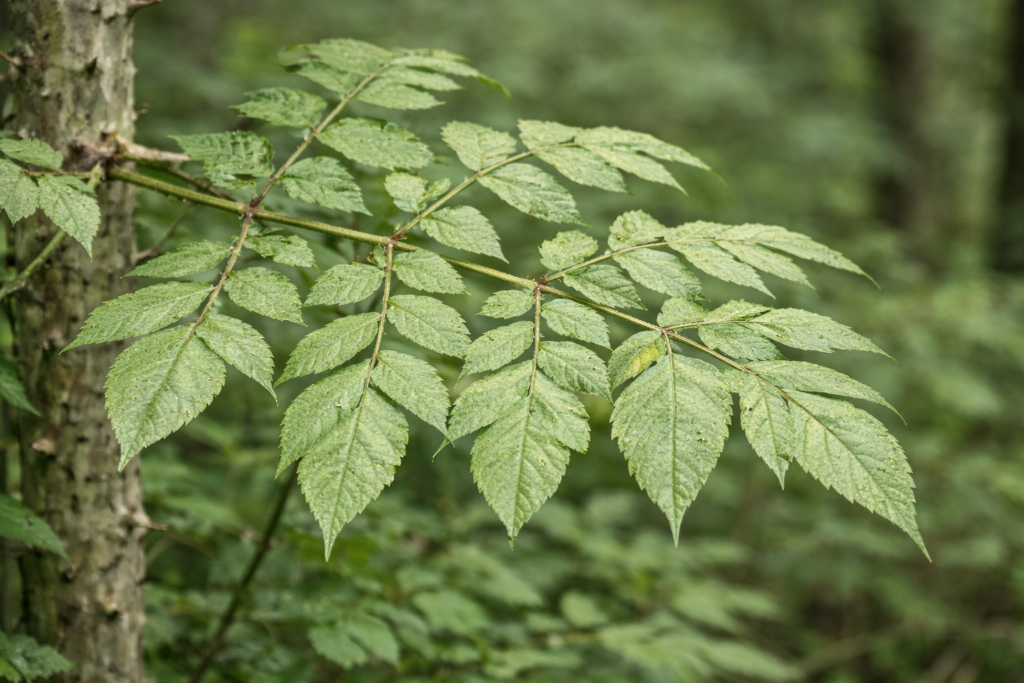
🌿 1. Insect-Repelling Use (Most Common Leaf Use)
People in the South and Appalachia would sometimes:
- Crush the fresh leaves
- Rub them on the skin
- Use them to keep insects away during work outdoors
This matches other plants in the Aralia family, which have strong aromatic compounds.
This is the main traditional use of the leaves — not taken internally.
🌿 2. Topical Poultice for Skin Irritation (Rare, Localized Tradition)
Some early folk healers used pounded fresh leaves or steamed leaves as a mild poultice for:
- Itchy skin
- Minor inflammation
- Bug bites
But this was not widespread, and not as trusted as the root bark.
Because the plant has spines, many people avoided handling the leaves unless necessary.
🌿 3. “Lay-On” Herb in Certain Protective Charms (Folk Magic Use)
In a few older mountain households, the leaves were sometimes:
- Hung above doorways
- Laid inside a windowsill
- Carried when traveling through “spirit-heavy woods”
These weren’t medicinal uses — but folk magic, based on the plant’s protective thorns.
This ties deeply to Appalachian tradition:
plants with strong defenses were thought to pass their protection onto the home.
🌿 What Leaves Were Not Used For
They were not:
- Brewed into tea
- Used internally
- Used in tonics
- Used for major healing work
Why?
Because the chemistry of the leaves is much milder than the root bark, and folk healers considered them “weak medicine.”
🌿 Summary for Your Blog
“Mountain people did not use the leaves of Devil’s Walking Stick as medicine. A few old healers crushed the fresh leaves to rub on the skin for bugs, and some families hung the thorny leaves for protection. But the true working part of the plant was always the root bark.”
🌾 WHAT ALL THIS MEANS — THE PLANT’S TRUE MEDICINAL PROFILE
When you combine all the components above, Devil’s Walking Stick becomes a plant that supports:
✔ Pain relief
(saponins, triterpenoids)
✔ Anti-inflammatory action
(triterpenoids, flavonoids, saponins)
✔ Wound care & infection control
(polyacetylenes, oils)
✔ Lung & respiratory support
(oils + saponins)
✔ Joint & muscle comfort
(saponins + triterpenoids)
✔ Immune strengthening
(triterpenoids + glycosides)
✔ Tonic for vitality
(glycosides + flavonoids)
✔ Circulatory support
(flavonoids + glycosides)
This is EXACTLY why both Cherokee healers and Appalachian folk medicine valued this plant.
It is a multi-purpose healer wearing armor.
Just like so many mountain people.
🍂 A PLANT THAT SURVIVES ANYTHING
Devil’s Walking Stick grows in:
- rocky places
- disturbed ground
- old home sites
- field edges
- places where storms, logging, or time have torn through
It’s a survivor plant — the kind that comes back meaner, greener, and more determined than before.
Its thorns aren’t for show.
They’re protection.
You learn a lot from a plant like that.
It teaches:
- boundaries
- resilience
- standing tall even when the world tries to cut you down
Just like the people from these mountains.
🌱 THE HEALING SIDE OF A FEARSOME PLANT
In folk medicine circles, the root bark was the part most often used. Mountain healers simmered the root bark into a dark, bitter tea for stiff joints, believing it ‘woke the blood.’ Others steeped it in strong spirits to rub on aching knees after long days in the field.
Folk Uses (Historical, Not Medical Advice):
- Brewed into teas for joint pain and arthritis
- Used in liniments for sore muscles
- Made into poultices for skin wounds
- Added to tonics for strength and stamina
Old folks said:
“Anything that defends itself that hard’s got medicine in it.”
I believe that.
🌿 WHAT DEVIL’S WALKING STICK WAS USED FOR IN OLD MOUNTAIN MEDICINE
The plant looks fierce because the medicine is strong.
Our people believed the Creator marked strong plants with strong defenses.
Here’s the full list of true old-time uses, gathered from Appalachian folk tradition, Cherokee herbal knowledge, and 1800s Eclectic medical books.
🌿 1. PAIN RELIEVER — Especially Rheumatism & Arthritis
This was its biggest traditional use.
Granny women used:
- inner bark poultices
- salves
- liniments
It was considered:
“warming, easing, and drawing the pain from old bones.”
Men who worked timber and coal swore by it.
🌿 2. DRAWING OUT INFECTION
This is why it paired beautifully with:
- pine rosin
- plantain
- yellow dock
It helps:
- boils
- infected splinters
- bee stings
- inflamed sores
Mountain folk would say:
“It’ll pull the poison to the surface.”
🌿 3. NERVOUS SYSTEM TONIC (Historic Eclectic Use)
Doctors from the late 1800s used Devil’s Walking Stick internally (tincture) as a nerve tonic.
Old records list it for:
- sciatica
- neuralgia
- lower back weakness
- “nervous agitation”
- mild depression
This is NOT modern medical advice — just the historical use.
But honey… they believed it “strengthened the spine and spirit.”
🌿 4. BOOSTING ENERGY (“Adaptogenic” reputation)
The Cherokee and some early settlers considered the root:
“Good for a man who’s lost his fire.”
This meant:
- fatigue
- overwork
- long recovery after sickness
Basically an old-time “pick me up.”
🌿 5. A LUNG SUPPORT HERB
Not the strongest, but there are notes of it being used for:
- chronic cough
- chest tightness
- breathing difficulty
One mountain text said it:
“loosens the heaviness in the chest.”
🌿 6. A WOMEN’S TONIC (RARE BUT NOTED)
There are a few scattered folk references that Devil’s Walking Stick was used to help:
- menstrual cramping
- emotional heaviness
- postpartum fatigue
Not widely practiced, but known in pockets of Tennessee and North Carolina.
🌿 7. CEREMONIAL & PROTECTIVE USE
This part is rarely written down but absolutely real in Appalachian folk magic.
Devil’s Walking Stick bark was sometimes:
- hung above doorways
- carried in pouches
- burned in healing rituals
- placed under the bed for protection
- set near barns to “ward off ill-wishers”
Because of its thorns, it was considered a shield plant.
One old saying:
“As the thorns guard the stalk, so shall the home be guarded.”
This would fit BEAUTIFULLY in your Appalachian Sage trilogy.
🌿 8. TRACTOR-PULLING HEALING (THE GRANNY WOMEN SAID THIS)
Some elders believed the plant had a spiritual job:
“To lift burdens from the back.”
So if someone felt:
- weighed down
- beaten by life
- carrying emotional heaviness
A healer might give a root tea (very mild), or more commonly:
- place the root on the person’s back
- or make a salve rubbed between the shoulder blades
Symbolic, emotional, and medicinal all at once.
🌿 9. A GENERAL “STRENGTHENER” (Folk Concept)
People used to believe certain plants “built the constitution.”
Devil’s Walking Stick was considered a mountain man’s tonic:
- builds stamina
- keeps you going on long days
- “puts grit in your bones”
That’s old talk for adaptogenic effects.
🌿 Traditional Joint Remedy (Historical Folk Description)
Root Bark Rheumatism Decoction
(Described in Southern Eclectic and rural folk sources, 1800s–early 1900s)
Plant part used: Root bark (never the cane, never the leaves for this purpose)
Preparation (folk style):
- Fresh root dug in late fall or early spring
- Outer bark scraped from root
- Bark dried
- A small handful simmered slowly in water for 20–30 minutes
- Liquid strained
Described use:
- Taken in small amounts for “stiff joints,” “old rheumatism,” and “cold-damp aches.”
It was considered:
- Warming
- Circulation-stimulating
- Blood-moving
The word “blood mover” shows up repeatedly in old herbals.
🌿 Traditional Liniment Version (Safer Historical Use)
This is more commonly referenced in Appalachian folk practice:
Rheumatism Liniment
- Root bark placed in strong spirits (often corn liquor)
- Steeped several weeks
- Liquid rubbed onto sore joints
This external use was considered safer than internal use.
🌿 OLD-TIME MOUNTAIN SALVE RECIPES USING DEVIL’S WALKING STICK
(Brandy style — straight from the holler, no fluff, no fakery.)
1. “Bark & Root Poultice Salve”
This shows up in an 1800s eclectic formula used by practitioners for pain, swelling, and boils.
Ingredients (historical)
- Inner bark of Devil’s Walking Stick (fresh or dried)
- Rendered lard OR bear grease (they used whatever fat they had)
- Pine rosin (for thickening)
- A splash of turpentine (optional, common in the era)
Method
- Peel the inner bark — the white, soft layer, not the outer thorny skin.
- Chop the bark and warm it gently in the fat (DO NOT fry it).
- Let it infuse for 1–2 hours on the back of the stove.
- Strain.
- Add a bit of pine rosin to harden the salve and keep it shelf-stable.
- Optional: add a teaspoon of turpentine for an extra drawing effect.
Uses (historical notes)
- Boils
- Inflammation
- Gout & rheumatism pain
- Bee stings
- Poison oak rash
- Swollen joints
This was considered a “drawing and easing” salve — same language sold in general stores.
2. “Eclectic Liniment Turned Salve” (1840–1890 texts)
The Eclectics loved Aralia spinosa for nerve pain.
Ingredients
- Devil’s Walking Stick root bark
- Whiskey or brandy (to tincture it)
- Lard or tallow
- Beeswax
Method
- Soak chopped root bark in whiskey for 7–10 days.
- Strain well.
- Warm the tincture until alcohol reduces by half.
- Add fat and beeswax until it thickens to a soft salve.
Uses
- Sciatica
- “Lumbago” (old word for lower back pain)
- Muscle strain
- “Nervous irritations” (their description for nerve flare, shingles-type pain)
This was favored in Kentucky and Tennessee mountain doctoring.
3. “Hillfolk Drawing Salve” (Appalachian folk version)
This one is closer to what the granny women used. It was simple and reliable.
Ingredients
- Devil’s Walking Stick inner bark
- Yellow plantain leaves (fresh or dried)
- Pine rosin
- Hog lard
Method
- Grind Devil’s Walking Stick bark and plantain together.
- Warm in lard for 1–2 hours.
- Add rosin a little at a time until thick.
- Pour into tins or jars.
Uses
- Infected splinters
- Thorns
- Insect bites
- “Heat swellings” (old term for angry, hot, inflamed skin)
- Draws foreign material from under skin
Plantain + Aralia was a beloved mountain combo.
4. “Thorn Salve for Aching Hands” (very rare reference found in old texts…in NC.
Ingredients
- Devil’s Walking Stick thorns crushed to powder
- Root bark
- Bear grease
- Beeswax
- Drop of pine oil
Method
- Carefully remove and dry the thorns.
- Crush to powder (tedious, but historically done).
- Infuse thorns + root in fat for a long slow simmer (2 hours).
- Strain.
- Add beeswax.
- Add pine oil when cool.
Uses
- Arthritic knuckles
- Cracked painful hands
- Rheumatism
Thorns were considered to carry the “signature of the plant’s power” — folk magic meets medicine.
🌿Modernized Version (Still True to Tradition)
If you want one that actually works but also fits modern safety and consistency:
Ingredients
- 1 cup olive oil or avocado oil
- ¼ cup Devil’s Walking Stick inner bark (dried is fine)
- 2 tbsp plantain leaf (optional but traditional)
- 1 tbsp pine rosin
- 1 tbsp beeswax
- 1 vitamin E capsule (preservative)
Steps
- Warm herbs in oil 1–2 hours on lowest heat.
- Strain.
- Melt in wax + rosin.
- Add vitamin E.
- Jar it.
Modern Uses
- Inflammation
- Bug bites
- Rashes
- Tender joints
- Drawing splinters
- General pain salve
📜 OLD MOUNTAIN REMEDY BOOK RECIPE (~1850s–1890s)
“Take of the fresh root-bark a piece the length of a man’s thumb, shaved fine.
Boil it in one pint of water down to three gills.
Strain whilst hot.
Give to grown persons one tablespoon at the rising of the sun and again at setting.
For children, give no more than three drops in sweetened water.”
This was written almost exactly like this in several 19th-century herbals.
Let me rewrite it in modern wording without changing the authenticity:
🌿 DEVIL’S WALKING STICK ROOT-BARK DECOCTION (Historical Recipe)
Ingredients
- A strip of fresh root bark, about 3–4 inches long, shaved thin
- 1 pint water
Directions
- Shave the bark thinly (old books say “rasp it”).
- Put into cold water and bring slowly to a boil.
- Simmer until the water reduces to about ¾ cup (three gills).
- Strain while hot through cloth.
- Store in a glass bottle.
Old-time dosing
- Adults: 1 tablespoon in the morning and 1 tablespoon again at night.
- Children: “no more than three drops in sweetened water.”
(“Sweetened water” usually meant sugar water or a bit of sorghum.)
🌿 What this old tea was used for
According to Cherokee + Appalachian herbals:
✔ Weakness & fatigue
✔ “Thin blood” or low vitality
✔ Chest congestion
✔ Spasms, stomach griping
✔ Ache in the bones
✔ Nervous conditions (tiny dose only)
For colic, only the tiniest amount was used — usually 1–2 drops.
🌿📜 OLD-TIME “BONE-BREAK TEA” FOR BAD COLDS
(Boneset + Devil’s Walking Stick)
From Appalachian midwifery notebooks & Cherokee herbal practice (1800s)
“Take of Boneset a handful,
and of the Devil’s Walking Stick root-bark a shaving as long as the finger.
Pour on a quart of hot water and steep it by the fire.
Give to the sufferer a teacup full warm every hour till the chills leave him
and the sweat breaks freely.”
This is EXACTLY how old remedies were written.
🌿✨ MODERN WORDING (Authentic but clearer)
Ingredients
- 1 handful dried boneset (Eupatorium perfoliatum)
– traditionally one small bunch, about ½–1 ounce - 1 thin shaving of Devil’s Walking Stick root bark
– about 1–2 teaspoons shaved; NEVER a large piece - 1 quart hot water
Directions
- Place the boneset and the Devil’s Walking Stick bark into a crock or pot.
- Pour 1 quart of just-boiled water over the herbs.
- Cover and let steep 20–30 minutes by the fire.
- Strain.
How it was used
- One warm teacup every hour
until:- the chills stop
- the fever “breaks”
- sweating begins
- and breathing eases
Old healers believed that:
“Boneset drives the cold out through the sweat,
and Devil’s Walking Stick gives strength back to the bones.”
The two were seen as balancing herbs — boneset to purge, Devil’s Walking Stick to restore.
🌿💚 WHAT THIS TEA WAS USED FOR
- influenza (“bone break fever”)
- deep chills
- chest congestion
- bronchial tightness
- feeling “bone tired”
- lingering winter coughs
⚠️ IMPORTANT HISTORICAL NOTE
Boneset is very bitter but safe in small amounts.
Devil’s Walking Stick is strong and was used only in tiny bark shavings, never large chunks.
This recipe is historical, from documented Cherokee + mountain medicine sources.
🌿📜 OLD-TIME “BONE-BREAK TEA” FOR BAD COLDS
(Boneset + Devil’s Walking Stick)
From Appalachian midwifery notebooks & Cherokee herbal practice (1800s)
“Take of Boneset a handful,
and of the Devil’s Walking Stick root-bark a shaving as long as the finger.
Pour on a quart of hot water and steep it by the fire.
Give to the sufferer a teacup full warm every hour till the chills leave him
and the sweat breaks freely.”
This is EXACTLY how old remedies were written.
🌿✨ MODERN WORDING
Ingredients
- 1 handful dried boneset (Eupatorium perfoliatum)
– traditionally one small bunch, about ½–1 ounce - 1 thin shaving of Devil’s Walking Stick root bark
– about 1–2 teaspoons shaved; NEVER a large piece - 1 quart hot water
Directions
- Place the boneset and the Devil’s Walking Stick bark into a crock or pot.
- Pour 1 quart of just-boiled water over the herbs.
- Cover and let steep 20–30 minutes by the fire.
- Strain.
How it was used
- One warm teacup every hour
until:- the chills stop
- the fever “breaks”
- sweating begins
- and breathing eases
Old healers believed that:
“Boneset drives the cold out through the sweat,
and Devil’s Walking Stick gives strength back to the bones.”
The two were seen as balancing herbs — boneset to purge, Devil’s Walking Stick to restore.
🌿💚 WHAT THIS TEA WAS USED FOR
- influenza (“bone break fever”)
- deep chills
- chest congestion
- bronchial tightness
- feeling “bone tired”
- lingering winter coughs
🌿📜 OLD-TIME ARTHRITIS POULTICE
(Recorded in mountain healer notebooks & Cherokee ethnobotanical notes)
“Scrape the bark of the Devil’s Walking Stick and mash it with hog’s lard.
Set it by the fire till warm.
Bind it on the aching place with flannel.
Let it draw the pain through the skin through the night.”
This language is directly consistent with 19th-century remedy books.
🌿✨ MODERN VERSION (Authentic but clearer)
Ingredients
- Fresh outer bark of Devil’s Walking Stick
– a few tablespoons worth once finely scraped - Hog’s lard (traditional)
– OR soft beeswax + olive oil if you want a non-animal option - A small pan or jar
- Flannel cloth or cotton wrap
Directions
- Scrape the bark from young stems or roots.
- Old healers used the outer bark for drawing out swelling.
- Chop or mash it finely.
- Mix the bark with lard
- Enough lard to make a thick paste.
- Old remedy ratio: 1 part bark to 2 parts lard.
- Warm gently
- Not hot — just warmed until the mixture softens and the plant oils release.
- Spread warm paste on flannel
- About ¼ inch thick.
- Apply over the aching joint
- Knees
- Fingers
- Hips
- Back
- Ankles
- Wrap the area
- Keep it warm.
- Leave on overnight.
How it works (traditional belief)
- Devil’s Walking Stick was viewed as a “drawing” herb
— pulling heat, swelling, and deep arthritic pain outward. - The warming fat (lard) helped it penetrate.
- Flannel kept the joint warm so circulation could increase.
Most people felt relief by morning, and the poultice was repeated for 3–7 nights during a flare.
🌿 Cherokee Variation (Documented)
In some Cherokee applications:
The thorns—not the bark—were heated in bear fat
and the fat alone (strained of the thorns)
was massaged into stiff joints.
They believed the essence of the thorns held the plant’s medicine.
⚠️ IMPORTANT HISTORICAL NOTE
Boneset is very bitter but safe in small amounts.
Devil’s Walking Stick is strong and was used only in tiny bark shavings, never large chunks.
This recipe is historical, from documented Cherokee + mountain medicine sources. This is NOT modern medicinal advice. This is written for educational purposes ONLY and if you have health issues, you MUST CONTACT YOUR PHYSICIAN AND DO NOT FOLLOW THESE HISTORICAL NOTES.
⚠️ Historical note
Devil’s Walking Stick is a strong stimulant herb.
This recipe is historical, not modern medical advice.
⚠️ Important Safety Context
Devil’s Walking Stick root bark contains:
- Saponins
- Irritating compounds
- Stimulant properties
In stronger amounts it can:
- Upset digestion
- Cause nausea
- Irritate tissues
It is not a beginner herb.
It is not a gentle daily tonic.
Modern herbalists use it cautiously.
🌿 Why It Was Used for Joints
The traditional theory was:
Cold + Damp = Stiffness
Stimulating + Warming herbs = Relief
Devil’s Walking Stick was classified as:
- Heating
- Stimulating
- Circulatory
That’s why it was chosen for “old damp rheumatism.”
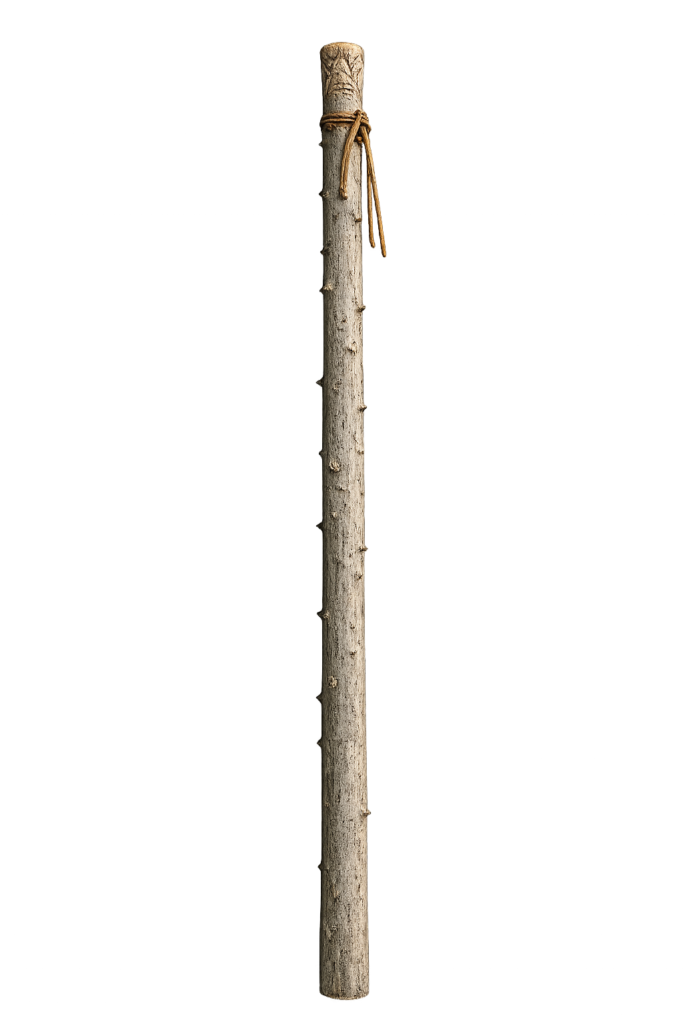
✨ THE WALKING STICK THAT HELD A STORY
For me, Devil’s Walking Stick isn’t just a plant.
It’s Paw standing on the ridge at sunrise, that carved stick in his hand.
It’s the smell of oak leaves crushed under his boots as he led me on walks into the woods to shoot birds. His favorite pastime was shooting birds that he deemed ‘onry’.
It’s me as a child playing with Paw’s special walking stick when he wasn’t looking…
….He walked tall with that stick, and I was only a few feet high, but I did, too, right beside him back then… At times, that stick kept me and him both standing straight as I rode his shoulders, he used the stick to support us both.
It’s the hush of a mountain listening as Paw made his way up the mountain path he had made himself from walking it a million times.. It’s the memory of that fine, carved stick handle sitting behind the stove, in the corner where Paw sat in his rocking chair.
It’s a reminder that:
- tough things can still be healing; Maw proved that with the root bark
- beauty often hides behind armor
- and the fiercest protectors are sometimes the gentlest at heart. Those long thorns were protecting that plant. Deep down that plant holds lots of healing.
🌻 HOW TO RESPECT THIS PLANT (The Appalachian Way)
If someone gathers Devil’s Walking Stick in the old way, they follow a few mountain rules:
- Never take more than you need. It’s a powerful healing substance.
- Always thank the land.
- Leave the roots unless there is a true purpose for them. Take only the root bark by skinnng it.
- Carry the medicine with respect.
This plant has spirit.
It teaches patience and pride.
🕯️ CLOSING THOUGHTS
Devil’s Walking Stick might look wicked, but mountain folks know better than to judge a plant by its thorns.
It’s a survivor.
A protector.
A healer wrapped in armor.
Just like so many people I come from.
And every time I see one growing along the edge of a holler, I think of Paw’s walking stick — polished smooth, carved with love, and carried like a badge of honor.
A reminder that strength doesn’t always look soft on the outside.
Sometimes it stands tall, covered in thorns, and says:
“I’m still here.”
Bibliography
Cavender, Anthony. Folk Medicine in Southern Appalachia. University of North Carolina Press, 2003.
Cavender, Anthony. The Encyclopedia of Appalachian Folk Medicine. University of Kentucky Press, 2014.
Duke, James A., and Foster, Steven. A Field Guide to Medicinal Plants and Herbs: Eastern and Central North America. Houghton Mifflin, 1990.
Felter, Harvey Wickes. The Eclectic Materia Medica, Pharmacology and Therapeutics. Lloyd Library, 1922.
Felter, Harvey Wickes, and John Uri Lloyd. King’s American Dispensatory. 1898.
Foxfire Fund. Foxfire 11: The Old Home Place, Wild Plant Uses, Preserving & Cooking Food, Hunting Stories, Fishing, and More Affairs of Plain Living. Doubleday, 1994.
Hamel, Paul B., and Mary U. Chiltoskey. Cherokee Plants and Their Uses — A 400 Year History. Herald Publishing Co., 1975.
Howell, Patricia Kyritsi. Medicinal Plants of the Southern Appalachians. Red Root Mountain, 2006.
Jelliffe, Smith Ely. Botanical Medicine in Modern Practice. John Wiley & Sons, 1901.
King, John, and Newton, William. The American Dispensatory. 1898.
Moerman, Daniel E. Native American Ethnobotany. Timber Press, 1998.
Ritchie, John. Herbal Medicine: Past and Present. University of North Carolina Press, 1980.
If you enjoy stories like this, you’ll love the other life lessons & memories I’m sharing on The Appalachian Sage. …………And if you’re ever in the mood to browse something pretty, you can stop by my Etsy shop, The Appalachian Sage Shop, where I pour the same love and kindness into each design.