By Hannah Cedars — The Appalachian Sage
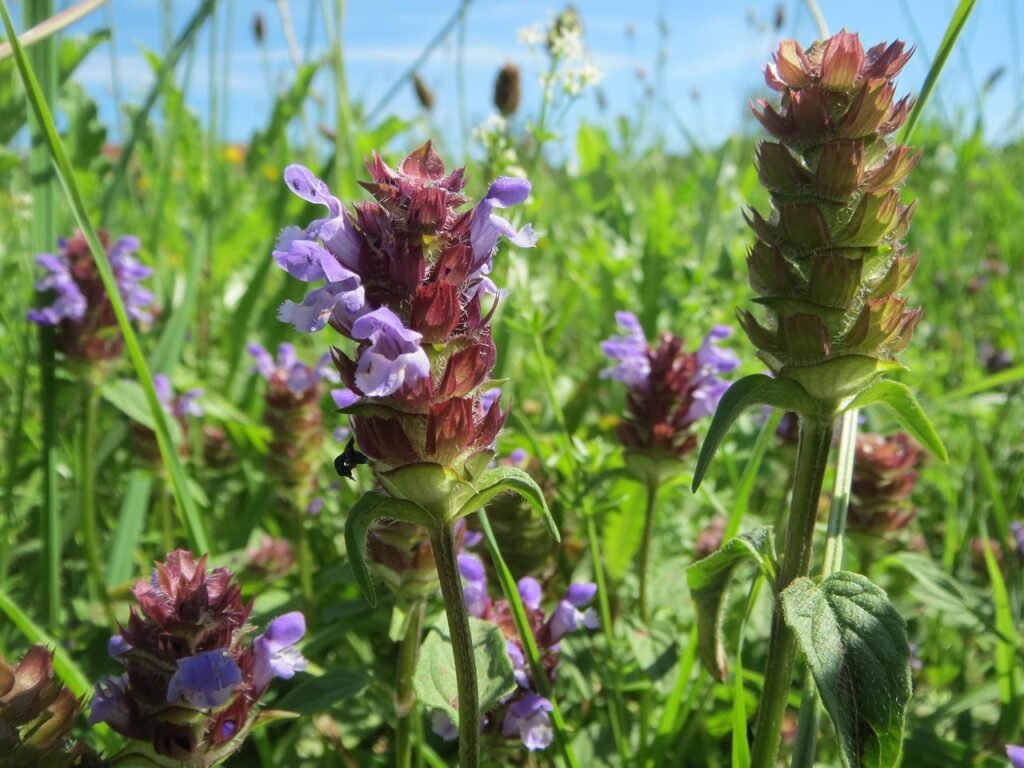
If you’ve ever wandered through a summer meadow barefoot, chances are Self Heal brushed against your ankles without making a fuss about it. This tiny purple blossom is one of those herbs that never tries to show off — it just minds its manners, keeps to itself, and quietly offers more healing spirit than most plants twice its size.
Around here, folks call it Heal-All, Woundwort, or my grandmother’s favorite name for it: “that pretty little purple miracle.”
Self Heal grows where people need it most — along old fence rows, beside porches that have seen better days, around mailbox posts with peeling paint, and tucked in beside shady yard patches where nothing else wants to grow. It’s the kind of plant that refuses to give up on you, even when you’ve just about given up on yourself.
Early Appalachian families respected this little mint-family wonder. It wasn’t the herb they bragged about at church picnics or tucked into fancy jars for the county fair. No, Self Heal was the one they reached for quietly — the way you reach for an old friend who always knows what to say.
🌾 A Bit of Ancestral Wisdom: How Native Tribes Used Self Heal
Long before Appalachian settlers ever brewed their first cup of Self Heal tea, this little purple plant was already woven into the healing traditions of several Native tribes. The Cherokee gathered it in damp meadows and woodland clearings, believing the plant carried “cooling” qualities that balanced the body. The Iroquois valued it as a dependable summer herb, using it in warm infusions and poultices made from the leaves. Some Plains tribes used Self Heal wherever it grew naturally — along streams, beside encampments, and in the soft soil near village paths — treating it as a reliable helper for everyday living. It was known as a plant that never left the people, growing close at hand, offering its calm steady strength when needed. To the tribes who relied on it, Self Heal was more than a weed — it was a quiet companion, trusted, familiar, and always close to the campfire circle.
🌿 What’s Inside Self Heal: The Plant Chemistry Behind the Magic
For a humble little yard herb, Self Heal is packed with more goodness than most folks realize. Mountain women may not have known the scientific names for what was inside it, but they sure understood what it could do. Today, we can peek a little deeper into the plant’s chemistry — and it turns out our ancestors were right all along.
Self Heal is rich in:
• Rosmarinic Acid
A natural compound also found in rosemary and lemon balm. Traditionally valued for how it supported the skin and brought “cooling comfort” to hot, irritated areas.
• Tannins
These give the plant that slightly astringent taste. Old-timers used tannin-rich plants to “tighten up” the skin — one reason poultices were so popular in camp and cabin medicine.
• Flavonoids (like Rutin & Quercetin)
Colorful plant compounds often used when someone needed a soothing tea or a bit of calm after a long day.
• Triterpenoids
These earthy-sounding components show up in many traditional herbs. Appalachian grannies believed plants with this “grounding” nature helped the body settle back into balance.
• Volatile Oils
Gentle meadow-scented oils that contribute to Self Heal’s soft presence. These helped make warm infusions comforting and pleasant to sip.
🌾 What This Meant to the Ancestors
Native peoples and early mountain families didn’t need chemistry terms — they learned these truths by watching the plants, season after season. But what they noticed lines up beautifully with what we know today:
• They used it on the skin because the tannins kept things “tight and clean.”
Grandmothers taught their daughters: “If it puckers your mouth a little, it’s good on the outside, too.”
• They brewed it warm to soothe the body.
The Cherokee often called it a “cooling” herb — not cold, but calming, settling, and balanced.
• They dried it for winter because it held its strength.
Self Heal keeps its usefulness once dried, and old pantry shelves often had a jar of it right beside the mint.
• They trusted it because it grew right where the people lived.
A plant that shows up by the back door was believed to be meant for everyday use — not rare, not fancy, just reliable and steady.
Self Heal is the herb you overlook until you need it.
It doesn’t ask for attention.
It simply says, “I’m here, if you’re willing to notice.”
If plants had personalities, this one would be a soft-spoken mountain granny sitting in her rocker, stitching a quilt and giving you advice without ever raising her voice. Strong. Steady. Kind. And always exactly where you need her.
So next time you walk past those little purple square-topped blossoms, don’t just mow them down like unruly guests. Pause a moment. They’re part of a lineage older than any of us — a reminder that healing doesn’t have to be loud, complicated, or expensive. Sometimes it’s just sitting quietly in the yard, waiting for you to remember what your ancestors already knew.
🍵 Three Simple Recipes Using Self Heal
1. Self Heal Meadow Tea
A soft, grassy tea — perfect for quiet evenings on the porch.
Ingredients:
- 1 tablespoon fresh Self Heal blossoms
- 1 cup hot water
- Honey to taste
Instructions:
Steep the blossoms in hot water for 10–12 minutes. Add honey if you like. Sip warm and slow, the mountain way.
2. Self Heal Vinegar (Kitchen Tonic)
Bright, pretty, and a lovely addition to salad dressings.
Ingredients:
- 1 cup fresh Self Heal (flowers + upper leaves)
- Apple cider vinegar
- A clean jar
Instructions:
Fill the jar halfway with Self Heal. Cover completely with vinegar. Let sit 2–4 weeks, then strain. Use in vinaigrettes or over greens.
3. Self Heal & Honey Kitchen Syrup
Sweet, floral, and wonderful drizzled over cornbread or biscuits.
Ingredients:
- ½ cup Self Heal flowers
- 1 cup local honey
- 2 tablespoons warm water
Instructions:
Warm the honey just enough to soften it, then stir in the water and flowers. Let sit for at least 24 hours. You can strain or leave the blossoms in — they’re pretty as can be.
🌾 A Little Personal Note
I’ll tell you one more thing before I close this out — I keep a stash of Self Heal in my own cupboard, tucked right beside my jars of yarrow and red clover. I’ve reached for it more times than I can count, especially on the days when life feels heavier than my old cast-iron skillet.
And when I want a ready-made blend, I buy Dr. Morris’s Heal All Tea online from his shop down in Florida. It’s been a staple in my home for years, and it’s one of those simple comforts I don’t ever want to be without.
Sometimes the quiet herbs are the ones that stick with you the longest.
If you enjoy stories like this, you’ll love the other life lessons & memories I’m sharing on The Appalachian Sage. …………And if you’re ever in the mood to browse something pretty, you can stop by my Etsy shop, The Appalachian Sage Shop, where I pour the same love and kindness into each design.