Introduction — A Soft Velvety Wild Plant & Why It Matters
Verbascum thapsus
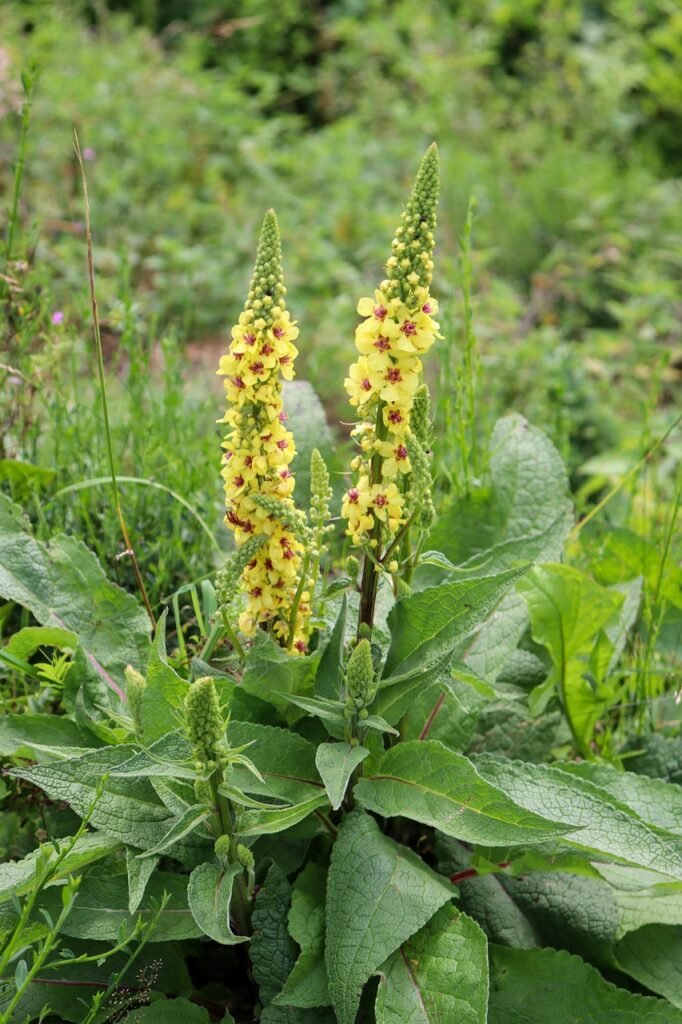
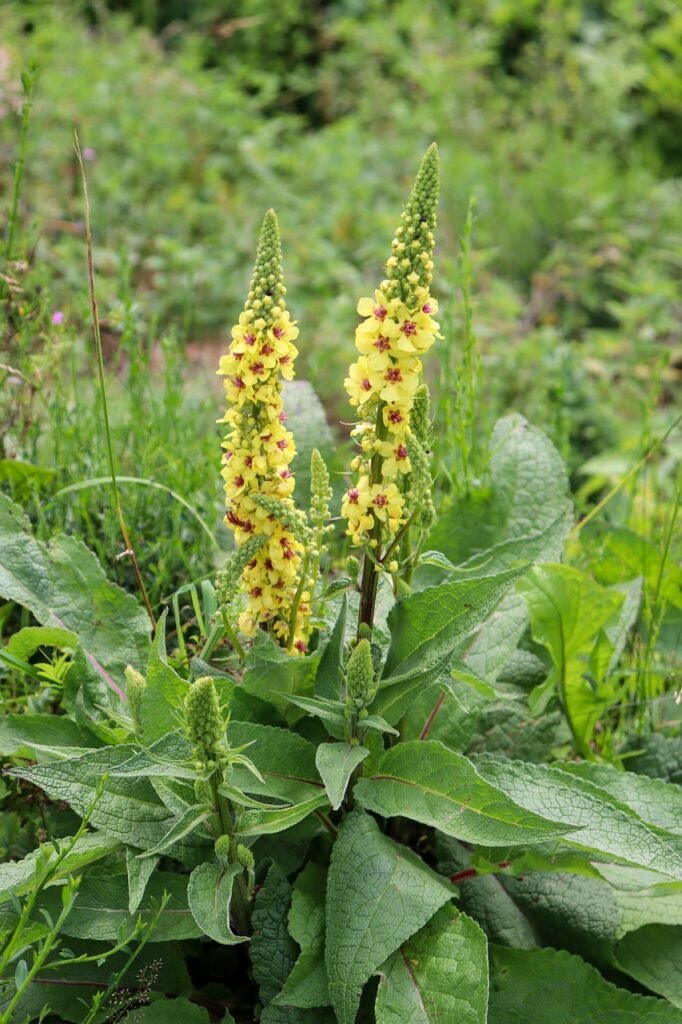
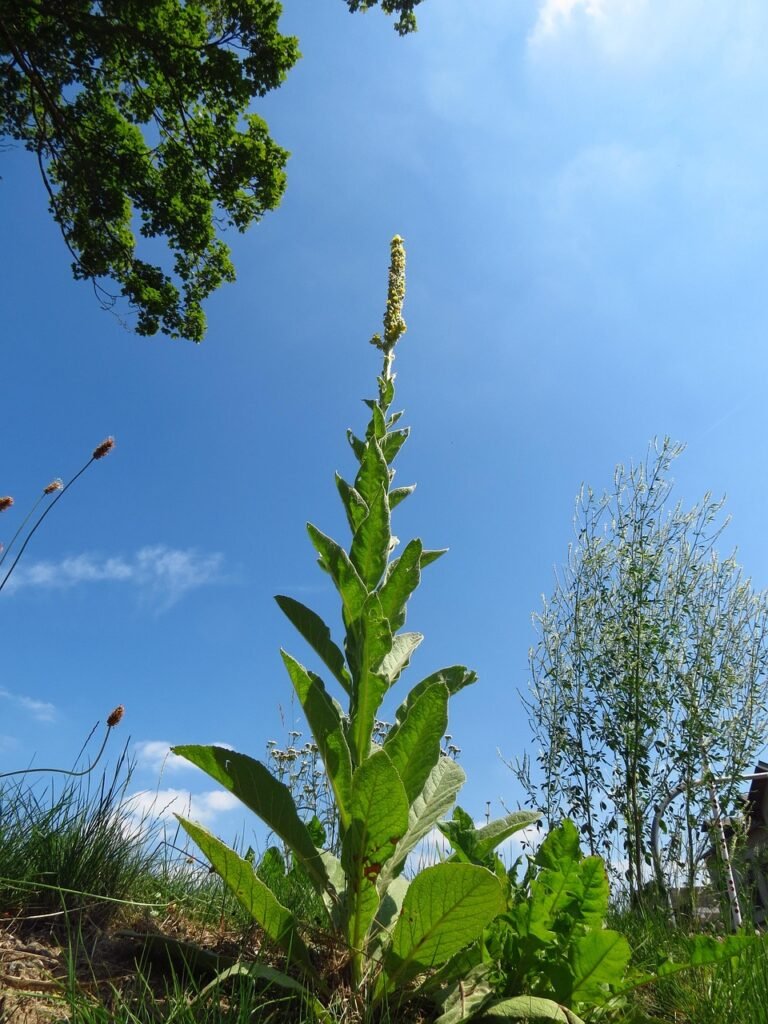
Mullein is one of the most familiar wild plants across the Appalachian landscape, even though many people pass it by without knowing its name. It rises tall and unmistakable along fence rows, old logging roads, creek banks, barn edges, and worn-out fields, its soft gray-green leaves catching the light like flannel laid out to dry in the sun. However, beneath this humble, quiet appearance lies a deep and well-documented history of medicinal use that stretches back centuries and spans continents.
Moreover, mullein earned its reputation not because it worked fast or dramatically, but because it worked steadily and gently. Instead of forcing change, mullein works by actively supporting the body’s natural processes, especially those involving the lungs, throat, and ears. For that reason, Appalachian families, American Indians, European herbalists, and early pioneers all came to rely on this plant as a trusted ally during long winters, lingering coughs, smoky work environments, and seasonal breathing troubles.
This article explains what mullein contains, shows how those constituents shape its traditional uses, and walks through how generations prepared the plant as tea, oil, and tincture. It also traces mullein’s role in Indigenous, pioneer, and European traditions, maps where it grows worldwide, and examines how people continue to use it today. Ultimately, this is a grounded, respectful look at mullein as both a wild plant of the holler and a long-respected medicinal herb.
Botanical Name & Common Names
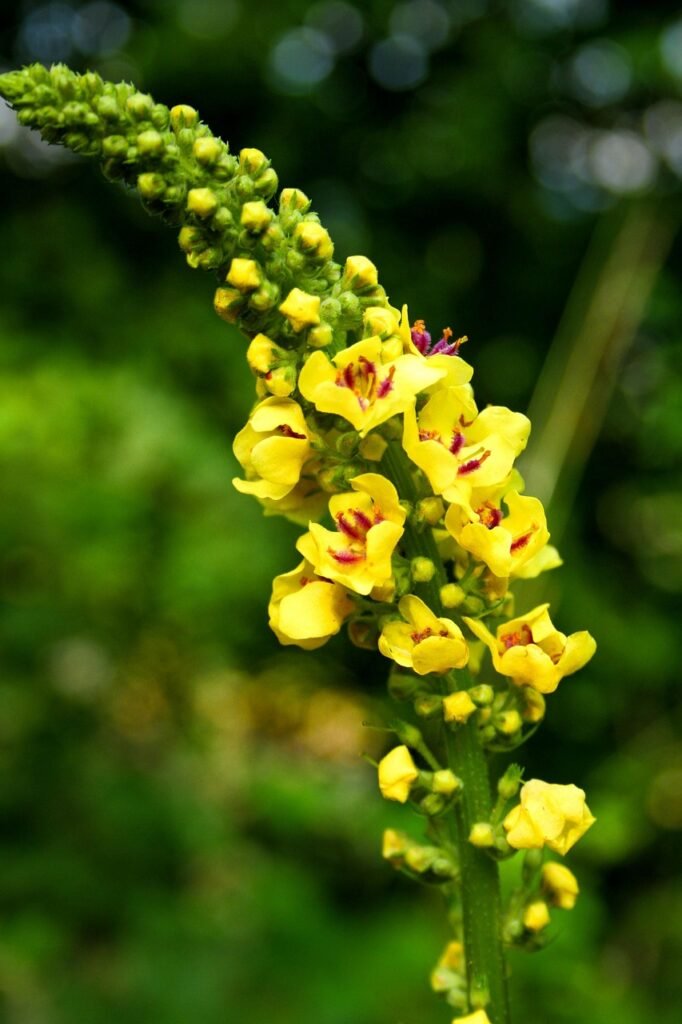
Botanically, mullein is known as Verbascum thapsus. Common names include common mullein, woolly mullein, velvet plant, flannel leaf, and candlewick plant. Folks once dipped the dried flower stalks in tallow and used them as torches, which is how mullein came to be called “candlewick.” In many rural communities, people simply knew the plant by sight and use, passing that knowledge down through lived experience instead of formal names.
Key Constituents (At-a-Glance)
Before examining how mullein has been used, it helps to understand what the plant contains. Over time, careful observation in folk medicine aligned closely with what modern herbal analysis later confirmed.
Mullein is known to contain several key constituents that work together rather than in isolation:
- Mucilage — soothing, coating compounds that help calm irritated tissues, especially along the respiratory tract
- Saponins — gentle expectorants that assist the body in loosening and moving stubborn mucus
- Flavonoids — plant compounds associated with calming inflammatory responses
- Iridoid glycosides — traditionally linked to tissue support and resilience
- Tannins — mildly astringent compounds that provide balance and tone
- Volatile oils (in small amounts) — found primarily in the flowers
As a result, these constituents help explain why mullein has been used consistently for the lungs, throat, ears, and other irritated tissues across cultures and generations.
Traditional Uses (Overview)
Historically, mullein was viewed as dependable rather than dramatic. In other words, it was not a plant used to shock the system or force rapid change, but one relied upon to support the body gently and steadily over time.
For example, traditional uses commonly included supporting the lungs and respiratory system, soothing dry or irritated coughs, helping loosen stubborn mucus, calming chest irritation, and easing ear discomfort when prepared as an oil. By contrast, mullein was rarely used alone for sudden or severe illness. Instead, it was chosen for slow-moving complaints that required patience, consistency, and care.
Primary Preparations
Tea (Infusion)
Most commonly, mullein was prepared as a tea using the dried leaf. However, because the leaf is covered in fine hairs that can irritate the throat if swallowed, careful straining was always considered essential.
Therefore, the traditional approach was simple but attentive:
- Use dried mullein leaf
- Pour hot (not boiling) water over the herb
- Steep for 10–15 minutes
- Strain thoroughly through cloth or a very fine filter
As a result, the finished tea was mild, earthy, and soothing, often sweetened with honey. This tea was commonly used during lingering coughs, winter chest congestion, smoke exposure, and seasonal breathing difficulties. At the same time, it was valued because it worked without harshness or strain on the body.
Mullein Oil — Old-Time Preparation & Use
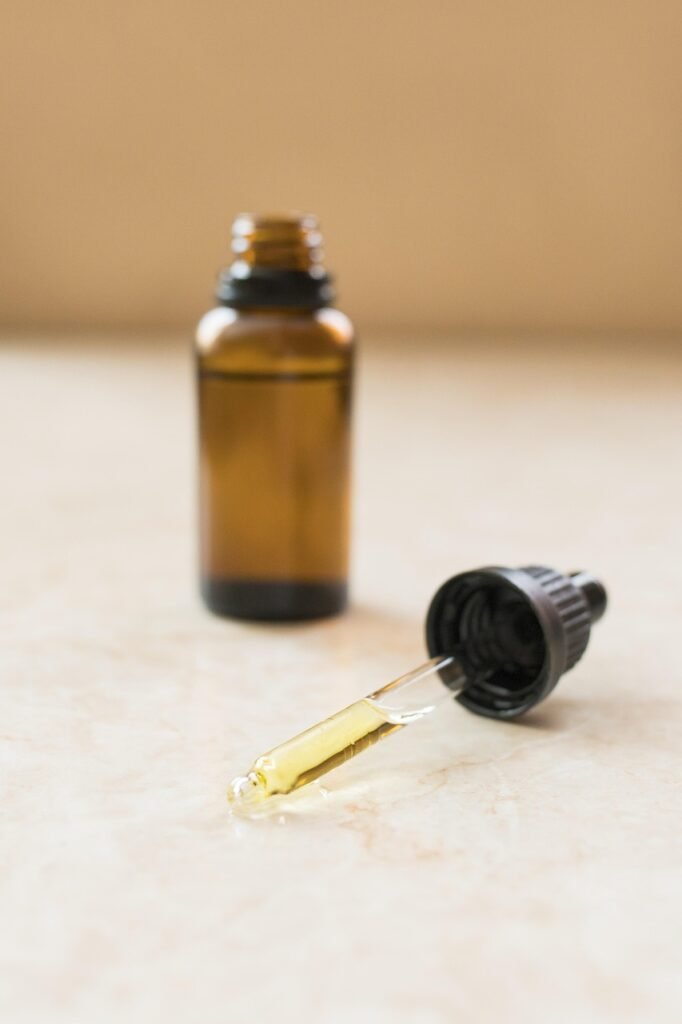
Meanwhile, mullein oil occupies a special place in home remedies. People prepare mullein oil ahead of time and keep it on hand for specific situations rather than using it daily.
People most often applied mullein oil externally for ear discomfort, neck and jaw soreness, and gentle warming during cold or damp weather, and they never used it hot or forced it.
Folks traditionally used these parts of the plant: People use the leaves for tea, but traditionally favored the yellow flowers. They gathered the flowers on dry days after the morning dew lifted and brushed them clean rather than washing them.
Old-time sun-infused recipe:
- Loosely fill a glass jar with fresh mullein flowers
- Cover completely with olive oil or another mild oil
- Release air bubbles gently
- Cap and place in a sunny window
- Infuse for 2–4 weeks
- Strain carefully and bottle
As old folks said, “Let the sun do the work.”
Traditional use:
For ear discomfort, people warmed the oil only to body temperature and applied it gently. If fever, infection, or injury was present, they did not use the oil. People also rubbed mullein oil along the neck or jaw during damp or windy weather. When using it for children, they acted with special caution and often paired its use with quiet reassurance or prayer.
Mullein Tincture — Strength with Simplicity
Folks mostly used teas and oils, but they made tinctures when they needed something that would keep and travel well. Traveling healers, pioneers, and later herbal practitioners favored mullein tincture for that reason.
Because tinctures concentrate certain compounds, people traditionally turned to mullein tincture for steady support, especially for lung and bronchial concerns, lingering coughs, chest tightness, and times when making tea wasn’t practical.
Old-time tincture recipe:
- Chop or crumble mullein leaf and/or flower
- Place in a glass jar
- Cover completely with high-proof alcohol
- Store in a dark place for 4–6 weeks, shaking gently
- Strain, bottle, and label
People didn’t use tinctures to suppress symptoms; they used them to help the body clear things naturally.
Cultural & Historical Use
Indigenous Use
Long before European settlement, Indigenous peoples recognized mullein as a lung and chest herb. People used mullein as a tea, smoke, or poultice and sometimes applied the leaves externally for warmth and protection. They passed knowledge of the plant through observation, experience, and tradition.
Pioneer & Appalachian Use
Similarly, early pioneers adopted mullein through a blending of Indigenous knowledge and European herbal traditions. Because tinctures resisted spoilage, they suited life on the move and remote living conditions. Appalachian families, in particular, value mullein as a dependable plant that could be gathered locally and prepared simply. Early pioneers blended Indigenous knowledge with European herbal traditions and adopted mullein as their own. Because tinctures resisted spoilage, they worked well for life on the move and in remote places. Appalachian families especially valued mullein as a dependable plant they could gather nearby and prepare with ease.
European Use
Meanwhile, Europe held a long record of mullein use. Historically, Greek and Roman sources referenced the plant for respiratory complaints. Later, German and English herbalists formalized mullein preparations in early pharmacopeias, reinforcing its reputation as a lung-supporting herb.
Where Mullein Grows (Geography & Habitat)
As mullein spread, it adapted easily to new lands. Today, it grows throughout North America, Europe, Asia, Northern Africa, and parts of Australia. Because it thrives in disturbed soil, it often appears along roadsides, open fields, and neglected ground, quietly reclaiming the land.
Modern Herbal & Pharmaceutical Use
In modern times, mullein continues to bridge traditional and contemporary practice. For example, it appears in respiratory formulas, cough syrups, ear oil blends, and lung-support supplements.
At the same time, modern research has focused on mullein’s mucilage and saponin content for their soothing and expectorant properties. Ultimately, while pharmaceutical medicine often isolates individual compounds, mullein remains widely respected as a whole-plant remedy in traditional and integrative systems.
Closing Reflection
Ultimately, mullein teaches patience. It does not force healing, but supports it quietly and steadily. In that way, it reflects the Appalachian approach to tending both land and body — attentive, respectful, and unhurried.
This article shares traditional folk knowledge and does not replace professional medical advice.
If you enjoy stories like this, you’ll love the other life lessons & memories I’m sharing on The Appalachian Sage. …………And if you’re ever in the mood to browse something pretty, you can stop by my Etsy shop, The Appalachian Sage Shop, where I pour the same love and kindness into each design.