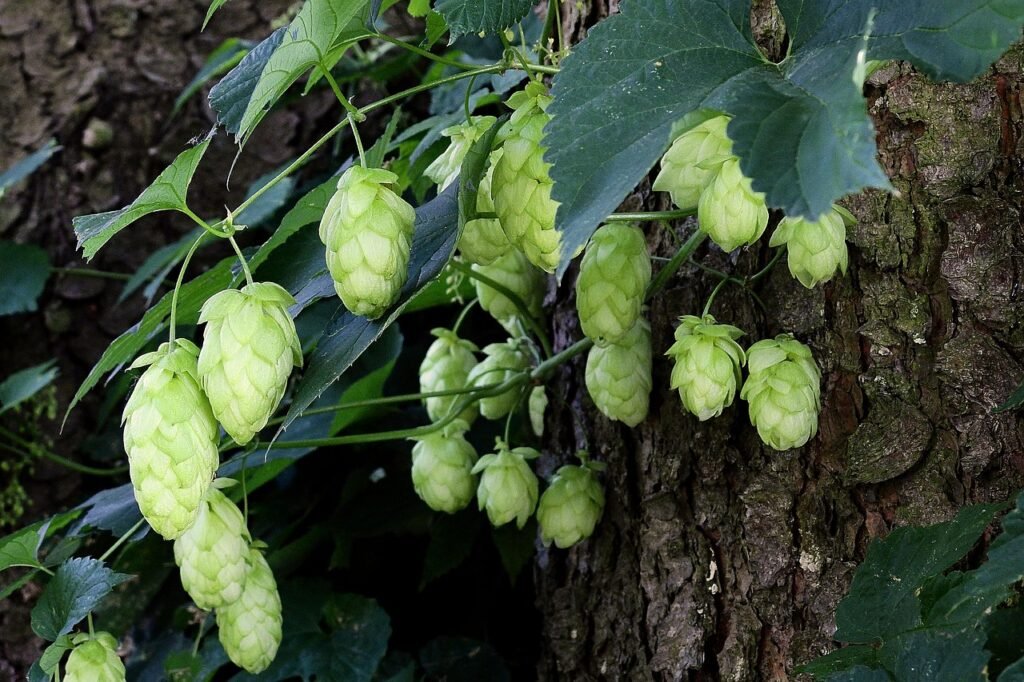
WILD HOPS…Humulus lupulus var. lupuloides or Humulus americanus, those refer to North American native variants,
When most folks hear the word hops, they picture breweries, beer barrels, and big copper kettles. But long before hops ever flavored an ale, mountain families knew this plant as a wild healer, a gentle nervine, and a friend to the restless, anxious, or weary-hearted.
Here in Appalachia, where the hills cradle old remedies like secrets whispered on the wind, wild hops (Humulus lupulus) grows along riverbanks, sunny thickets, forgotten fence rows, and old homestead sites. If you’ve ever seen a tangle of vines climbing high and heavy with pale-green papery cones, you’ve likely crossed paths with this ancient plant.
Let’s settle in for a spell and talk about it.
What Exactly Are Wild Hops?
Wild hops are perennial, fast-growing climbing vines. They can shoot up 20–30 feet in a single season, wrapping themselves around anything sturdy enough to support them.
They are part of the Cannabaceae family — yes, the same family as hemp and cannabis — though hops themselves don’t create psychoactive effects. What they do contain is a powerful blend of compounds known for calming the nervous system.
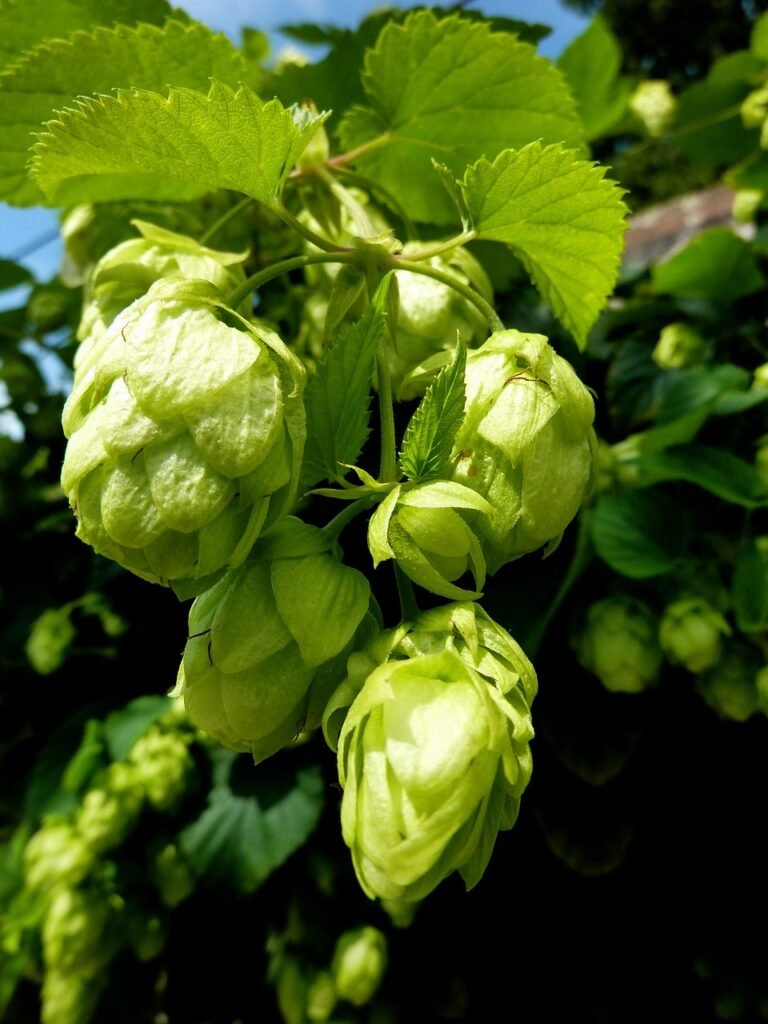
The prized part of the plant is the cone, the female flower, filled with tiny golden glands called lupulin. This is where the magic lives.

Constituents of Wild Hops (Humulus lupulus)
A structured, SEO-optimized outline for herbal teaching content
Wild hops contain a complex blend of bitter acids, resins, essential oils, flavonoids, and tannins, all housed within the golden lupulin glands at the base of each cone. These compounds work together to create hops’ calming, digestive, antimicrobial, and aromatic qualities.
Below is the full, outlined breakdown.
1. Bitter Acids
These are the primary active compounds responsible for hops’ distinct bitterness and many of its soothing actions.
• Humulone (α-acids)
- Main contributor to bitterness
- Offers nervine, anti-inflammatory, and mild sedative effects
- Supports healthy digestion by stimulating gastric activity
• Lupulone (β-acids)
- More resinous than the α-acids
- Demonstrates antimicrobial and antifungal properties
- Plays a strong role in hops’ ability to calm internal irritation
2. Resins
Resins give hops its sticky texture and deeper golden color.
• Soft and Hard Resins
- Strengthen hops’ antibacterial activity
- Contribute to its preservative qualities historically used in brewing
- Add to the herb’s grounding, settling effect on the nervous system
3. Essential Oils
Hops has one of the richest aromatic oil profiles found in medicinal plants. These oils evaporate easily, making hops ideal for pillows, sachets, and steam blends.
• Myrcene
- Strong, earthy aroma
- Helps relax tight muscles and reduce tension
• Humulene
- Woody, herbal scent
- Supports respiratory and inflammatory balance
• Caryophyllene
- Spicy/clove-like
- Interacts with the endocannabinoid system, offering calming and anti-inflammatory support
• Farnesene
- Soft floral–green aroma
- Contributes to hops’ soothing emotional effect
• Geraniol & Linalool
- Sweet, floral notes
- Add to the sleep-promoting and mood-balancing profile
4. Flavonoids
These give hops its antioxidant strength and are essential to its traditional hormonal reputation.
• Xanthohumol
- Strong antioxidant
- Supports liver detox and hormone balance
- Studied for its protective effects on cellular health
• Isoxanthohumol
- Converts in the body to 8-prenylnaringenin, one of the strongest known phytoestrogens in plants
- Helps explain hops’ traditional female balancing properties
• Quercetin & Rutin
- Strengthen blood vessels
- Offer anti-inflammatory and circulatory support
5. Tannins
Tannins add a slightly astringent character to hops.
• Polyphenolic Tannins
- Tone and tighten tissues
- Help reduce intestinal irritation
- Balance the moistening effect of hops’ oils and resins
6. Lupulin
This is not a separate compound but a glandular structure containing most of the constituents listed above.
• Lupulin Glands (yellow powder)
- Rich in acids, essential oils, flavonoids, and resins
- Responsible for hops’ golden color, stickiness, and medicinal potency
- The most concentrated therapeutic part of the plant
SHORT LIST OF HOPS COMPONENTS
Hops Constituents at a Glance
- Bitter Acids: humulone, lupulone
- Essential Oils: myrcene, humulene, caryophyllene, farnesene, linalool
- Flavonoids: xanthohumol, isoxanthohumol, quercetin, rutin
- Resins: antimicrobial, calming, preservative action
- Tannins: astringent and digestive support
- Lupulin: houses the highest concentration of medicinal compound
Where Wild Hops Are Found Worldwide
Wild hops (Humulus lupulus) grow almost everywhere temperate winds can touch. Although most folks think of Europe first — especially Germany, England, and the Czech countryside — hops are actually native across the entire Northern Hemisphere. They flourish in the cool, moist soils of Europe, Western and Central Asia, Russia, and the Himalayan foothills. Early settlers carried hop rhizomes across the ocean, and now truly wild hops can be found all through the United States and Canada, especially along riverbanks, forest edges, abandoned homesteads, and old farm fences where vines can climb freely. Because hops love partial shade and rich, loamy soil, they often show up in the same quiet, forgotten places where elderberry, wild rose, and nettles thrive. Today, naturalized stands of wild hops grow throughout New Zealand, Australia, and South America, making them one of the far-reaching herbal plants tied to global folk medicine and brewing traditions.
Traditional Appalachian Uses
Mountain healers didn’t need a lab report to understand hops. They watched, listened, and paid attention to what the body did when given the herb. Here’s how our ancestors used it:
1. Sleep & Nervous System Support
Hops tea or tincture was used to quiet:
- anxiety
- racing thoughts
- restless sleep
- emotional tension
- “jumpiness” after hard news or hard times
Old healers often mixed hops with valerian, skullcap, or catnip for a fuller sedative effect, especially for the overworked and overworried.
Grandmothers sometimes tucked hops pillows into bed linens for children who struggled to settle at night.
2. Pain & Muscle Tension Relief
The herb carries gentle analgesic effects and was brewed as a warm drink for:
- body aches
- menstrual tension
- stomach cramping
- headaches from stress
3. Bitter Tonic for Digestion
Hops are one of the best bitters in the plant world.
A cup before supper was used to:
- stimulate appetite
- ease sluggish digestion
- reduce bloating
- support the liver
A little bitter goes a long way in the body.
4. Women’s Wellness
Some healers used hops for:
- easing menopausal discomfort
- calming irritability
- gentle hormone balancing
Hops contain phytoestrogens, which can help some women but should be avoided by those with estrogen-dominant conditions unless guided by a practitioner.
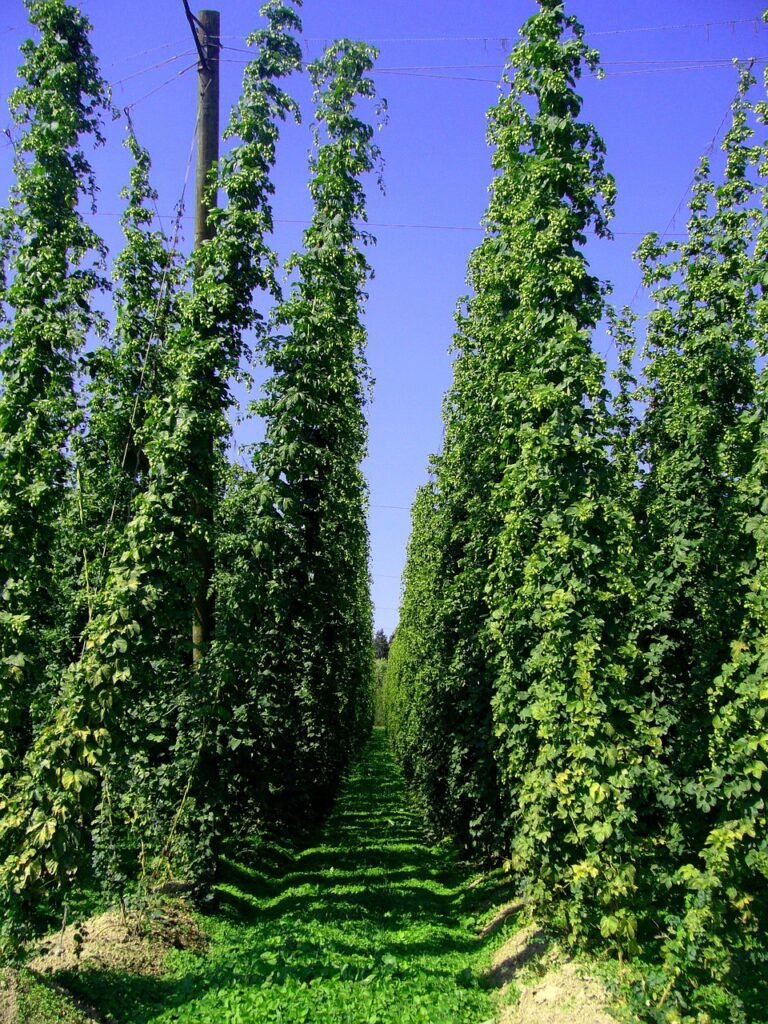
Where to Find Wild Hops in the Appalachian Region
Wild hops prefer:
- riverbanks
- the edges of old farmlands
- sunny slopes
- abandoned homestead sites
- forest edges
- places where the soil is rich and well-drained
If you find a vine with heart-shaped leaves, rough to the touch, and papery green cones that crumble lightly between your fingers, you’ve found her.
Harvest when the cones feel papery, dry, and aromatic, usually late summer into early fall.

How to Use Wild Hops
Wild Hops Tea (Calming & Bitters Blend)
Ingredients
- 1–2 teaspoons dried wild hop flowers
- 1 cup hot water (just under boiling)
- 1 teaspoon honey or maple syrup (optional)
- A slice of lemon or fresh mint (optional)
Directions
- Place hops in a tea strainer or muslin bag.
- Pour hot water over the flowers and cover the cup to keep the aromatics in.
- Steep for 5–7 minutes — longer will make it even more bitter and sedative.
- Add honey or lemon if desired.
- Sip before bedtime for deep relaxation.
More Wild Hops Recipes
1. Wild Hops Sleepy Syrup
A gentle nighttime tonic for stress, strong nerves, and restless sleep.
Ingredients:
- 1 cup water
- 1 cup raw honey
- 2 tbsp dried wild hops
- 1 tbsp chamomile
- 1 tsp vanilla extract
Instructions:
Simmer water with hops and chamomile for 10 minutes. Strain. Stir in honey and vanilla while warm. Bottle and refrigerate. Take 1–2 teaspoons before bed.
2. Hops-Infused Apple Cider Vinegar (Digestive Bitter)
Perfect for stimulating digestion before heavy meals.
Ingredients:
- Small handful of dried hops
- Apple cider vinegar to cover
- Glass jar with non-metal lid
Instructions:
Fill jar 1/3 with hops, cover with ACV, and shake. Steep 2–4 weeks, shaking occasionally. Strain and store. Use ½ teaspoon before meals or add to salad dressings for a floral-bitter twist.
3. Wild Hop & Lavender Bath Soak (Relaxing Muscle Soother)
A luxurious herbal bath blend for nervous tension and sore muscles.
Ingredients:
- ½ cup dried hops
- ¼ cup dried lavender
- ¼ cup Epsom salt
- Muslin bag
Instructions:
Mix herbs and salts together and spoon into a muslin bag. Tie tightly. Drop into warm bathwater and soak 20 minutes. The hops’ natural calming compounds help quiet the mind and relax tight muscles.
4. Hops Simple Bitter Tea
- 1 teaspoon dried hops
- 8 oz hot water
- Steep 10 minutes
This is a bitter tea, so a little honey helps. Sip 30 minutes before bed.
5. Hops Sachet
Sew dried hops into a small cotton or muslin sachet.
Slip it into your pillowcase to calm the nervous system as you sleep.
6. Tincture
A few drops before bedtime can settle the mind beautifully.
⚠️ A Few Safety Notes
Wild hops are powerful. Use with care if:
- you have depression (it may worsen low mood)
- you have estrogen-sensitive conditions
- you are pregnant
Never mix hops with sedatives or alcohol.
And as always, test small and see how your body responds.
The Spirit of the Plant
In Appalachian herbal folklore, hops represents:
- surrender
- rest
- emotional unwinding
- releasing what we can’t carry anymore
It’s the plant you turn to when you’ve been strong for too long and your bones finally whisper, “Baby, sit down and rest a minute.”
Why Wild Hops Belong in Your Modern Apothecary
Hops is an herb for:
- the anxious
- the overwhelmed
- the overworked
- the emotionally bruised
- the spiritually weary
It carries a motherly quality — not soft like chamomile, but honest.
It says:
“Come here. Calm down. Be still. You don’t have to fight so hard anymore.”
If you enjoy stories like this, you’ll love the other life lessons & memories I’m sharing on The Appalachian Sage. …………And if you’re ever in the mood to browse something pretty, you can stop by my Etsy shop, The Appalachian Sage Shop, where I pour the same love and kindness into each design.