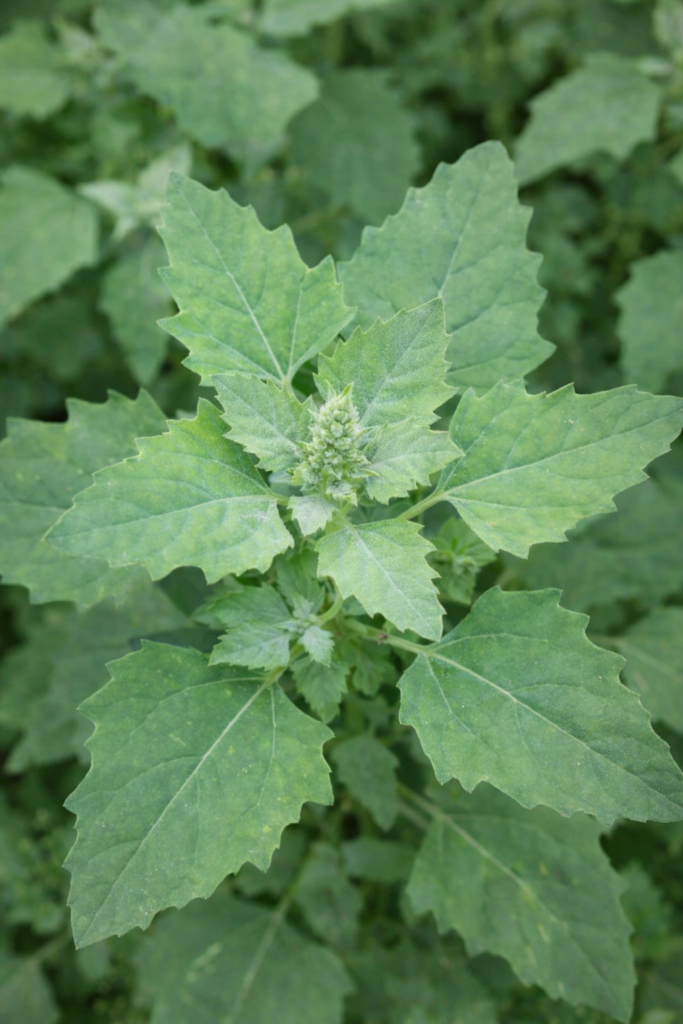
Chenopodium album
Common names:
Lamb’s quarters, goosefoot, pigweed, wild spinach, fat-hen
Latin name:
Most commonly Chenopodium album L. (in some modern botany you’ll also see it moved into Blitum album, but herbal folks still mostly use Chenopodium album.)
Lamb’s quarters is an annual wild green in the amaranth family. The leaves have that “goosefoot” shape and a soft, mealy coating—especially on the younger top leaves—that looks almost silvery in the sun.
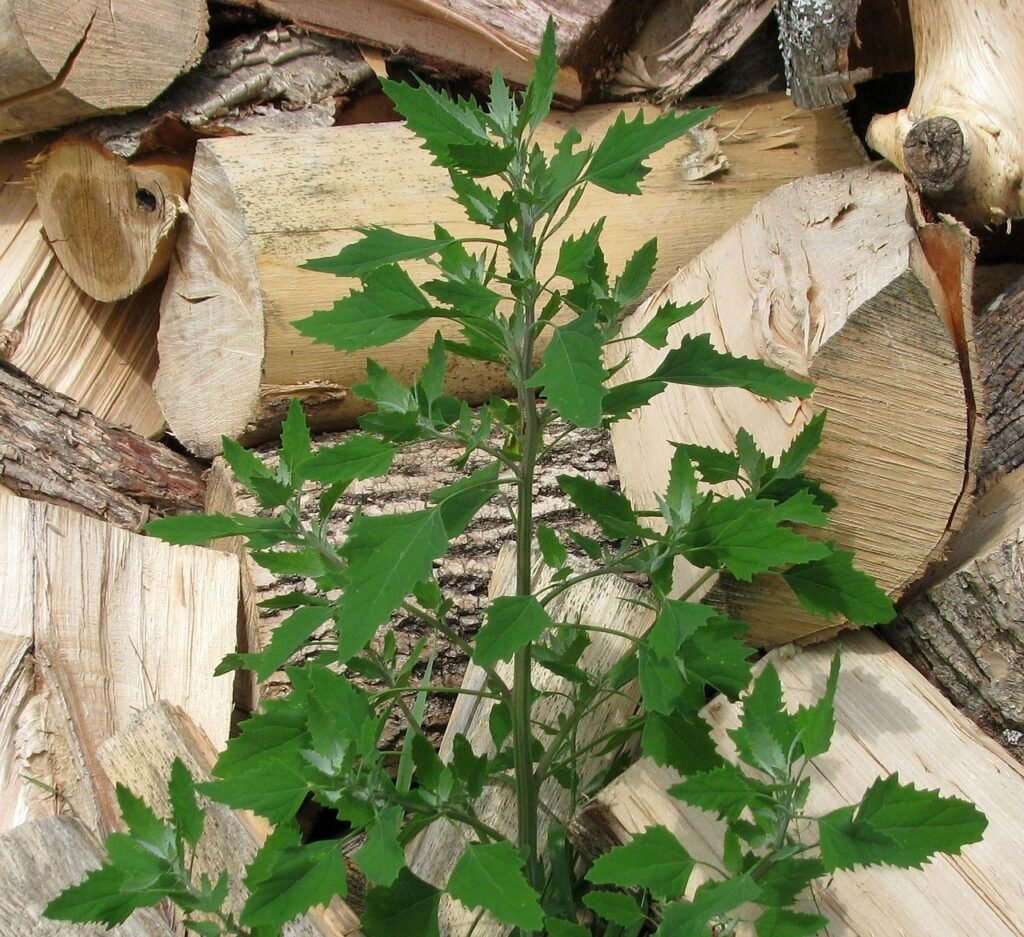
Where Lamb’s Quarters Grows
This plant is a world traveler. It’s considered native to Europe and parts of Asia, but now grows across:
- North America – gardens, barn lots, field edges, vacant lots
- Central & South America – often eaten as one of the “quelites” in Mexican cuisine
- Africa – grown both as a weed and deliberate food crop in some regions
- Australia & New Zealand – common wild weed in disturbed soil
If there’s rich, disturbed ground—gardens, compost piles, manure-fed fields—there’s a good chance lamb’s quarters is nearby.
Nutritional & Phytochemical Profile
Lamb’s quarters is often called “wild spinach” for a reason. Per weight, the young leaves can be as or more nutrient-dense than many cultivated greens.
Major Nutrients
Approximate nutrients in 100 g fresh lamb’s quarters leaves (varies with soil and species):
- Vitamin A (as beta-carotene): high
- Vitamin C: significant amounts
- Vitamin K: present in notable levels (like many leafy greens)
- B-vitamins: especially folate
- Minerals: calcium, magnesium, potassium, manganese, iron, and some zinc
- Protein: higher than many garden greens for the same weight
- Fiber: decent soluble and insoluble fiber
These don’t make it medicine in the pharmaceutical sense—but they do make it a deeply nourishing wild vegetable.
Key Plant Constituents (and what they’re known for)
Again, these are general properties studied in plants, not promises of effects in your body. Always think “supports” and “may help,” not “treats” or “cures.”
- Flavonoids – especially quercetin, kaempferol, rutin
- Known in research for antioxidant and general cell-protective properties.
- Phenolic acids – such as ferulic and p-coumaric acids
- Studied for antioxidant and general tissue-supportive actions.
- Saponins
- Soapy-like compounds; in small dietary amounts they’re just part of the plant’s chemistry.
- Oxalic acid
- Same family of compound found in spinach and sorrel. Gives a slight tang. Large amounts may be an issue for people prone to kidney stones.
- Nitrates (especially in fertilized soils)
- Common in leafy greens; very heavy, daily use of highly fertilized plants may not be ideal.
Traditional & Cultural Uses
Europe
- Used as a spring green when little else was available.
- Often boiled or steamed like spinach, mixed with nettles or other greens.
- In some areas it went into simple peasant soups and porridges as a mineral-rich “tonic” food after winter.
India & South Asia
- Known as bathua in Hindi.
- Common in parathas (flatbreads), saag dishes, and mixed green curries.
- Considered a strengthening, everyday food—especially in winter and early spring.
Mexico & Latin America
- One of the “quelites” (traditional wild greens).
- The tender tops are sautéed with garlic, onions, tomatoes, or chilies and eaten with tortillas or eggs.
- Often treated like spinach and valued simply as a tasty, nutrient-dense vegetable.
Folk Herbal Traditions
In many folk systems (Appalachian, European, and others), lamb’s quarters shows up as:
- A nutritive spring green when people talk about “blood-building” or “spring tonics”—usually meaning a mineral-dense, nourishing food after winter scarcity.
- A cooking green for the very young, the elderly, or those needing gentle nourishment, added to soups, broths, and porridges.
Synergy With Other Wild Allies (like Burdock)
You’ll often see lamb’s quarters mentioned alongside:
- Burdock root (Arctium lappa)
- Dandelion greens (Taraxacum officinale)
- Nettle (Urtica dioica)
In traditional practice, these plants are combined in:
- Broths and soups – for a pot full of minerals and bitter greens.
- Vinegars and tonics – a jar of mixed roots and leaves covered in apple cider vinegar, used in small culinary amounts for salads, greens, and beans.
The idea is nutritive synergy: lamb’s quarters brings vitamins and gentle greens, while burdock and dandelion bring deeper roots and bitters. Together, they make a more complete “food-tonic” rather than a single isolated herb.
I have to be careful what I say here but if you do your research, you can find healing recipes far more potent than what you’ll find here…. The Canadian Indian tribe,
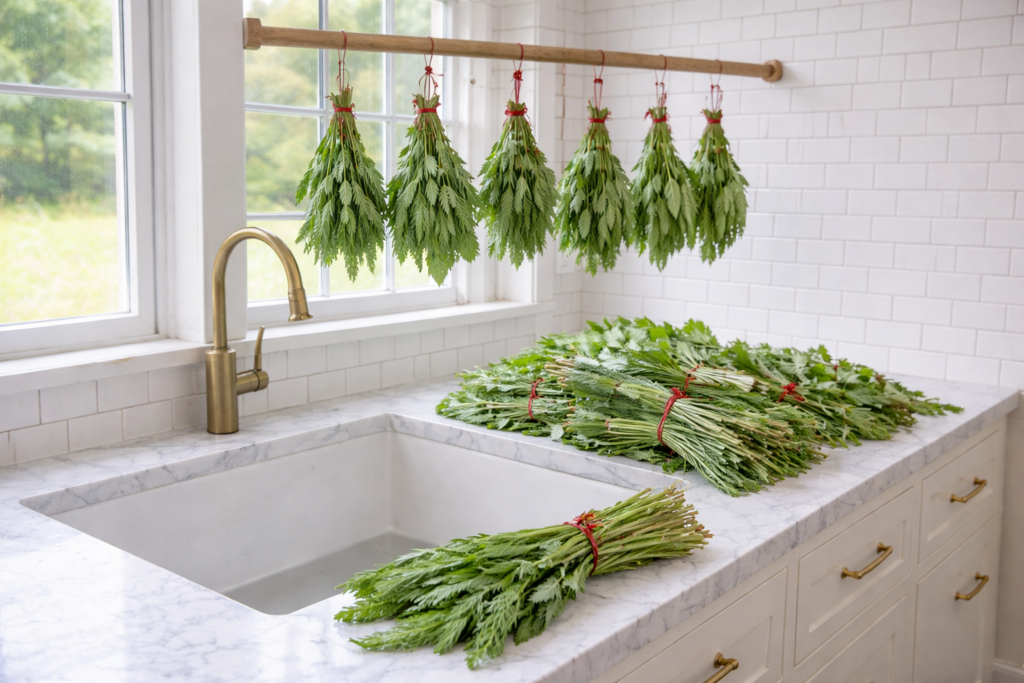
Kitchen & Apothecary Uses
(For education only – not medical advice. Always correctly ID plants & talk with a professional if you have medical conditions, are pregnant, or take medications.)
1. Lamb’s Quarters as Food
Basic Foraged Greens (like spinach)
- Young tops & leaves (before the plant gets tough)
- Rinse well and blanch 1–2 minutes in boiling water.
- Drain, then sauté in:
- a little olive oil or bacon grease
- garlic or onions
- pinch of salt, pepper, a squeeze of lemon or vinegar
This removes some oxalic acid and gives you a tender, mild side dish.
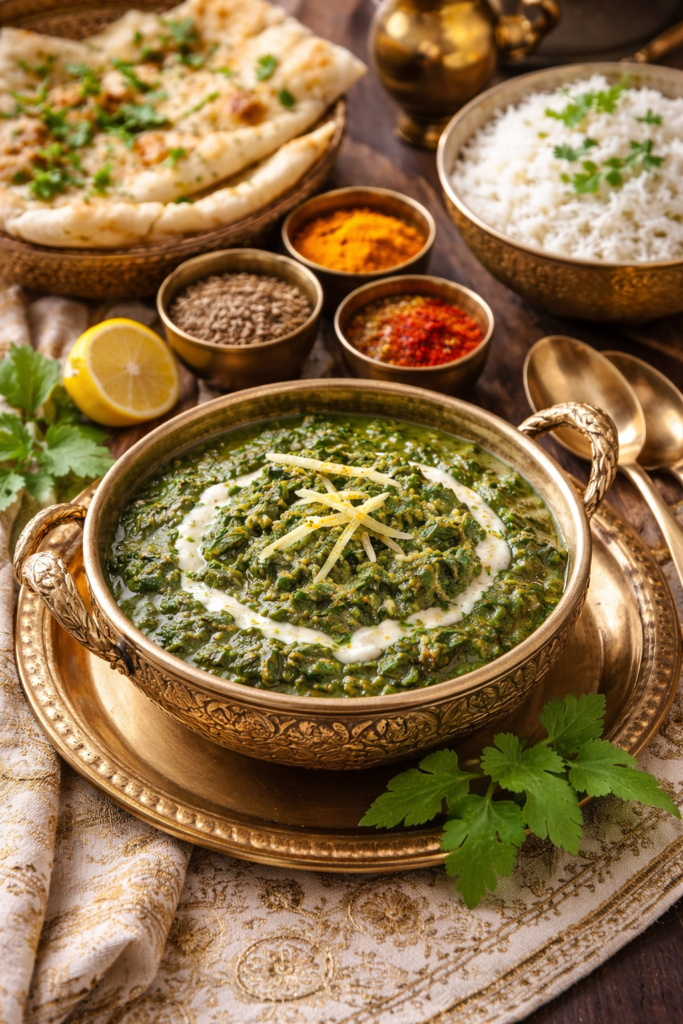
Bathua-Style Saag (Indian-inspired)
- 2 cups chopped lamb’s quarters (young leaves)
- 1 cup other mild greens (spinach, chard, etc.)
- 1–2 Tbsp ghee or oil
- 1 small onion, chopped
- 1 clove garlic + small piece ginger, minced
- Pinch turmeric, cumin, coriander, and salt
- Blanch the greens 2–3 minutes, drain, and roughly puree or chop.
- Sauté onion, garlic, and ginger in ghee/oil until soft.
- Add spices for 30 seconds, then stir in greens.
- Cook together 5–10 minutes; finish with a splash of cream or yogurt if you like.
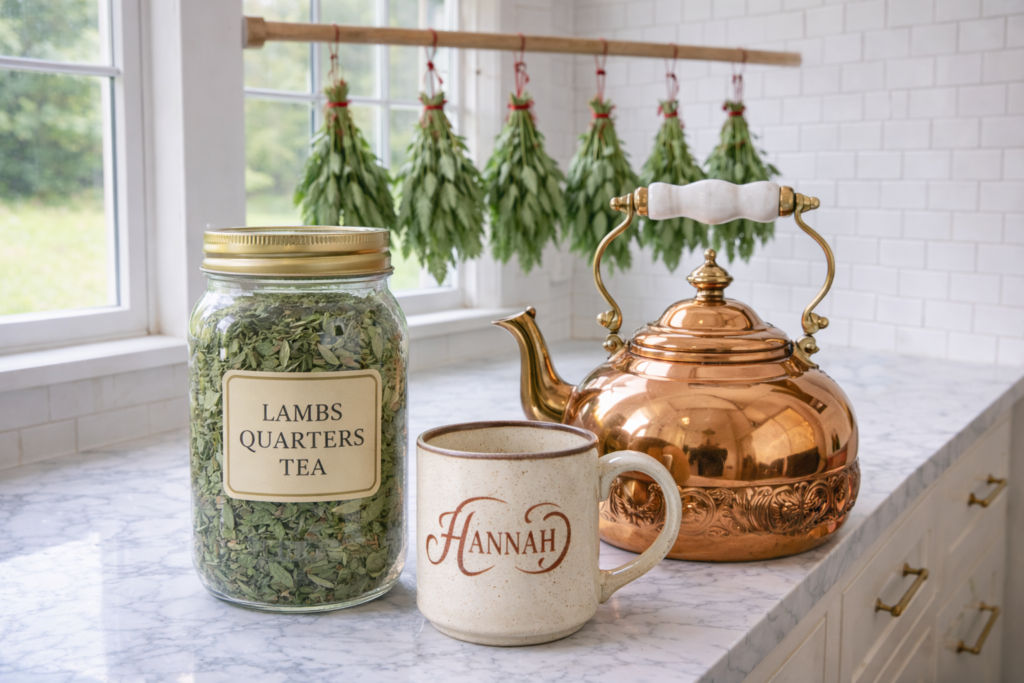
2. Simple Lamb’s Quarters Tea (Infusion)
This is more of a nutritive herbal tea, not a strong medicinal dose.
- 1–2 tsp dried lamb’s quarters leaf (or 1–2 Tbsp fresh, chopped)
- 1 cup just-boiled water
- Place herb in a jar or mug.
- Pour hot water over, cover.
- Steep 10–15 minutes.
- Strain and drink as a mild, mineral-rich tea.
Flavor is similar to a green/herbal tea; you can blend with mint, lemon balm, or chamomile.
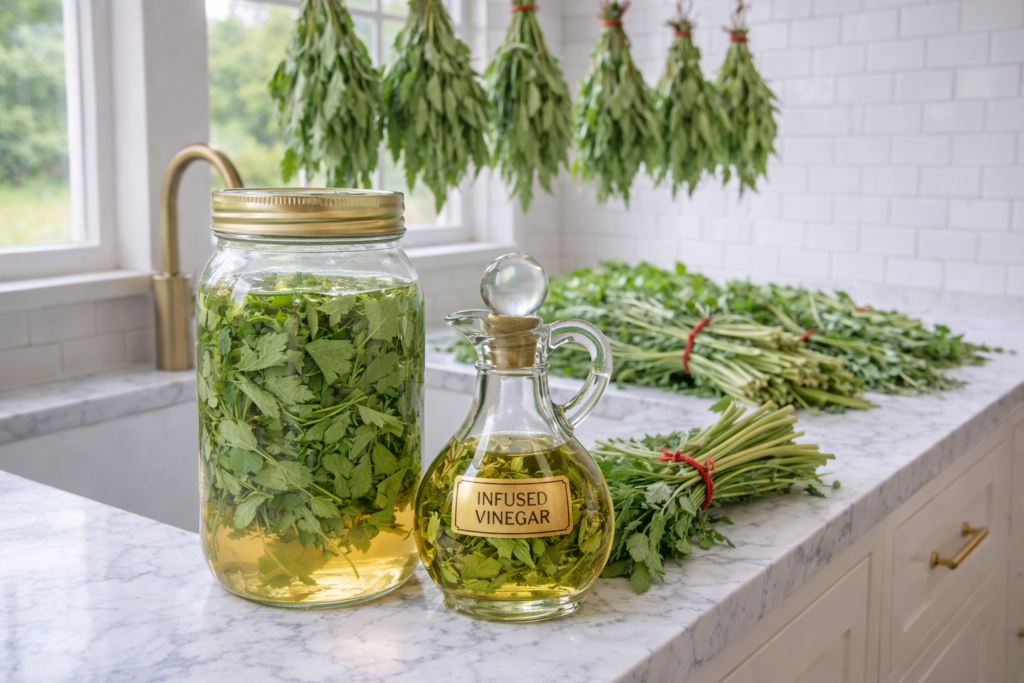
3. Lamb’s Quarters Vinegar (Kitchen Mineral Tonic)
- Clean, chopped fresh lamb’s quarters leaves & tender stems
- Apple cider vinegar
- Fill a jar halfway with chopped herb.
- Cover completely with vinegar; poke to remove air bubbles.
- Cap with plastic-lined lid (vinegar corrodes metal).
- Steep 2–4 weeks, shaking now and then.
- Strain. Use splashes in:
- salad dressings
- greens and beans
- soups and stews
You’re mainly getting flavor and minerals here, not a “medicine.”
4. Basic Tincture (Leaf & Young Tops)
This is for folk-herbal use and study—not a recommendation to self-treat illness.
- Fresh lamb’s quarters leaves and young tops, finely chopped
- 80-proof vodka or brandy (about 40% alcohol)
A classic folk method:
- Loosely fill a jar with chopped fresh plant.
- Cover with alcohol so it’s 1–2 inches above the herb.
- Label with plant, alcohol, and date.
- Steep 4–6 weeks in a dark cupboard; shake when you remember.
- Strain and store in a dark bottle.
Herbalists who use this generally give small, food-like amounts and treat it more as a nutritive green extract rather than a strong medicine.
5. Lamb’s Quarters Oil & Salve (for experimenters)
There isn’t a big traditional record of lamb’s quarters as a salve herb, but if you want to experiment gently:
Infused Oil
- Dried (important!) lamb’s quarters leaf
- Olive oil or other carrier oil
- Fill a jar 1/3 with crumbled, fully dried herb.
- Cover with oil to the top.
- Steep 4–6 weeks, warm place but not hot, shaking now and then.
- Strain well.
Simple Salve Base
- 1 cup infused oil
- 1 oz (about 28 g) beeswax
- Gently warm oil and beeswax until melted.
- Pour into tins or jars and cool.
You could combine this with burdock root oil or plantain for a more typical “green salve,” used externally as a general soothing skin balm (again—no disease claims, just comforting, protective moisture).
A Note on Essiac® Tea
You may also hear people talk about Essiac® tea, a blend of herbs that became known in Canada in the early 1900s through René Caisse, a Canadian nurse. Caisse said she learned the recipe from an Ojibwe (Anishinaabe) medicine man, and for many years she shared the formula as an herbal support tea.
Today, you’ll find lots of stories online about Essiac and serious illnesses, especially cancer. It’s important to know that major medical organizations do not consider Essiac a proven treatment, and clinical research so far has not shown clear benefits for cancer or other serious diseases. Some sources also raise concerns about possible side effects or interactions with medications. If you want to know the true story, it used to be on YouTube if the powers that be have not banned it yet… It’s worth watching…. WELL WORTH knowing…. Make your own mind up after careful research.
If you’re curious, Essiac is something to research thoughtfully and prayerfully on your own, and always discuss with a qualified healthcare provider before trying—especially if you have a diagnosed condition, are pregnant, or are taking prescription medicines. In my work here at The Appalachian Sage, I mention Essiac as part of herbal folklore and history, not as medical advice or as a recommendation to treat or cure any disease.
Safety Notes
- Oxalates: Like spinach and sorrel, lamb’s quarters contains oxalic acid.
- Blanching and discarding the water reduces this.
- People with a history of kidney stones or certain kidney issues are often advised to limit high-oxalate foods—so they should talk with a professional before making this a staple.
- Nitrates: Plants grown in very heavily fertilized soils may accumulate more nitrates—similar to some lettuces and beets. Moderate, varied use is the safest route.
- Identification:
- Always be 100% sure you have lamb’s quarters, not a look-alike.
- When in doubt, skip it or double-check with a good field guide or local plant person.
- Pregnancy / medications: As with most wild herbs, pregnant or breastfeeding folks, and those on important meds, should check in with a knowledgeable practitioner before heavy or long-term use of any new plant.
If you enjoy stories like this, you’ll love the other life lessons & memories I’m sharing on The Appalachian Sage. …………And if you’re ever in the mood to browse something pretty, you can stop by my Etsy shop, The Appalachian Sage Shop, where I pour the same love and kindness into each design.