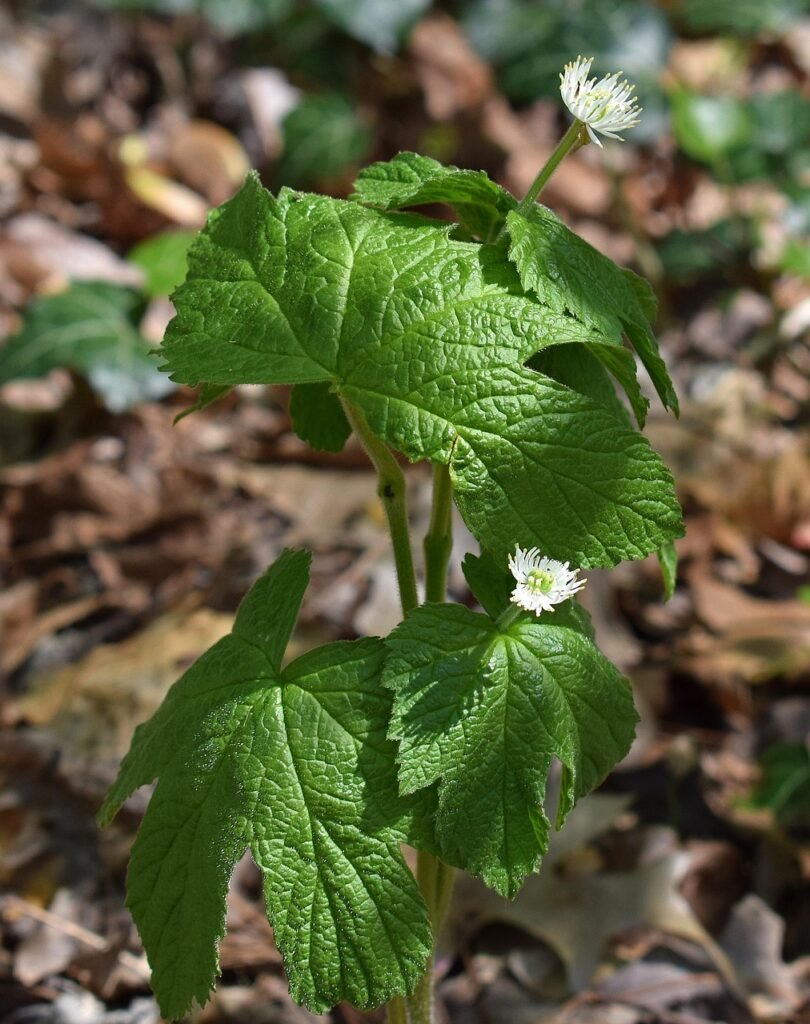
Goldenseal (Hydrastis canadensis) is a woodland plant native to eastern North America and has been valued for generations in traditional herbal practice. The part used medicinally is the root and rhizome, which are bright yellow on the inside and naturally bitter. Historically, Goldenseal was used to support the body during times of imbalance, especially where the body’s natural defenses and tissues were under strain. Because it is a slow-growing forest plant, it was never considered an everyday herb, but rather one that was used with intention and respect.
Today, Goldenseal is rarely used as a whole, wild plant and is most often found in cultivated, processed forms. Common modern forms include capsules, powdered root, liquid extracts (tinctures), and topical preparations such as salves or washes. Due to overharvesting in the past, ethical herbalists now rely on farm-grown Goldenseal or carefully formulated products that combine it with other herbs. Beginners should understand that Goldenseal is considered a short-term herb, not something meant for daily or long-term use, and its strength is one reason it continues to be respected in both traditional and modern herbal circles.
Goldenseal is one of the most well-known medicinal plants of North America, yet also one of the most misunderstood and overused. Revered for generations by Indigenous healers and later embraced by early American herbalists, Goldenseal earned a reputation as a powerful ally for infections and inflammation. Today, it stands as both a respected medicinal plant and a cautionary tale in herbal ethics.
What Is Goldenseal?
Goldenseal (Hydrastis canadensis) is a low-growing woodland perennial native to eastern North America. It thrives in rich, shaded hardwood forests and was once abundant throughout Appalachia, the Ohio River Valley, and parts of the Northeast. Due to overharvesting, it is now considered at risk or protected in many areas.
The plant produces:
- A single white flower in spring
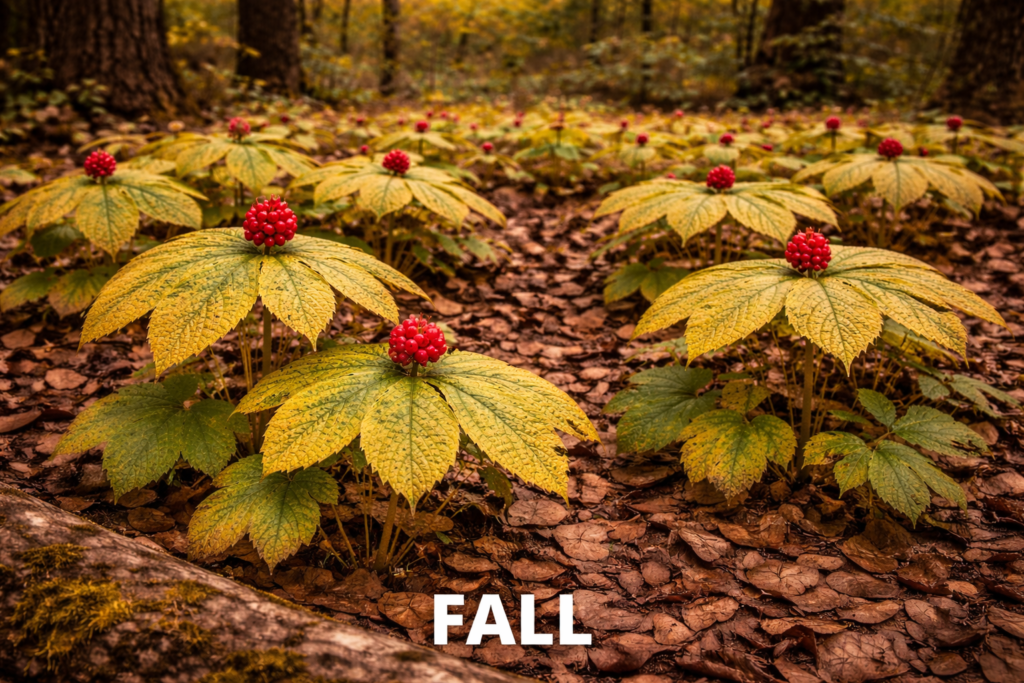
- A raspberry-like red fruit later in the season
- Thick, knotted yellow rhizomes (roots), which are the primary medicinal part
The bright yellow color of the root is where Goldenseal gets its name.
Is Goldenseal Eaten?
No.
Goldenseal is not a food herb. The root is extremely bitter and biologically active. It was never used as something you “eat,” cook with, or consume casually like dandelion, burdock, or nettle.
Historically, when it was taken internally, it was used:
- In very small amounts
- For short periods only
- For specific needs, not daily nourishment
Is Goldenseal Used as a Tea?
Sometimes, but cautiously — and less so today.
Historically:
- Goldenseal root was occasionally prepared as a decoction (simmered root tea)
- Mostly used as a wash, gargle, or rinse, not drunk freely
- Internal tea use was limited and short-term
Modern herbal practice:
- Tea is no longer the preferred method
- It’s difficult to dose accurately
- Can be harsh on the stomach and mucous membranes
- Easier to overuse unintentionally
Because Goldenseal is so bitter and potent, tea is often considered too aggressive for most people.
How Goldenseal Is Most Commonly Used Today
Today, Goldenseal is more often found as:
- Capsules (measured doses)
- Tinctures (very small amounts)
- Topical washes or salves
- Combined formulas with gentler herbs
Modern herbalists emphasize: Goldenseal is not a food herb and is not traditionally eaten. While it was sometimes prepared as a tea in the past, modern herbal practice favors measured preparations such as tinctures or capsules due to its strength
- Short-term use only
- Never daily
- Never long-term
- Often combined with other plants to soften its action
Key Active Components
Goldenseal’s medicinal reputation comes primarily from its isoquinoline alkaloids, especially:
Berberine
The most studied compound in Goldenseal, berberine is strongly antimicrobial. It inhibits the growth of bacteria, fungi, protozoa, and some viruses by interfering with microbial cell replication and enzyme systems. Berberine is also bitter, stimulating digestive secretions and bile flow.
Hydrastine
Hydrastine acts on smooth muscle and blood vessels. Historically, this led to its use in conditions involving excessive secretions or bleeding. It contributes to Goldenseal’s astringent and tightening qualities.
Canadine (Tetrahydroberberine)
This alkaloid has mild sedative and nervous-system effects, helping explain why Goldenseal was sometimes used in states of exhaustion or irritation associated with illness.
Together, these compounds make Goldenseal pharmacologically active, not a gentle herb.
Traditional Indigenous Use
Native American tribes, including the Cherokee and Iroquois, used Goldenseal thoughtfully and sparingly.
Traditional uses included:
- Washes for skin infections and wounds
- Eye rinses in very dilute preparations
- Digestive support for bitter stimulation
- Oral care for mouth and gum issues
- Dye for fabrics and ceremonial items
Importantly, Goldenseal was not used daily and was often combined with other plants rather than taken alone.
Appalachian and Early American Herbalism
As European settlers learned from Indigenous healers, Goldenseal became widely adopted in American folk medicine.
It was commonly used for:
- Upper respiratory infections
- Digestive infections
- Mouth and throat inflammation
- Skin conditions
- Recovery after illness
By the 1800s, Goldenseal was heavily commercialized and marketed as a “cure-all,” which eventually led to overharvesting and population decline.
Modern Herbal Use (With Caution)
Today, Goldenseal is still valued, but ethical herbalists emphasize limited, short-term use only.
Common modern applications include:
- Acute infections (short duration)
- Oral and throat support
- Digestive infections
- External washes (diluted)
Goldenseal is not recommended for:
- Long-term daily use
- Preventive supplementation
- Pregnancy or breastfeeding
- Use without clear indication
Because berberine affects gut flora and liver enzymes, prolonged use can disrupt normal physiological balance.
Why Goldenseal Should Not Be Overused
Goldenseal teaches an important herbal lesson:
Strong medicine is meant for strong need.
Overuse can lead to:
- Disruption of beneficial gut bacteria
- Mucosal dryness and irritation
- Liver enzyme interference
- Reduced effectiveness over time
This is why traditional practitioners used it acutely, not chronically.
Sustainability and Ethical Use
Goldenseal is now considered:
- At risk in many states
- Protected from wild harvesting
- Best sourced from cultivated plants only
Responsible herbalists:
- Avoid wild-harvested Goldenseal
- Use alternatives when possible (Oregon grape, barberry)
- Educate rather than exploit the plant’s reputation
Safer Alternatives with Similar Action
Several plants provide berberine-like support without the same ecological pressure:
- Oregon grape root (Mahonia aquifolium)
- Barberry (Berberis vulgaris)
- Yellowroot (Xanthorhiza simplicissima)
These plants can often replace Goldenseal in formulas.
Goldenseal’s Deeper Lesson
Goldenseal is not a daily tonic. It is a situational ally — powerful, effective, and deserving of respect.
Its story reminds us that:
- Not all herbs are meant for constant use
- Popularity can harm a plant
- Wisdom includes restraint
Goldenseal Timeline
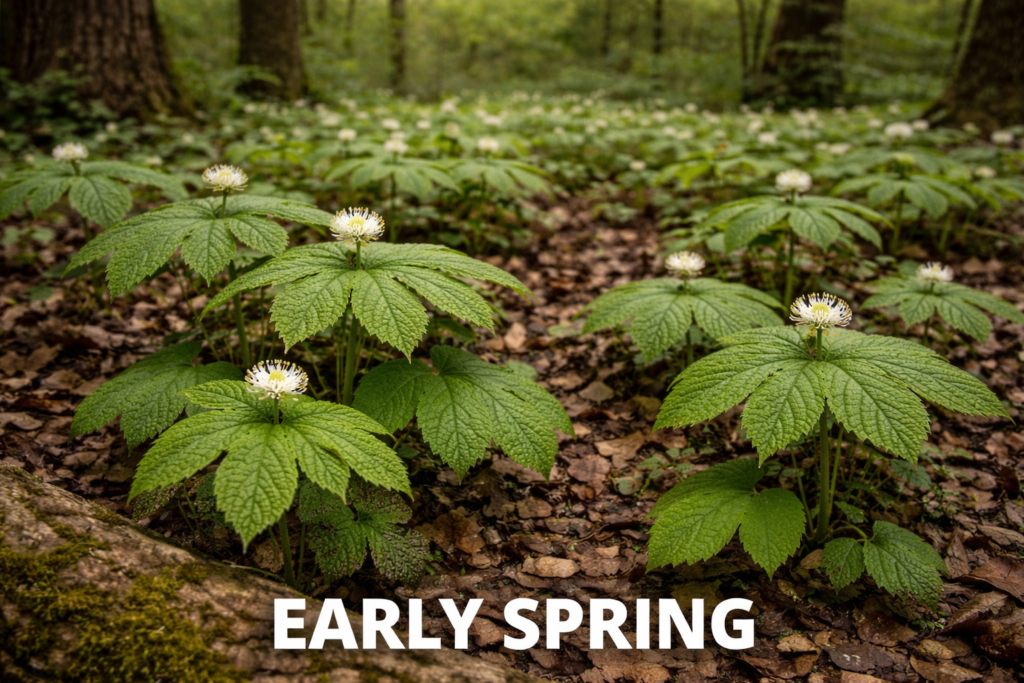
🌱 Early Spring
- One leaf emerges first (basal leaf)
- Soon after, the second leaf (stem/flowering leaf) appears
- Small white flower blooms (no petals, just stamens)
➡️ NO red fruit yet
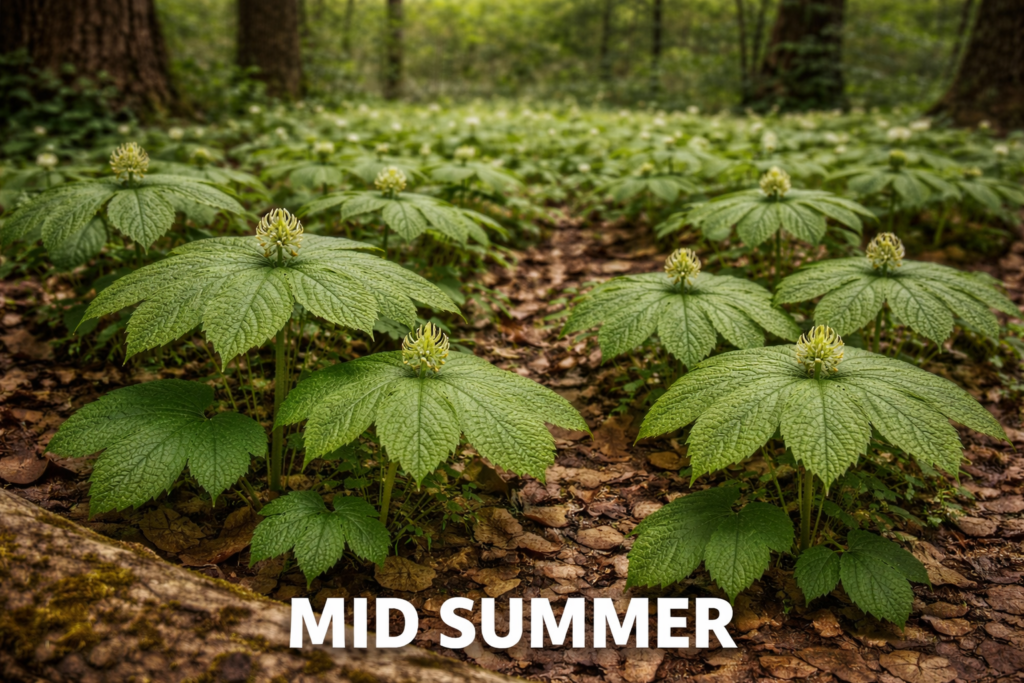
🌸 Late Spring → Early Summer
- Flower fades
- Ovary begins to swell
🍓 Mid to Late Summer
- The red, raspberry-like fruit forms
- It sits at the center above the upper (flowering) leaf
- Plant now has:
- Two leaves
- One red fruit cluster
✔️ This is the stage most photos label as “late summer”
Why People Say “Spring Berry” (and Why It’s Wrong)
People see:
- The leaf that carried the flower in spring
- And later see that same leaf carrying the fruit
They collapse the timeline and say “spring berry,” but botanically:
The leaf forms in spring — the fruit forms later.
Goldenseal produces its red fruit in mid to late summer, though the flowering stem that bears the fruit first appears in spring.
One More Important Note (you’ll appreciate this)
Not all plants fruit every year. Some photos show:
- Flowering plants without fruit
- Fruiting plants without visible flowers
That’s normal too.
Bottom line
✔ Flower = spring
✔ Red fruit = mid to late summer
✔ Same stem, different timing
⚠️ Disclaimer
This article is for educational purposes only and is not intended to diagnose, treat, cure, or prevent disease. Consult a qualified healthcare practitioner before using medicinal herbs, especially if pregnant, nursing, or taking medications.
If you enjoy stories like this, you’ll love the other life lessons & memories I’m sharing on The Appalachian Sage. …………And if you’re ever in the mood to browse something pretty, you can stop by my Etsy shop, The Appalachian Sage Shop, where I pour the same love and kindness into each design.