The Quiet Root of the North Slopes
In Appalachia, ginseng was never loud.
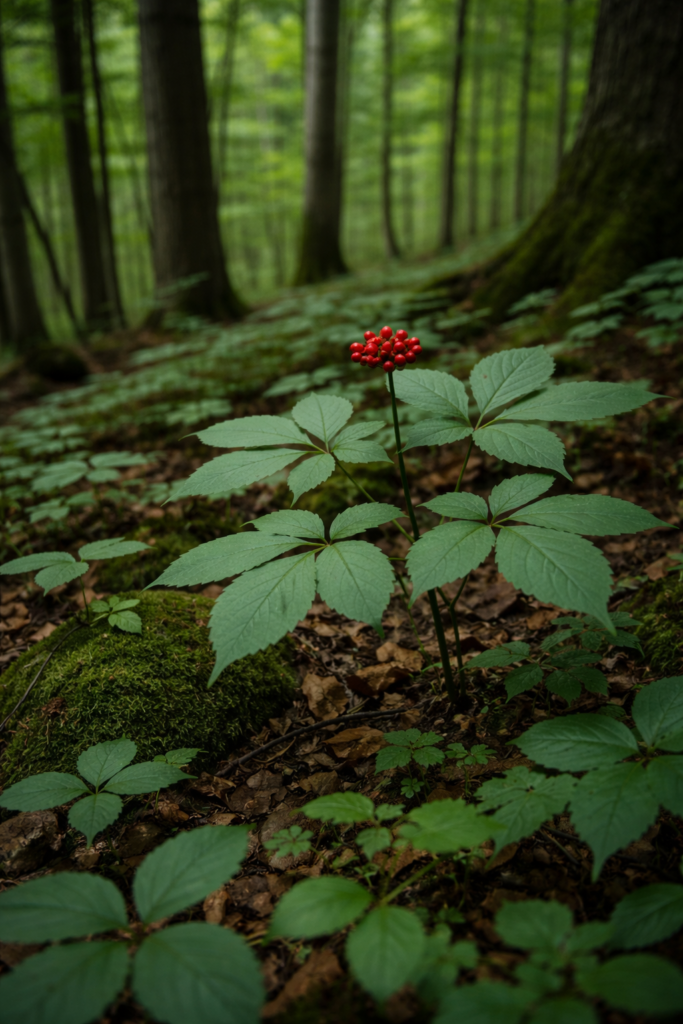
It didn’t announce itself. It didn’t grow where everyone walked. It stayed tucked into north-facing hillsides, shaded hollers, and rich forest soil — exactly where your family had it.
And like so many Appalachian families, your dad let people dig it because he didn’t know how to make money from it. That wasn’t ignorance — it was culture. Mountain people didn’t grow up thinking in terms of global markets. They thought in terms of use, need, and neighborliness.
Meanwhile, that same root was being shipped across oceans and sold for more than most folks made in a week.
What American Ginseng Is
- Botanical name: Panax quinquefolius
- Native to: Eastern North America
- Family: Araliaceae
- Part used: Root
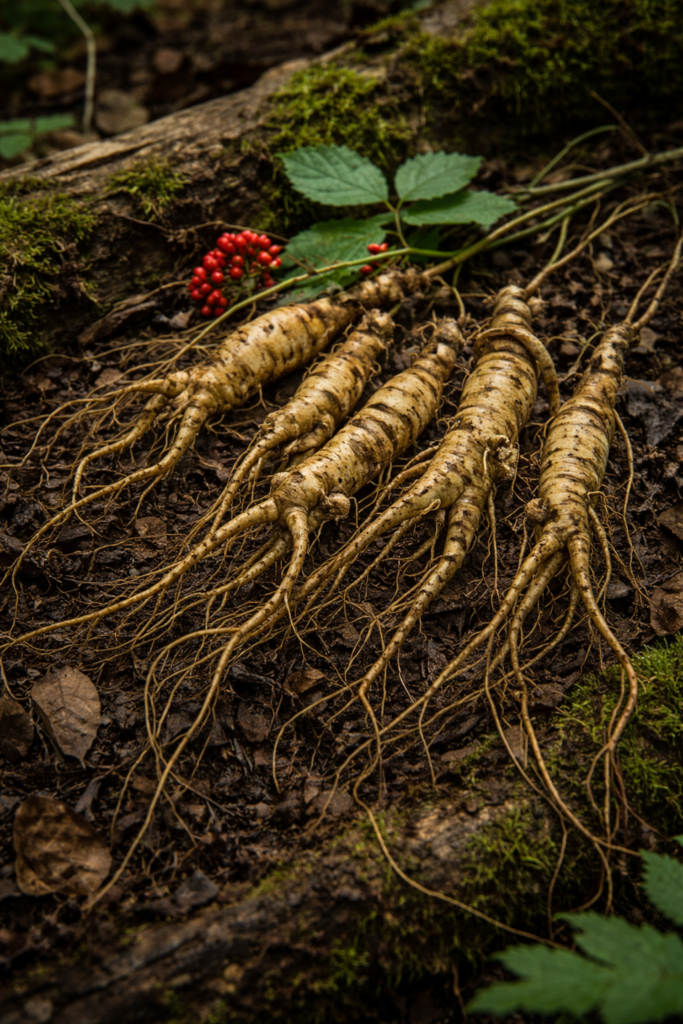
American ginseng is not a weed, not a garden herb, and not fast-growing. It’s a slow, patient woodland root that takes 5–10+ years to mature.
That slowness is part of its power — and its rarity.
American Ginseng
Component Breakdown: What Makes the Root Work
American ginseng isn’t powerful because of one single compound. Its strength comes from a balanced constellation of constituents that work together gently over time. That’s why mountain people said it “builds a body back up” instead of forcing anything.
1) Ginsenosides (The Core Actives)
These are the most studied and most important compounds in ginseng.
What they are
Ginsenosides are triterpene saponins—a class of plant compounds that influence how cells respond to stress, energy demand, and recovery.
American ginseng contains a different balance of ginsenosides than Asian ginseng. It’s generally:
- More cooling
- More calming
- Less stimulating
Key ginsenosides in American ginseng
- Rb1
- Rc
- Rd
- Re
- Rg1 (lower than Asian ginseng)
What they do:
- Help the body adapt to stress instead of crashing
- Support steady energy without spikes
- Encourage recovery after illness or exhaustion
- Modulate immune response rather than overstimulate it
Why Appalachian healers valued this:
People felt stronger without feeling wired or restless. That made it suitable for elders, the sick, and the worn-down.
2) Polysaccharides (Immune & Nourishing Compounds)
These are complex sugars, not sweet sugars.
What they are
Long-chain carbohydrate molecules that:
- Feed immune cells
- Support resilience
- Help regulate inflammation
What they do
- Strengthen immune responsiveness over time
- Support recovery after long sickness
- Nourish the body during weakness or wasting
Mountain language for this:
“It gives a body something to work with.”
This is one reason ginseng was given during convalescence rather than during acute fever.
3) Peptides & Amino Acids (Repair & Signaling)
American ginseng contains small amounts of:
- Arginine
- Glutamine
- Other amino acids
What they do
- Support tissue repair
- Aid circulation and oxygen delivery
- Help the body communicate internally (cell signaling)
Why this mattered:
It supported healing at a cellular level—which is why people slowly regained strength instead of just masking fatigue.
4) Polyacetylenes (Protective Compounds)
These are lesser-known but important.
What they do
- Contribute to antimicrobial and protective effects
- Help explain ginseng’s historical use during epidemics and long winters
- Support nervous system balance
These compounds are part of why ginseng was sometimes said to:
“Help fend off what’s going around.”
5) Trace Minerals (Subtle but Essential)
Wild American ginseng absorbs minerals from deep forest soil, including:
- Iron (small amounts)
- Zinc
- Magnesium
- Manganese
Why this matters
These minerals:
- Support enzyme function
- Aid energy production
- Help explain why wild ginseng was valued more than cultivated
Cultivated ginseng grown in poor soil simply doesn’t carry the same mineral profile.
6) Volatile Oils (Very Small, Still Important)
Ginseng contains tiny amounts of volatile aromatic compounds.
What they do
- Affect mood subtly
- Support nervous system regulation
- Add to the “grounding” feeling people describe
This contributes to ginseng’s reputation for:
- Calm alertness
- Mental clarity without agitation
7) Starches & Fibers (The Hidden Support)
These are often overlooked.
What they do
- Provide slow, steady nourishment
- Support digestion when used correctly
- Help explain why ginseng was sometimes added to broth
This is part of why ginseng felt strengthening, not draining.
How These Components Work Together
Ginseng is not a stimulant.
It’s not a sedative.
It’s not a drug-like hammer.
It works because:
- Ginsenosides regulate stress response
- Polysaccharides support immunity
- Amino acids assist repair
- Minerals and fibers nourish slowly
The whole root matters.
Isolating one compound misses the point.
That’s why Appalachian healers:
- Used small amounts
- Used it for long-term rebuilding
- Saved it for when it truly mattered
Why Wild Appalachian Ginseng Was So Prized
Wild roots:
- Grow slowly (years)
- Develop higher ginsenoside complexity
- Accumulate deeper mineral content
- Carry “character” in root shape (age markers)
Chinese buyers believed:
“The more a root looks like it lived a hard life, the more wisdom it carries.”
Appalachian roots fit that belief perfectly.
Safety & Traditional Wisdom
Old mountain rules around ginseng:
- Don’t take it every day
- Don’t take it when feverish
- Don’t take it late at night
- Less is more
Modern herbalism confirms this restraint was wise.
Appalachian Summary (Plain and Honest)
American ginseng was valued because it:
- Restored instead of forced
- Balanced instead of pushed
- Strengthened without stealing energy later
It was a quiet medicine for quiet strength.
Where Ginseng Grows
Appalachian people didn’t need field guides. They just knew where to look.
Ginseng grows best on:
- North- and east-facing slopes
- Shady hardwood forests
- Rich, well-drained soil
- Under trees like:
- Maple
- Poplar
- Beech
- Hickory
If someone says “north side of the hill,” every old-timer knows exactly what they mean.
That’s ginseng country.
Who Used Ginseng First — and Why
Indigenous Use (Long Before Settlers)
Native peoples of eastern North America used ginseng as:
- A strengthener
- A recovery root
- A life-sustaining tonic
It was not used casually. It was saved for:
- Elders
- Long illness
- Extreme fatigue
- Times of hardship
Appalachian Adoption
Settlers learned from Indigenous neighbors and observation. Ginseng became known as:
- A “life root”
- A restorative
- Something you didn’t take every day — only when truly needed
What Appalachian Folk Healers Used Ginseng For
Appalachian healers didn’t talk about “adaptogens” or “hormone regulation.”
They said ginseng:
- “Puts strength back”
- “Builds a person up”
- “Helps when somebody’s wore down to nothing”
Traditional uses included:
- Extreme exhaustion
- Recovery after long sickness
- Weak lungs
- Low vitality in elders
- Helping people survive hard winters
It was never a quick fix.
What’s Inside Ginseng (Beginner-Friendly)
Ginseng works because of compounds called ginsenosides.
These help:
- Regulate stress response
- Support energy without overstimulation
- Balance systems instead of forcing them
That’s why people felt:
- Stronger, not jittery
- Clearer, not wired
- More resilient over time
Ginseng doesn’t push — it teaches the body how to respond better.
Ginseng and “Granny Healers”
Here’s something important and honest:
Ginseng was not a flashy granny-witch herb.
It wasn’t used in spells or charms much because:
- It was too valuable
- Too slow-growing
- Too respected
Instead, it was:
- Hidden away
- Saved
- Given quietly
Some families kept a piece dried in a jar for years, only using it when nothing else would do.
That’s real Appalachian mysticism — restraint.
Why Outsiders Came Every Year to Dig It
By the 1800s:
- Chinese buyers prized American ginseng highly
- Wild Appalachian ginseng was considered superior
- Root shape, age, and “wild look” mattered
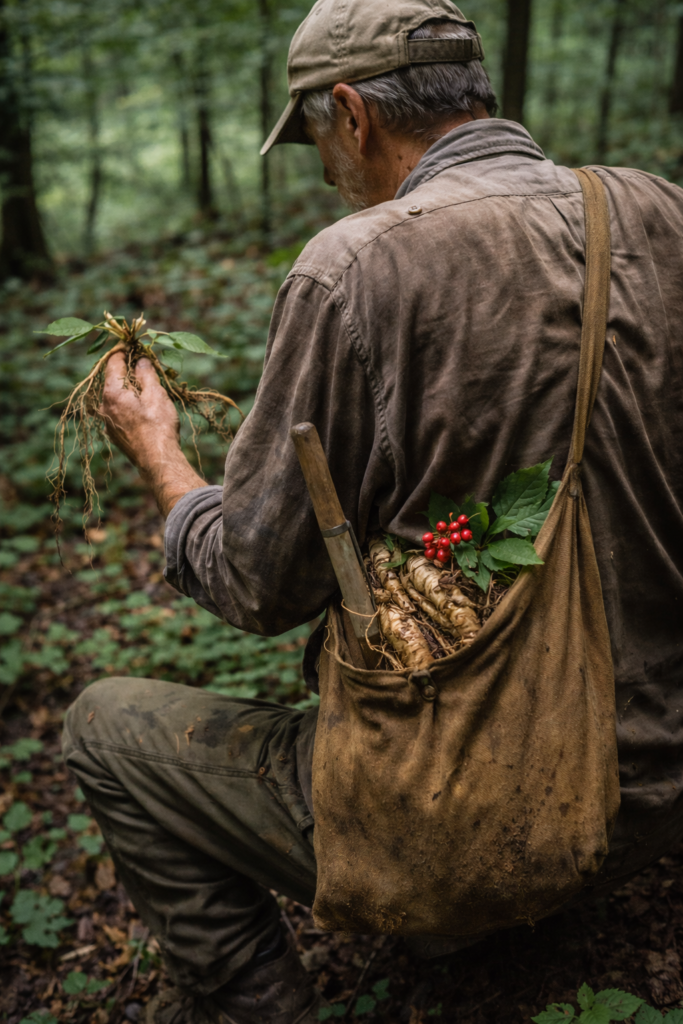
Men known as “sang diggers” came every year, hill to hill, offering:
- Cash
- Trade
- Sometimes little explanation
Many landowners let them dig because:
- It didn’t look like money growing
- It wasn’t food
- It didn’t seem “useful” day to day
Only later did people realize what they’d had.
My Dad would let people come every year to dig Ginseng…. I was curious, looking in the library at school to find the plant that man would spend all weekend digging every year… Later, as we got older, Dad only let one particular man go up on the hill behind the house to dig for ginseng. He would come down every year with a satchel full, load it up, and drive that money out the driveway… I wanted so much to learn that plant and make money myself from it, but back then, information wasn’t as accessible as it is today. I needed Dad to support me in trying, and he just wasn’t interested in ginseng.
How Ginseng Was Traditionally Prepared
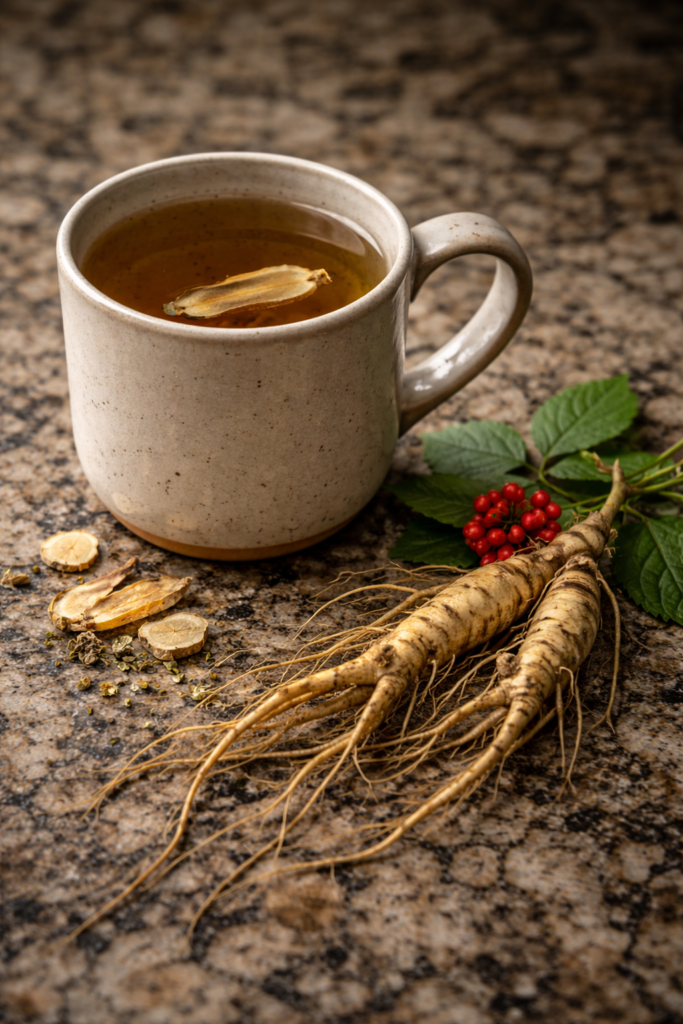
🌿 Tea (Mild)
- Thin slices of dried root
- Simmered gently
- Used short-term
🌿 Chewed Root (Oldest Way)
- Tiny piece chewed slowly
- Especially by elders
🌿 Tincture
- Alcohol extraction
- Very small doses
- Used sparingly
🌿 Food Use
Rare. Sometimes added to broth — but mostly medicinal.
Conservation & Loss
Today:
- Wild ginseng is protected
- Digging is regulated or illegal in many places
- Overharvesting nearly wiped it out
Old-timers used to say:
“It hides now because it’s been mistreated.”
That belief carries weight.
The Deeper Meaning of Ginseng in Appalachia
Ginseng represents:
- Quiet wealth
- Missed opportunity
- Deep wisdom
- The difference between knowing a thing is there and knowing its value
If you enjoy stories like this, you’ll love the other life lessons & memories I’m sharing on The Appalachian Sage. …………And if you’re ever in the mood to browse something pretty, you can stop by my Etsy shop, The Appalachian Sage Shop, where I pour the same love and kindness into each design.