The Immediate-Relief Plant of Appalachia
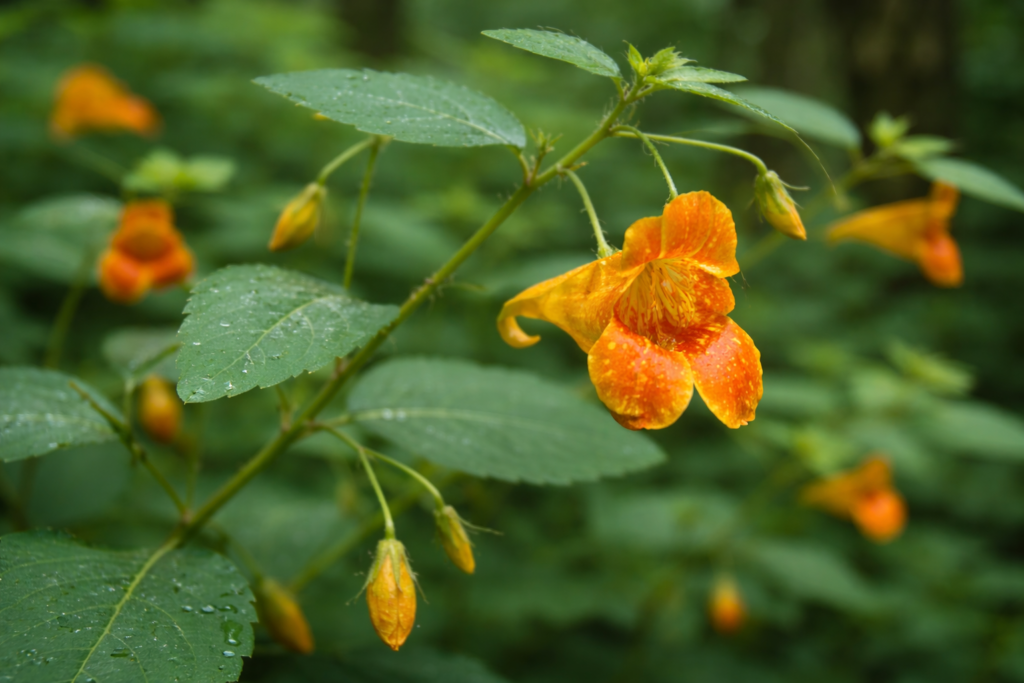
Jewelweed is one of the most trusted and time-tested plants in Appalachian folk healing. Unlike slow tonics or long-term restoratives, jewelweed is known for immediate action, particularly on the skin. It is not subtle, mysterious, or rare — it is practical, responsive, and exact.
Mountain people didn’t romanticize jewelweed. They relied on it because it worked when nothing else did, especially against poison ivy, insect bites, rashes, and heat-based skin reactions.
🌿 Identification & Habitat
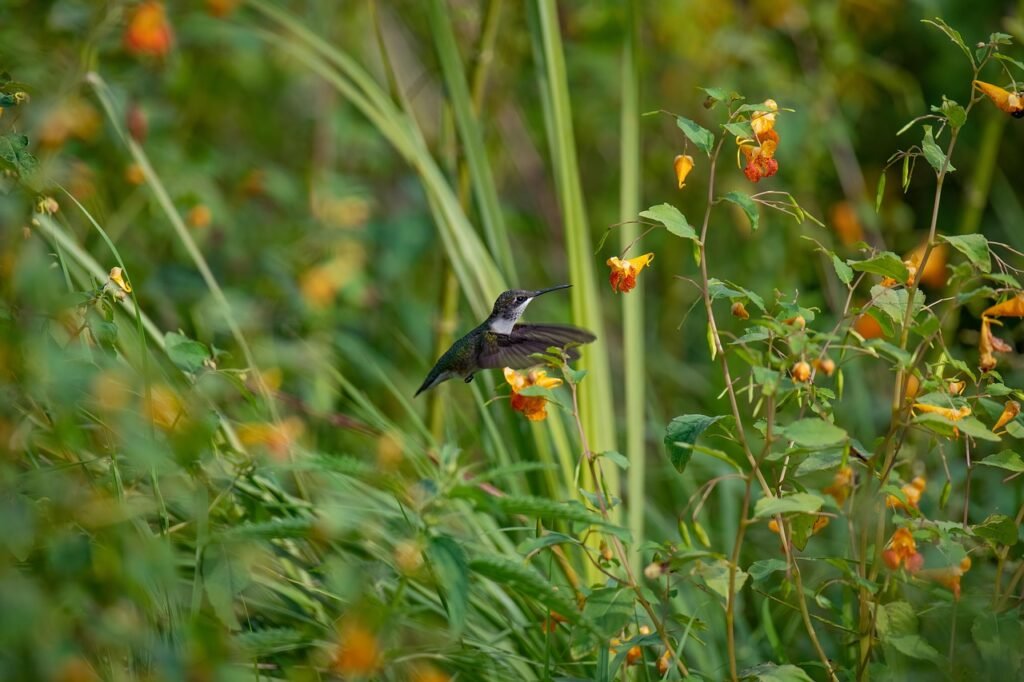
- Annual plant growing 3–5 feet tall
- Hollow, watery stems
- Oval, toothed leaves
- Bright orange or yellow trumpet-shaped flowers
- Seed pods that burst when touched (“touch-me-not”)
Where It Grows
- Along streams and creeks
- Damp woods
- Shaded hollers
- Right beside poison ivy (a key observation)
Its presence near water is essential to its medicine.
🌎 Origins & Cultural Use
Jewelweed is native to eastern North America and was used extensively by:
- Indigenous tribes (including Cherokee-related groups)
- Appalachian folk healers
- Rural households across the eastern U.S.
It was primarily a fresh-use plant, not something stored long-term in traditional practice.
🧪 Component Breakdown — Why Jewelweed Works
Jewelweed’s effectiveness comes from a unique chemical profile suited for topical use.
🔹 Lawsone (Naphthoquinone)
Also found in henna.
Actions:
- Anti-inflammatory
- Anti-itch
- Antimicrobial
This compound helps explain jewelweed’s effectiveness against poison ivy reactions.
🔹 Saponins
Natural surfactant compounds.
Actions:
- Break down urushiol (poison ivy oil)
- Help remove irritants from skin
- Reduce inflammation
This is why jewelweed works best when applied quickly and directly.
🔹 Flavonoids
Including quercetin-like compounds.
Actions:
- Calm histamine response
- Reduce swelling and redness
- Support capillary integrity
🔹 Mucilage & Polysaccharides
Cooling, slippery plant compounds.
Actions:
- Soothe inflamed skin
- Protect damaged tissue
- Reduce burning sensation
🔹 Tannins (Mild)
Light astringency.
Actions:
- Tighten irritated skin
- Reduce weeping rashes
- Support wound closure
🔹 Minerals & Water Content
High water content supports:
- Rapid cooling
- Hydration of damaged skin
- Heat dispersion
🌿 Traditional Uses
External (Primary)
- Poison ivy, oak, sumac
- Insect bites and stings
- Rashes and hives
- Heat rash
- Minor burns
- Nettles
Internal (Secondary, less common)
- Mild anti-inflammatory
- Gentle cooling tea (used sparingly)
Appalachian tradition emphasized external use.
🌿 PREPARATIONS & FULL RECIPES
Jewelweed works best fresh, but can be preserved carefully.
🌱 Fresh Jewelweed Poultice (Traditional Method)
Best for: immediate poison ivy exposure
Ingredients:
- Fresh jewelweed stems and leaves
Method:
- Crush plant until juice releases.
- Rub directly onto affected skin.
- Allow to dry.
- Reapply as needed.
This was often done right in the woods.
🍵 Jewelweed Tea (Cooling Wash or Internal)
Best for: skin washes, mild internal cooling
Ingredients:
- 1 cup fresh jewelweed (chopped)
- 2 cups water
Method:
- Bring water to a gentle boil.
- Add jewelweed.
- Simmer 10 minutes.
- Cool and strain.
Use:
- Apply externally as a wash or compress
- Internal use: ¼ cup, once daily (short term)
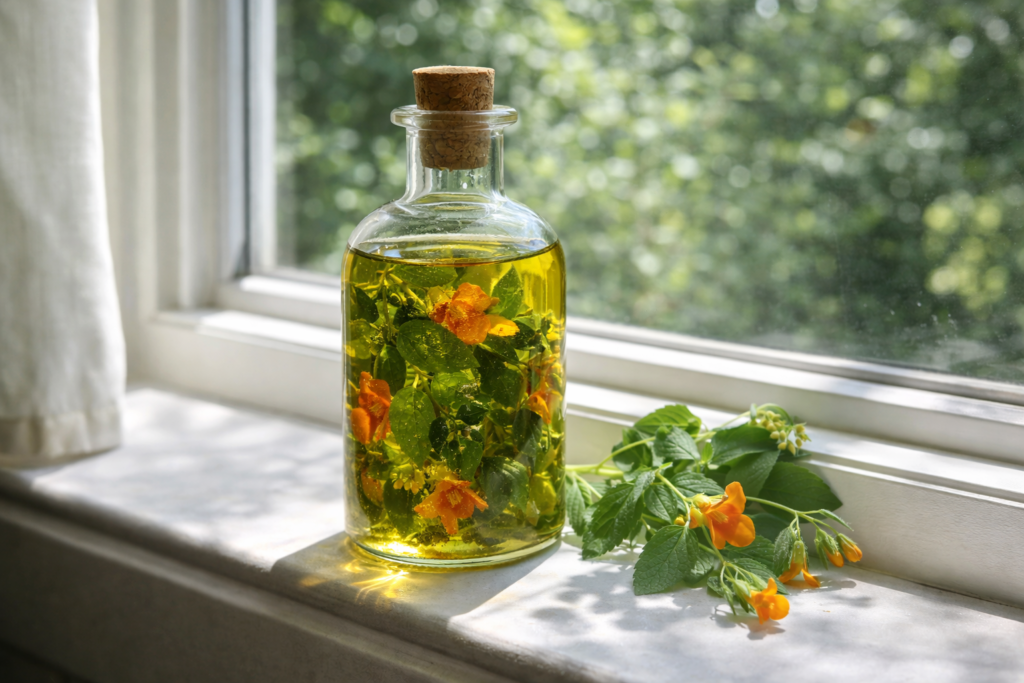
🧴 Jewelweed Oil Infusion
Best for: salves, creams
Ingredients:
- Fresh jewelweed (wilted 24 hours)
- Olive oil or sunflower oil
Method:
- Chop wilted jewelweed.
- Cover completely with oil.
- Infuse:
- Low heat: 4–6 hours
- Or dark cupboard: 4–6 weeks
- Strain thoroughly.
Note: Moisture control is critical.
🧴 Jewelweed Salve
Ingredients:
- 1 cup jewelweed-infused oil
- 1 oz beeswax
Method:
- Melt beeswax gently.
- Add oil.
- Stir well.
- Pour into tins and cool.
Use: poison ivy, bites, rashes
🍯 Jewelweed Syrup (Rare Use)
Used sparingly; not traditional Appalachian norm
Ingredients:
- 2 cups fresh jewelweed
- 3 cups water
- Raw honey (equal to strained liquid)
Method:
- Simmer jewelweed 20 minutes.
- Strain.
- Add honey.
- Warm gently to combine.
- Store refrigerated.
Dose:
- 1 tsp once daily, short-term only
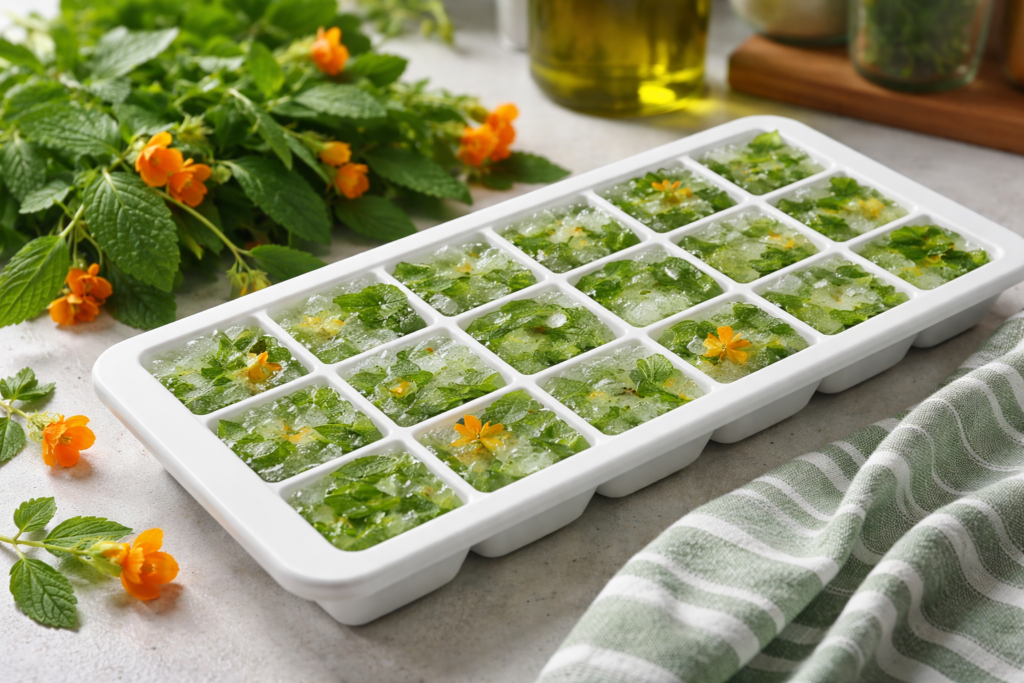
🧴 Frozen Jewelweed Cubes (Highly Traditional)
A favorite Appalachian method.
Method:
- Make strong jewelweed tea.
- Pour into ice cube trays.
- Freeze.
- Apply cube directly to rash.
Extremely effective for acute poison ivy.
🌿 Drying & Storage Notes
- Jewelweed loses potency when dried
- Best preserved as:
- Frozen tea
- Oil infusion
- Alcohol tincture (less effective than fresh)
⚠️ Safety Notes
- Generally safe topically
- Internal use should be minimal
- Not for long-term ingestion
- Correct identification is essential
🏔️ Appalachian Folk Wisdom
Mountain people said:
“Jewelweed don’t wait.”
It was never meant for:
- Daily use
- Storage for years
- Fancy preparations
It was meant to be:
- Found
- Used
- Trusted
- Let go
🌱 Why Jewelweed Still Matters
Jewelweed teaches a core Appalachian lesson:
Some medicine works because it shows up at the exact moment you need it.
It grows where poison ivy grows.
It works when applied immediately.
It fades when its job is done.
That is not weakness — that is precision.
If you enjoy stories like this, you’ll love the other life lessons & memories I’m sharing on The Appalachian Sage. …………And if you’re ever in the mood to browse something pretty, you can stop by my Etsy shop, The Appalachian Sage Shop, where I pour the same love and kindness into each design.