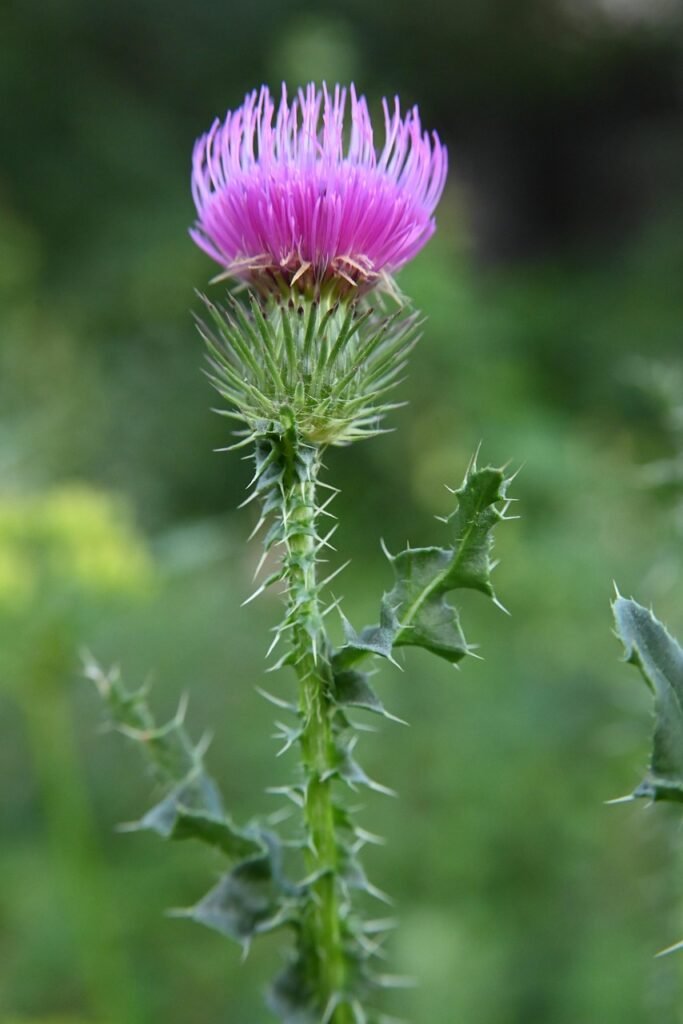
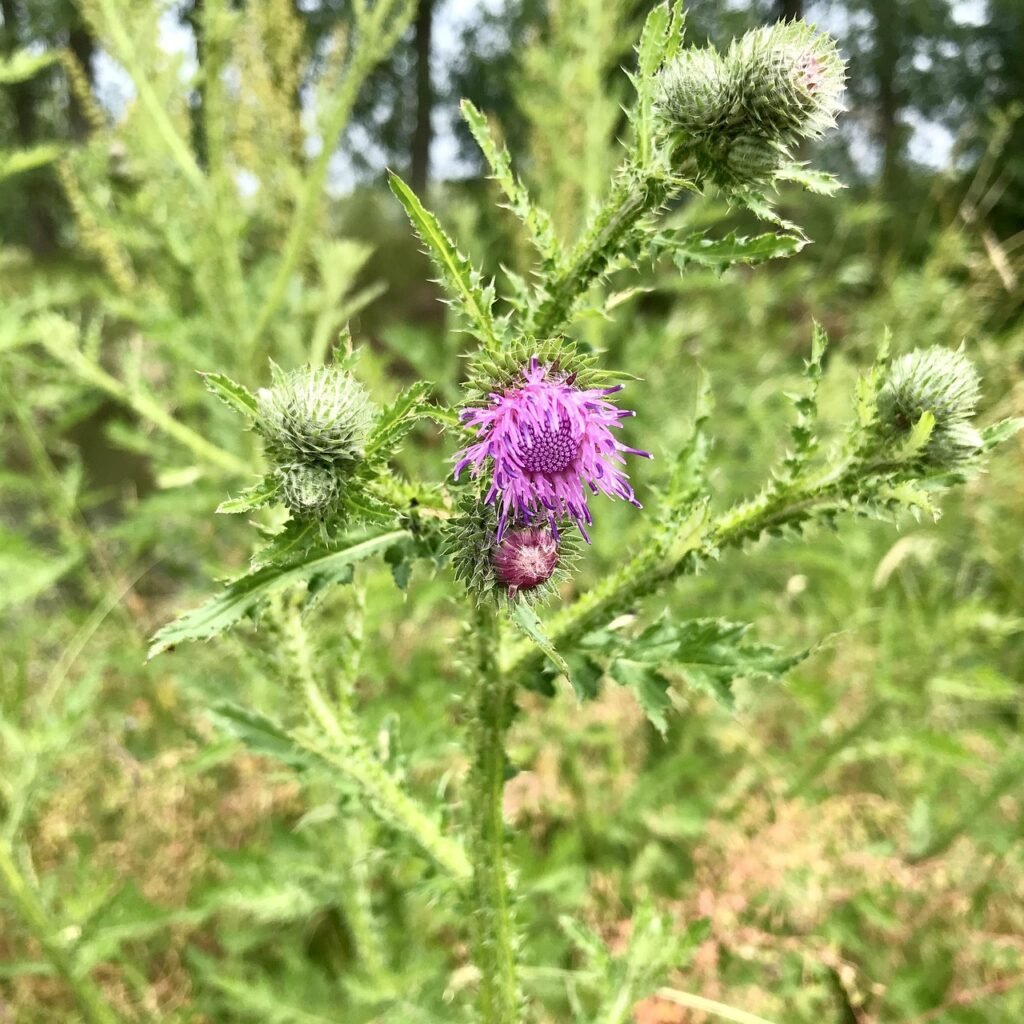
- Common name: Burdock
- Main species used:
- Arctium lappa – greater burdock
- Arctium minus – lesser burdock
- Arctium tomentosum – woolly burdock
- Family: Asteraceae (daisy family)
Burdock is a big, thistle-like biennial with broad leaves and those famous burrs that hitch rides on clothing and animal fur. It’s both food and medicine in many cultures, and has a long reputation as a “deep cleaner” of the system: blood, skin, and digestion.
Where Burdock Grows & How It Travels
Native range:
- Likely Northern Asia, Europe, and North Africa, where it’s been used for centuries as both a vegetable and a medicinal plant.
Naturalized range:
- Now widespread in North America and much of the temperate world. It thrives in:
- Disturbed soils
- Road edges
- Field margins
- Vacant lots and pastures
It’s one of those classic “waste ground” plants—exactly the kind of weed our ancestors learned to rely on when they didn’t have apothecaries or pharmacies nearby.
Foraging note:
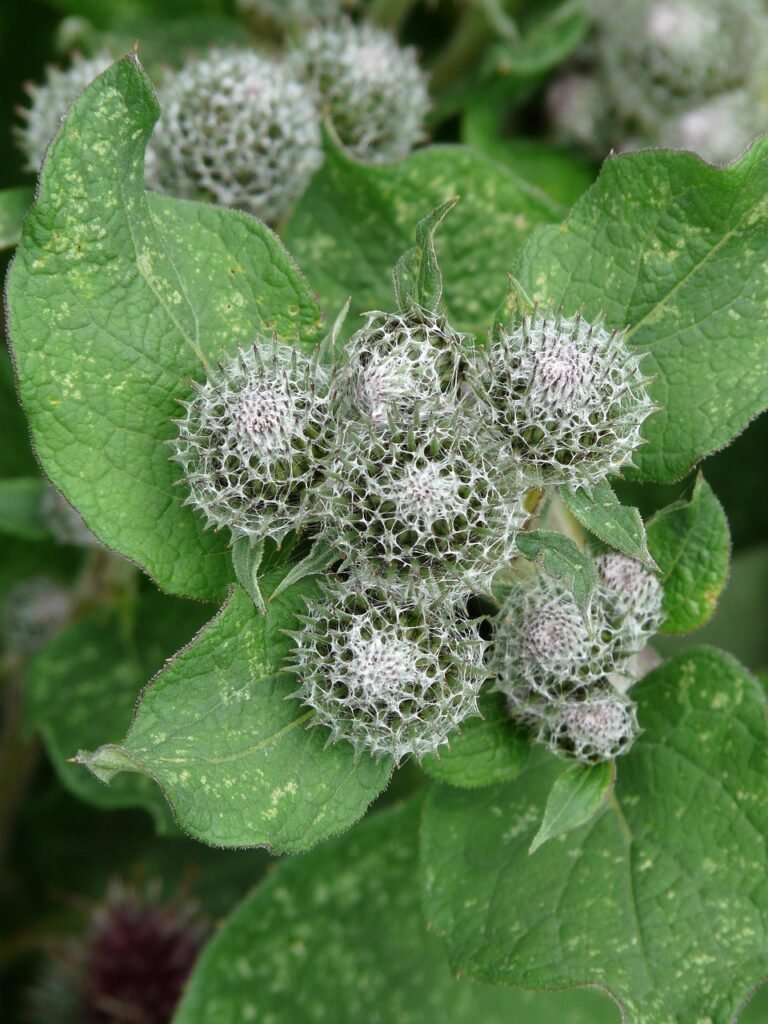
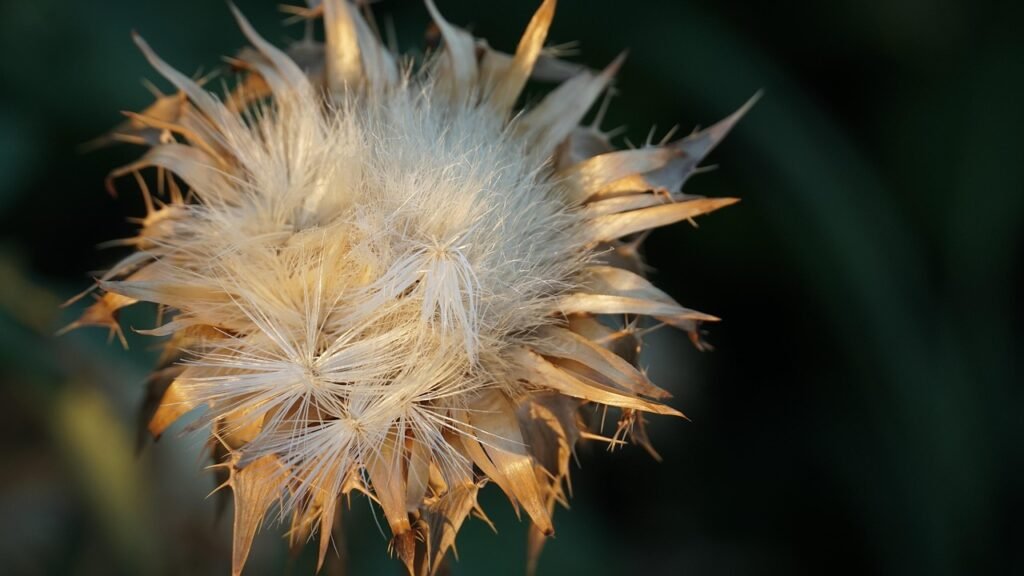
Burdock has large, heart-shaped leaves and purple thistle-like flowers; the seed heads become burrs. There are toxic lookalikes in the wild plant world, so any real-life harvesting should be done with an experienced teacher, not just a picture.
Species & Plant Parts
Herbal references often group several Arctium species together:
- Arctium lappa – greater burdock; roots and seeds widely used
- Arctium minus – lesser burdock; similar uses
- Arctium tomentosum – woolly burdock; also a source of medicinal material
Commonly used parts:
- Root (Arctii radix) – the main “alterative” / “blood purifier” and food
- Seed/fruits (Fructus Arctii) – used more in Chinese medicine
- Leaves – less commonly, for topical and minor internal use
Key Constituents in Burdock Root (and What They Do)
Burdock is chemically rich. Modern analysis shows a mix of polysaccharides, phenolic acids, lignans, flavonoids, volatile compounds, and minerals.
1. Inulin-Type Fructans (Prebiotic Fiber)
- Burdock root is a major source of inulin, a prebiotic fiber.
- Inulin:
- Feeds beneficial gut bacteria
- Contributes to feelings of fullness
- Helps regulate blood sugar and lipids when eaten as part of a normal diet
Herbal lens:
Inulin-rich roots (burdock, chicory, dandelion) are often seen as grounding, nourishing, and gently detoxifying, supporting digestion and the microbiome.
2. Phenolic Acids (Especially Caffeoylquinic Acids)
Burdock root is rich in dicaffeoylquinic acid isomers and related phenolic acids.
- These compounds:
- Have antioxidant activity
- Contribute to mild bitterness (useful as a digestive “bitter”)
- Are being studied for anti-inflammatory and metabolic effects (mostly preclinical so far).
Herbal lens:
Phenolic-rich roots are often classed as alteratives—herbs that, over time, support metabolic and eliminative pathways (liver, kidneys, skin).
3. Lignans (Arctiin, Arctigenin)
The seeds and to some extent leaves contain lignans, particularly arctiin and arctigenin.
- Arctiin is a lignan glycoside; arctigenin is its aglycone.
- Research suggests roles in:
- Modulating inflammatory pathways
- Influencing immune responses
- Various experimental anti-tumor and anti-viral models (again, lab and animal work, not established cures).
Herbal lens:
This is part of why burdock shows up in folk formulas for chronic, deep-seated conditions and “thick blood” or “sluggish lymph,” especially when seeds are used.
4. Flavonoids (Quercetin, Luteolin, etc.)
Analyses of burdock leaves and other parts show quercetin, luteolin, rutin, quercitrin and other flavonoids.
- Flavonoids are widely associated with:
- Antioxidant protection
- Capillary strength and vascular support
- General anti-inflammatory effects
Herbal lens:
Flavonoids contribute to burdock’s reputation for supporting skin and vasculature and helping the body deal with irritation and “heat.”
5. Volatile Oils & Sesquiterpene Lactones
Burdock contains small amounts of volatile compounds and sesquiterpene lactones such as onopordopicrin.
- These contribute to:
- Aroma
- Bitterness
- Some of the plant’s more “stimulating” actions, especially in small doses
Herbal lens:
Sesquiterpene lactones show up in many bitter tonic plants and often correlate with digestive and immune-modulating actions.
6. Minerals, Vitamins, and Trace Nutrients
Concentrated extracts and analyses show burdock root provides:
- B vitamins, Vitamin E
- Trace minerals: potassium, phosphorus, iron, magnesium, zinc, etc.
Herbal lens:
This is why traditional practitioners often emphasize burdock as food-medicine: a nutritive root, not just a drug-like extract.
Traditional Uses by Region & Culture
1. Europe
In traditional European herbalism, burdock (especially A. lappa and A. minus) is one of the classic herbs for:
- Chronic skin problems – acne, boils, eczema, “bad complexion”
- “Bad blood” – a catch-all for chronic toxicity and sluggish metabolism
- Joint and rheumatic complaints in long-term formulas
It was also eaten as a vegetable in some regions and used as a “blood purifier” and detoxifying herb in medieval and later European herbals.
2. Asia – Particularly China & Japan
Traditional Chinese Medicine (TCM)
- The seeds/fruits (Fructus Arctii, 牛蒡子 Niu Bang Zi) are used more than the root.
- Classified in TCM as dispersing wind-heat, with actions such as:
- Easing sore throat
- Helping rashes and eruptions
- Supporting the lungs and clearing “toxic heat”
Japan & East Asia (as food)
- In Japan, burdock root is “gobo”, a common vegetable:
- Used in stir-fries, pickles, soups
- Valued as a tonic food for stamina and digestion
- Burdock root tea is also drunk as a simple health beverage.
3. North America
Introduced and naturalized, burdock was quickly adopted by:
- Eclectic and physiomedical physicians
- Folk herbalists and “root doctors”
They used the root primarily as an alterative—a long-term tonic for:
- Chronic skin eruptions
- Rheumatic and arthritic complaints
- “Scrofula” and glandular issues
- General “systemic toxicity” concerns
4. Modern Perspectives
Modern reviews note that burdock:
- Has been reported in traditional and complementary contexts for chronic conditions like skin disease, metabolic disorders, and even cancer, but evidence in humans is still limited and mixed.
- Is recognized by bodies like the European Medicines Agency as a traditional herbal medicine for:
- Supporting diuresis (“flushing out” minor urinary tract issues)
- Temporary loss of appetite
- Seborrheic skin conditions
Important:
None of this replaces conventional diagnosis and treatment. Burdock is best thought of as supportive food-medicine and gentle tonic rather than a stand-alone cure for “harsh diseases.”
Common Preparations & Recipes (Educational Use)
Disclaimer:
The following are traditional/educational herbal preparation methods, not medical prescriptions. Anyone with serious illness, medications, pregnancy, or chronic conditions should work with a qualified practitioner before using medicinal herbs.
1. Burdock as Food
A classic way—especially in Japanese-style cooking:
- Peel and thinly slice fresh burdock root
- Soak briefly in water with a splash of vinegar or lemon (reduces browning)
- Sauté with carrots, sesame oil, and tamari/soy to make a kinpira-style dish
- Or add to stews and soups as a root vegetable
This route takes advantage of inulin, minerals, and fiber with relatively gentle actions.
2. Burdock Root Decoction (Tea)
Because the root is tough and fibrous, it’s usually prepared as a decoction rather than a simple hot-water infusion.
Simple traditional method:
- Use about 1–2 teaspoons of dried, cut burdock root per cup of water (or a small handful of fresh sliced root for a pot).
- Add to a pot with cold water, bring to a simmer.
- Simmer 10–20 minutes, then strain.
- Drink warm in small amounts, often combined with other alteratives like dandelion or red clover in traditional formulas.
Again, that’s how herbalists prepare it—not a directive on how often or how much anyone should drink.
3. Burdock Tincture (Alcohol Extract)
Herbalists commonly make burdock tincture from fresh or dried root, using standard tincture techniques.
Weight-to-volume guideline (dried root):
- A common tincture strength is 1:5 in 40–50% alcohol
- 1 part dried root by weight
- 5 parts alcohol-water mixture by volume
- 40–50% alcohol (80–90 proof vodka) is often recommended as a minimum for dried herbs to ensure preservation.
Folk method (no scale):
- Fill a clean jar about 1/3 full with chopped dried root (or ~½ full with fresh root).
- Cover completely with vodka or other 40–50% alcohol, ensuring all plant material is submerged.
- Cap and label (herb, date, type of alcohol).
- Store in a cool, dark place for 4–6 weeks, shaking occasionally.
- Strain through cheesecloth and bottle in dark glass.
Tincture is often used in small, diluted doses, typically under the guidance of a practitioner, especially in long-term protocols.
4. Burdock Oil & Infused Oil
You’ll see “burdock oil” marketed particularly for hair and skin care.
Two main types:
- Infused oil
- Dried burdock root is infused in a carrier oil (like olive or sunflower) for several weeks, then strained.
- Used topically for:
- Scalp treatments
- Dry, irritated skin, or blemish-prone skin (often combined with other herbs)
- Essential oil / CO₂ extract
- Burdock root yields a small amount (0.2–0.8%) of essential oil.
- Some suppliers offer CO₂-extracted burdock root essential oil, used in highly diluted skin-care formulas.
Safety with oils:
- Essential oils (or CO₂ extracts) are concentrated and should never be used undiluted on skin or taken internally without professional guidance.
- Infused oils are much gentler but can still cause reactions in sensitive individuals.
5. Simple Burdock Salve (for Skin)
A traditional-style external preparation:
- Start with burdock-infused oil (as above).
- In a double boiler, gently warm:
- 1 cup infused oil
- ~1 ounce (by weight) beeswax pellets (adjust for firmer/softer salve)
- Stir until beeswax melts completely.
- Test a drop on a cool plate; if too soft, add a bit more beeswax.
- Pour into tins or jars and let cool.
This kind of salve is traditionally used for rough, blemish-prone skin or minor irritations, often with other herbs like plantain or calendula blended in.
Who Used Burdock Most, Historically?
- European peasants and folk healers – as a cheap, available root for skin, joints, and “blood cleansing.”
- Traditional Chinese doctors – particularly the seeds (Fructus Arctii) in formulas for sore throat, lung heat, and eruptive illnesses.
- Japanese cooks and healers – using burdock (gobo) as a daily food and simple tonic.
- North American herbalists – Eclectics, physiomedicalists, and folk healers who adopted it as a key alterative for chronic degenerative conditions and skin issues.
Across cultures, the pattern repeats:
Burdock is food first, long-term tonic second, and occasionally part of more “heroic” or serious formulas when illness has gone deep.
Safety & Cautions (Very Important)
Modern reviews and safety notes point out that while burdock is generally well-tolerated, there are some cautions:
- Allergies:
- As a member of the Asteraceae family, it can cause contact dermatitis or allergies in some people.
- Diuretic effect:
- Traditional use includes mild diuretic activity; those with kidney issues or on diuretic meds should be cautious.
- Blood sugar & meds:
- Because of inulin and metabolic effects, it may interact with medications affecting blood sugar in sensitive individuals.
- Contamination / lookalikes:
- Historically there have been concerns about misidentification or adulteration with toxic plants; reputable sources and good botanical training are crucial.
Never rely on burdock—or any herb—as your only treatment for serious diseases like cancer, advanced infections, or organ failure.
For those, you’re firmly in “doctor plus maybe herbalist” territory, not DIY.
Bringing It Together
Burdock (Arctium lappa and its cousins) is the perfect “wild weed” bridge between:
- Food and medicine
- Old-world folk practice and modern phytochemistry
- Harsh, deep-rooted illness and slow, steady, nourishing support
It shows up:
- In Asian kitchens as gobo
- In European herbals as a blood purifier
- In Chinese formulas as Niu Bang Zi
- In North American folk practice as one of the core alteratives
If you enjoy stories like this, you’ll love the other life lessons & memories I’m sharing on The Appalachian Sage. …………And if you’re ever in the mood to browse something pretty, you can stop by my Etsy shop, The Appalachian Sage Shop, where I pour the same love and kindness into each design