
Latin name: Stellaria media (L.) Vill.
Family: Caryophyllaceae (pink/campion family)
Common chickweed is that soft, sprawling mat of green that shows up in cool, moist spots just when you’re desperate for something fresh and living. Gardeners call it a weed; traditional healers and foragers have quietly loved it for centuries.
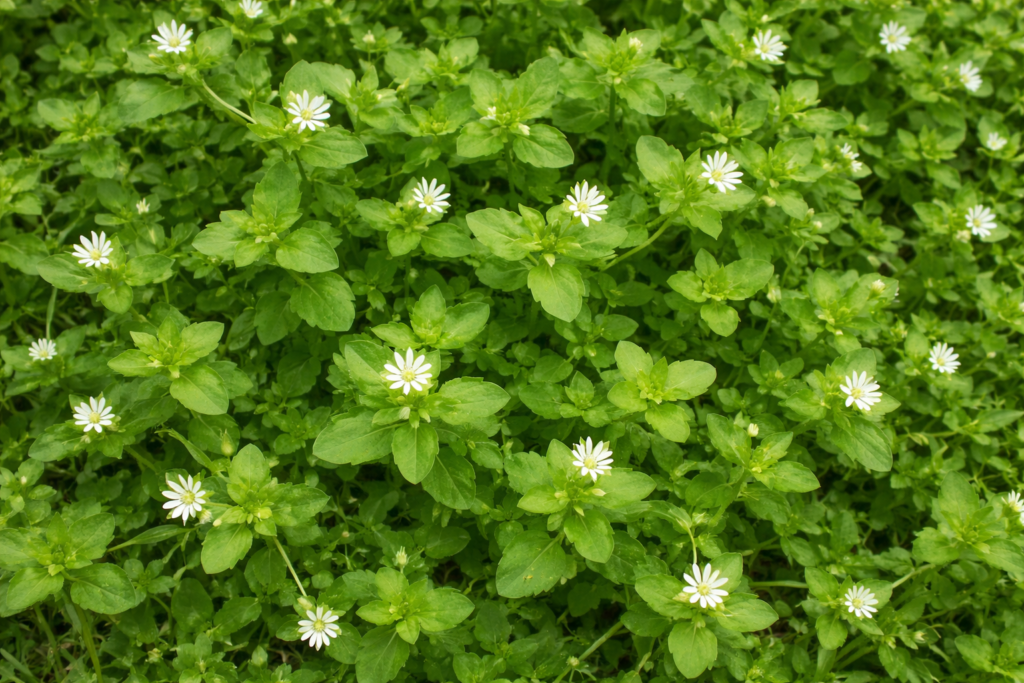
Where Chickweed Grows
Chickweed is originally native to Europe and western Asia, but it has followed people and livestock almost everywhere. Today it’s considered a cosmopolitan weed, naturalized across:
- Most of Europe
- North America (US & Canada)
- Large areas of South America, Australia, New Zealand, and temperate Asia
It favors cool, damp, nitrogen-rich soils: garden beds, pastures, the edges of walkways, field margins, and anywhere ground has been disturbed. In mild climates it can stay green right through winter.
Key Constituents (and What They’re Known For)
Analyses of Stellaria media show a mix of nutrients and phytochemicals:
- Saponins
- Flavonoids (including apigenin, luteolin, quercetin glycosides)
- Phenolic acids (like caffeic, ferulic, and chlorogenic acids)
- Coumarins
- Polysaccharides & mucilage
- Vitamins: C, A (via carotenoids), some B vitamins
- Minerals: potassium, magnesium, calcium, iron, zinc, manganese
- Essential fatty acids in the seed and, to a lesser degree, in the leaf (linoleic, linolenic)
Here’s how herbalists talk about those components (keeping it nice and compliant):
Saponins
These soap-like molecules can create foam in water. In lab and animal studies, saponins are often explored for effects on cholesterol metabolism, inflammation, and immune pathways, but this work is preliminary and not specific to chickweed as a finished remedy. Herbalists usually associate saponin-rich plants with “moving” and “loosening” – supporting fluid balance and softening thick secretions.
Flavonoids & Phenolic Acids
These are part of the huge antioxidant family found in fruits, veggies, and many herbs. In test-tube research, chickweed extracts show antioxidant and mild anti-inflammatory activity, mostly attributed to these compounds.
In practice, herbal traditions lean on that to justify chickweed as a “cooling, soothing, moistening” green.
Mucilage & Polysaccharides
That slippery, slightly succulent feel in fresh chickweed hints at mucilage. These long sugar chains are known for soothing irritated tissues on contact (think marshmallow root or plantain). Herbalists reach for chickweed in topical preparations for comfort where skin feels dry, itchy, or rubbed raw—again, more tradition than clinical proof.
Vitamins & Minerals
Chickweed is often called a “mineral green” – a living spring multivitamin in the wild-food world. Analyses highlight:
- Vitamin C – supports general immune function and collagen production
- Provitamin A carotenoids – precursors to vitamin A, important for skin and mucous membranes
- B vitamins (small amounts) – involved in energy metabolism
- Minerals – especially potassium, magnesium, calcium, plus iron, zinc, and manganese
Because people usually eat chickweed fresh and raw, these nutrients are relatively available compared with long-stored greens.
Traditional & Cultural Uses
Europe – Spring Tonic & Famine Food
In much of Europe, chickweed has long been a spring salad green and pot herb. Old farm and cottage texts mention using it:
- fresh in mixed spring salads
- boiled briefly as a potherb alongside nettles and other wild greens
- as a “famine food” in lean years, especially late winter/early spring when it’s thriving while other plants are still asleep
Folk healers also used poultices of crushed chickweed for hot, itchy, or irritated skin areas.
British & Irish Herbal Tradition
In British herbalism, chickweed often appears in formulas for what they call “cooling the system” – especially where the skin expresses heat or irritation. Creams and ointments with chickweed have been popular in the UK natural-health market for years, mainly based on this tradition rather than large clinical trials.
North American Eclectic & Folk Use
European settlers brought chickweed with them—sometimes intentionally, sometimes in animal feed. North American herbalists adopted it as:
- a wild salad and cooked green
- a topical herb in salves with plantain and calendula
- a mild “alterative” or “blood-cleanser” in older herbal language, usually combined with burdock, red clover, or cleavers
Again, that “alterative” concept comes from tradition, not from modern medical approval.
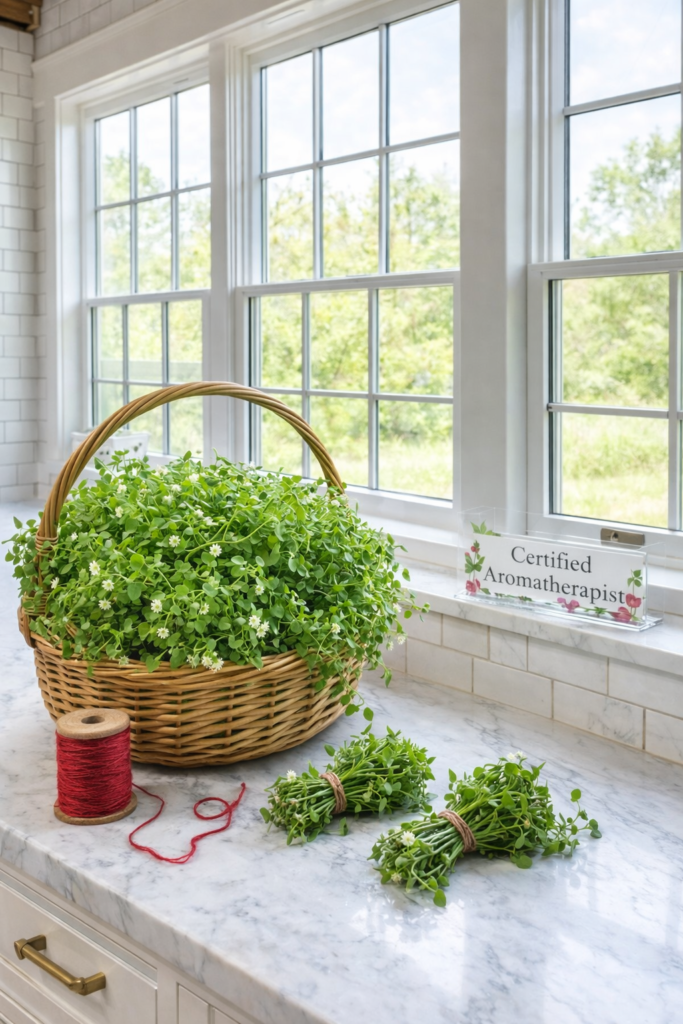
Chickweed in the Kitchen
Important: Always be 100% sure of your plant ID, harvest from clean areas (no spray, no runoff, no roadside), and introduce new wild foods slowly to see how your body responds.
European-Style Chickweed & New Potato Skillet (Cultural Recipe)
Inspired by simple farmhouse cooking in northern Europe.
You’ll need:
- 2 cups fresh young chickweed tops, loosely packed, cleaned & chopped
- 4–5 small new potatoes, sliced into thin rounds
- 2 tbsp butter or olive oil
- 1 small onion or 2 shallots, sliced
- 1 clove garlic, minced (optional)
- Salt & freshly ground pepper
- A squeeze of lemon
- Optional: a spoonful of sour cream or thick yogurt to finish
How to make it:
- Parboil the sliced potatoes in salted water for ~5 minutes; drain.
- In a heavy skillet, melt the butter/oil and gently cook onion until translucent.
- Add potatoes and cook until they begin to brown at the edges.
- Stir in the chickweed and garlic. Sauté just 1–2 minutes, until the greens are bright and tender.
- Season with salt, pepper, and a squeeze of lemon.
- Serve warm, optionally with a dollop of sour cream.
This keeps the chickweed’s fresh, slightly “corn-silky” taste and uses it the way many European families treat wild spring greens—simple, buttery, and comforting.
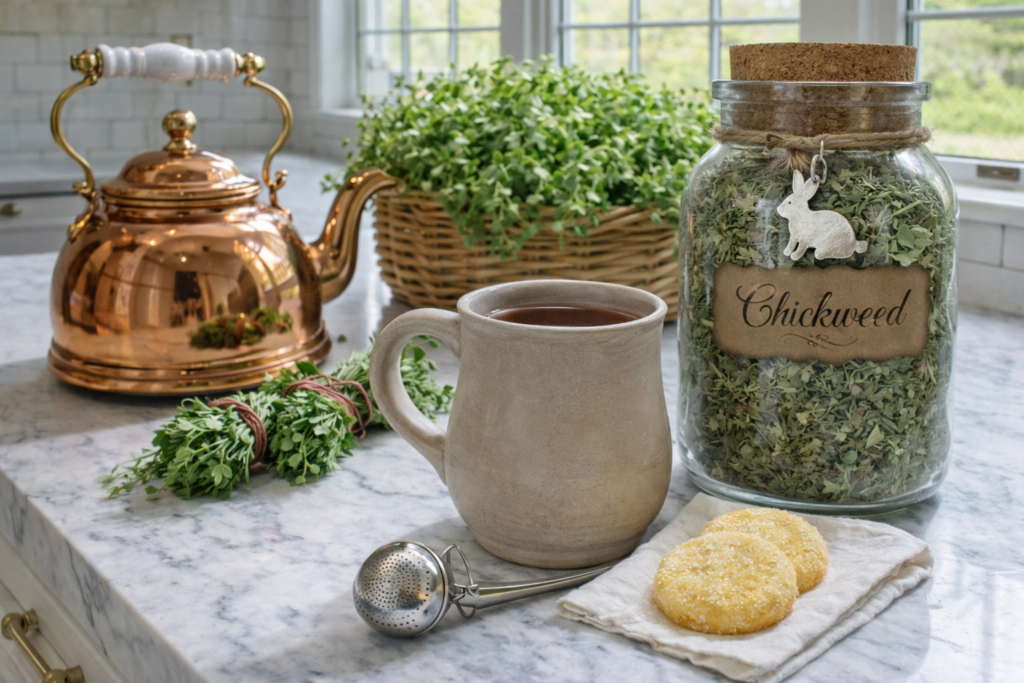
Simple Chickweed Tea (Infusion)
Ingredients
- 1–2 teaspoons dried chickweed (or 2–3 teaspoons fresh, chopped)
- 8 oz (240 ml) just-off-boiling water
Directions
- Place chickweed in a jar or mug.
- Pour hot water over the herb, cover, and steep 10–15 minutes.
- Strain. Sweeten with honey or lemon if desired.
Many traditional herbalists use chickweed tea as a gentle daily spring drink for a few weeks at a time. If someone wants to use chickweed regularly or alongside medications, it’s safest for them to check with a qualified practitioner.
Chickweed Tincture (Folk Method)
This is a traditional preparation, not a medical prescription.
You’ll need:
- Fresh chickweed, finely chopped
- 80-proof (40%) vodka or brandy, enough to cover
- Clean glass jar with tight lid
Steps
- Fill the jar loosely with chopped fresh chickweed (don’t pack hard).
- Cover with alcohol so the plant material is submerged by at least 1–2 inches.
- Label with plant, alcohol, and date.
- Store in a dark cupboard 4–6 weeks, shaking every few days.
- Strain through cloth; store the finished tincture in amber bottles.
In folk practice, small amounts such as 10–30 drops in a little water, once or several times daily are common for adults, but people should work with an herbalist or healthcare provider to decide what’s appropriate for them.
Chickweed Salve
A classic skin-comfort combo is chickweed + plantain + calendula.
Herbal Oil
- Fill a jar halfway with dried chickweed (and optionally equal parts dried plantain leaf and calendula flowers).
- Cover with olive oil or another mild carrier oil.
- Infuse in a warm spot 2–4 weeks, shaking often, or use a very low-heat water bath for several hours.
- Strain well.
Salve
- 1 cup chickweed infused oil
- 1 oz (about 28 g) beeswax
- Optional: a few drops of vitamin E oil
- Warm the oil in a double boiler.
- Add beeswax and stir until fully melted.
- Test firmness by letting a small spoonful cool; add more wax for a firmer salve, more oil for softer.
- Pour into clean tins or jars and let cool.
People traditionally apply this type of salve to intact skin that feels dry, rough, or irritated. Avoid using on deep or infected wounds unless guided by a professional.
Synergy with Other Herbs
Herbalists rarely use chickweed all by itself. It’s often paired with:
- Burdock root (Arctium lappa) – another classic “alterative” root. Together they’re used in formulas aimed at supporting normal skin function and general elimination.
- Red clover blossoms (Trifolium pratense) – another mineral-rich, cooling herb.
- Nettle leaf (Urtica dioica) – adds extra mineral density and a slightly stronger “tonic” character.
- Plantain & Calendula – in salves and creams for skin comfort.
Modern clinical research on these combinations is very limited; most of this knowledge is experiential folk and herbal practice, so it should be treated as exploratory, not as proven medical therapy.
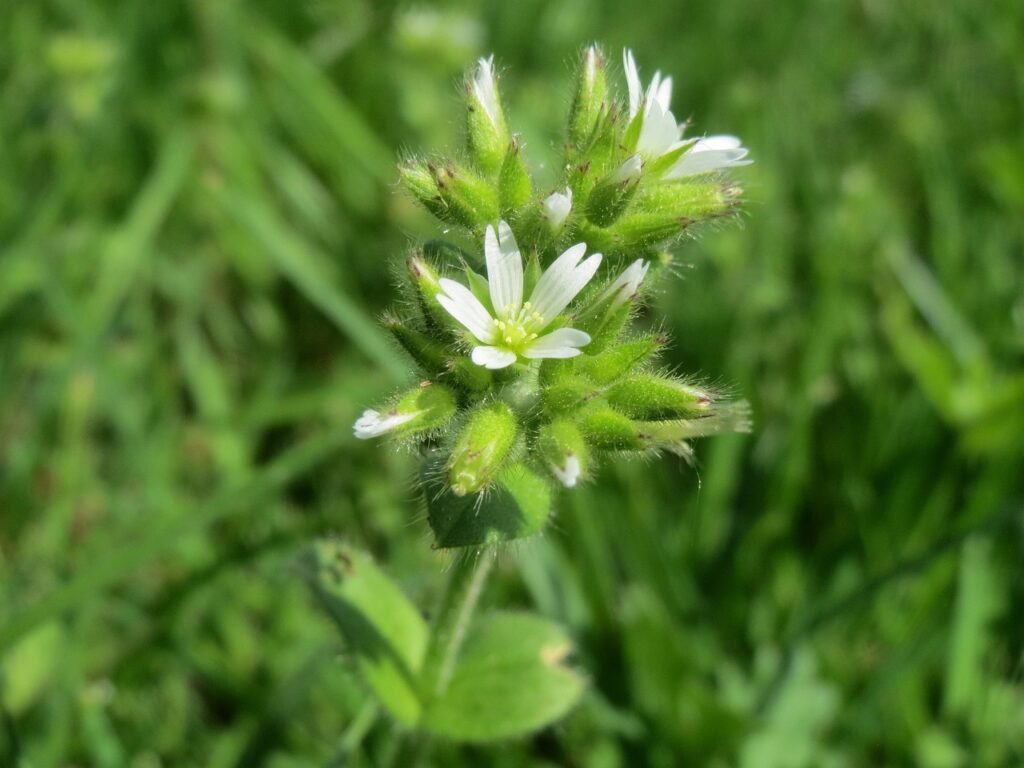
Safety Notes
- Edibility: Chickweed is widely eaten as a vegetable in many places and is generally considered safe as food in normal amounts.
- Large amounts for livestock have caused issues related to nitrates and saponins; that’s one reminder that more is not always better.
- Allergy: As with any plant, some individuals may be sensitive; topical products can occasionally cause local irritation in susceptible people.
- Pregnancy & breastfeeding: There isn’t solid safety data, so most conservative sources recommend short-term food-level use only unless a practitioner says otherwise.
- Medication interactions: None are well documented, but anyone on prescription meds, especially diuretics or drugs that already affect electrolytes, should talk with their healthcare provider before using chickweed regularly because of its mineral content and traditional reputation for influencing fluid balance.
If you enjoy stories like this, you’ll love the other life lessons & memories I’m sharing on The Appalachian Sage. …………And if you’re ever in the mood to browse something pretty, you can stop by my Etsy shop, The Appalachian Sage Shop, where I pour the same love and kindness into each design.