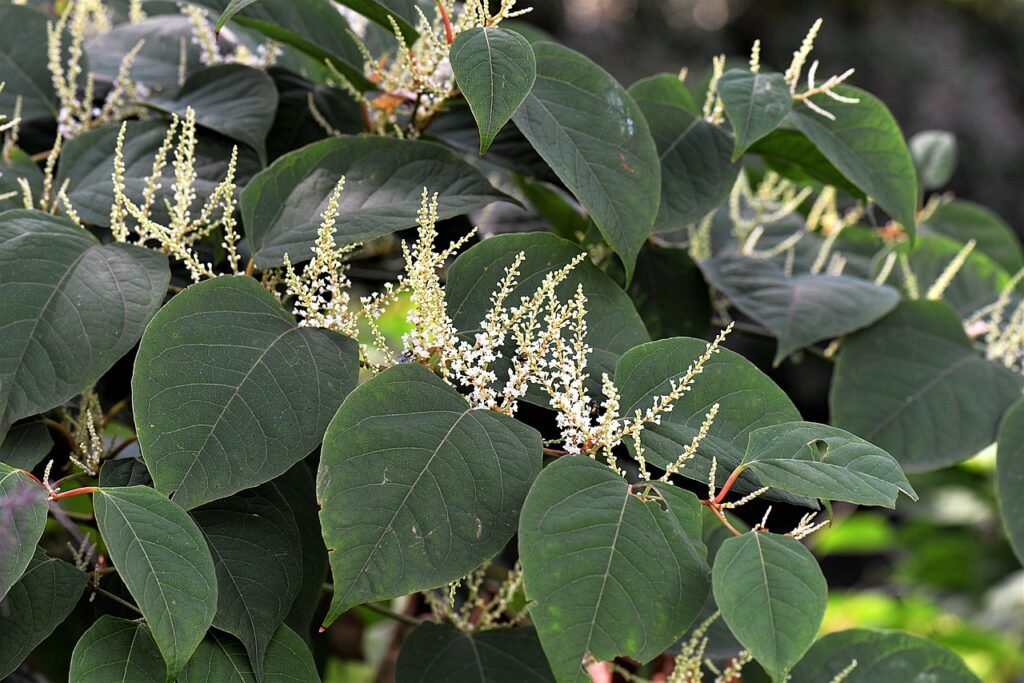
Fallopia japonica
Introduction to Japanese Knotweed
Japanese Knotweed (Fallopia japonica) is one of the most misunderstood plants in the world, yet it remains one of the most valuable herbs in today’s wellness community. While many people know it only as an invasive, fast-spreading plant, herbalists recognize something far different: a deeply potent root system rich in antioxidants, immune-supportive compounds, and restorative properties used for centuries in both Eastern and Western plant medicine.
Across the mountains and countryside, you’ll often find knotweed growing where the land has been disturbed — along riverbanks, mountainsides, old homesteads, and forgotten fence rows. Because of this, the plant has become a symbol of strength, survival, and regeneration. Consequently, within its tough exterior lies a medicinal root packed with resveratrol, polydatin, and warming anthraquinones — key constituents that help the body navigate long-term immune stress and deep-tissue discomfort. For this reason, modern herbalists frequently rely on Japanese Knotweed as a foundational herb for overall wellness, healthy circulation, joint nourishment, and the body’s natural response to persistent microbial challenges.
Whether it is brewed as a tea, taken as a dried root capsule, or prepared as a tincture, this resilient plant continues to demonstrate why it has earned such a respected place in both traditional herbal systems and modern holistic practice. In fact, many physicians nationwide are now promoting the healing abilities of this plant.
Natural Constituents Found in Japanese Knotweed
Japanese Knotweed is packed with a powerhouse profile of bioactive compounds that make it one of the most valued herbs in modern herbalism and traditional folk medicine. Most herbalists recognize its unusually high concentration of resveratrol, but this plant carries far more than that. Its chemical makeup works together to support immune function, reduce inflammation, and help the body regulate microbial stress.
Furthermore, to highlight its value, here are the primary constituents:
1. Resveratrol
The standout compound in knotweed, known for supporting cardiovascular health, easing inflammation, and acting as a potent antioxidant.
2. Polydatin (Piceid)
A more bioavailable precursor to resveratrol. Polydatin converts in the body and extends the plant’s therapeutic window.
3. Emodin
A naturally occurring anthraquinone used in traditional medicine to support detoxification, encourage regularity, and assist the body’s cleansing processes.
4. Rhein
In addition, another important anthraquinone in Japanese Knotweed offers gently supportive digestive effects and notable antimicrobial activity.
5. Anthocyanins & Flavonoids
These compounds work together to deliver strong antioxidant, anti-inflammatory, and immune-balancing properties.
6. Tannins
Provide astringent actions helpful for tissue tightening, wound care traditions, and gut wellness.
7. Quercetin
A powerful flavonoid known for supporting the immune system and stabilizing histamine responses.
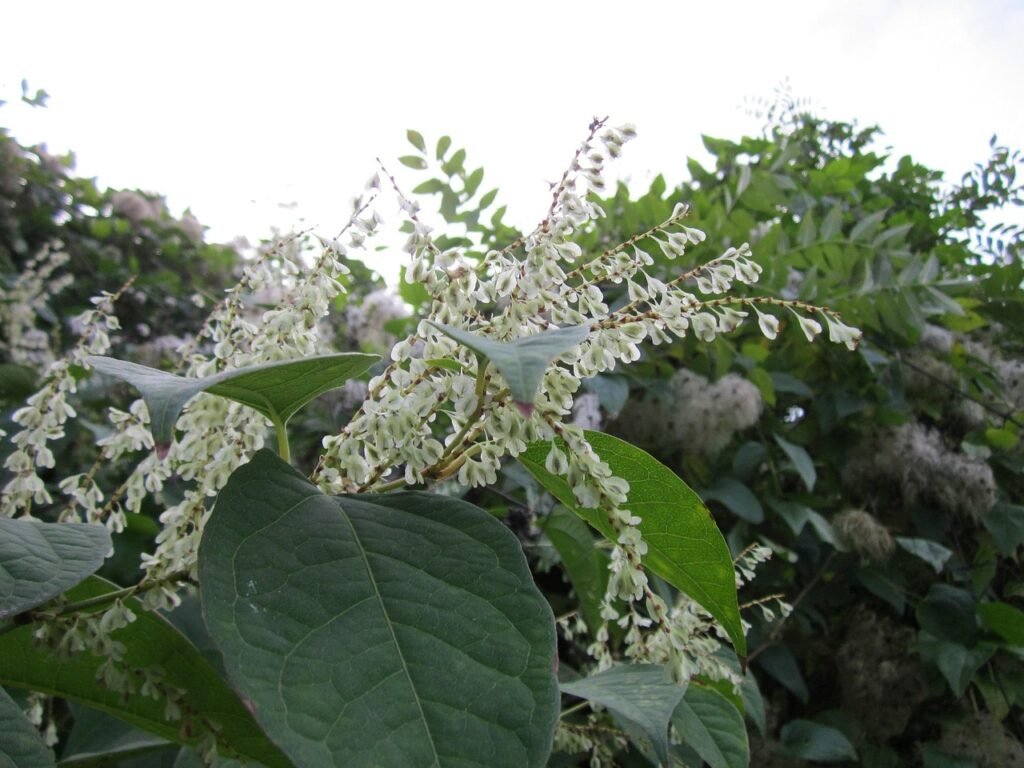
Where Japanese Knotweed Is Found Worldwide
Japanese Knotweed (Fallopia japonica or Reynoutria japonica) is native to Japan, Korea, China, and Eastern Asia, where it was once valued both as a mountain vegetable and as a respected medicinal root. Originally, it grew along volcanic mountainsides and forest edges, thriving in rugged terrain. Over time, people recognized its versatility and carried it into new regions for ornamental and herbal purposes.
As a result, the plant established itself far beyond its homeland. Over the past 200 years, however, the plant has spread widely across the world due to its remarkable hardiness and its ability to thrive in disturbed or neglected soils. As a result, it now grows across North America, Europe, Australia, and New Zealand, often flourishing in places where other plants struggle to survive. Consequently, it has become a familiar sight along riverbanks, roadsides, and mountainsides in many parts of the world. Today, it can be found across North America, Europe, Australia, and New Zealand, often flourishing in places where other plants struggle to survive.
Today, you’ll find knotweed:
- Across North America, especially the Northeastern U.S., Pacific Northwest, Appalachia, and Southern Canada
- Throughout Europe, especially the UK, Ireland, France, and Germany
- In New Zealand and Australia, where the climate suits its rapid growth
- Along roadsides, riverbanks, mountainsides, abandoned farmsteads, urban lots, and forest edges
Anywhere the ground has been disturbed — floods, construction, old homesteads — knotweed rises up with fierce resilience. Herbalists often see it as a symbol of sur
Japanese Knotweed Tea (Traditional Mountain Brew)
A simple tea for microbial balance, immune support, and antioxidant nourishment.
Ingredients:
- 1 teaspoon dried Japanese knotweed root
- 1 cup hot water
- Honey or lemon (optional)
Instructions:
- Add the dried root to a cup.
- Pour hot water over and cover the mug.
- Steep 10–15 minutes — roots need more time.
- Strain and sip warm.
Knotweed tea is naturally earthy, slightly bitter, and grounding.
More Japanese Knotweed Recipes
1. Knotweed Spring Stir-Fry (Edible Shoots)
Young shoots taste like a citrusy rhubarb and are used in mountain cooking.
Ingredients:
- 1 cup young knotweed shoots (under 8 inches)
- 1 tbsp butter or oil
- Pinch of salt
- Dash of garlic
Instructions:
Chop the shoots, sauté them lightly until tender, and finish with a pinch of salt. In fact, this simple preparation is especially lovely when served with eggs or rice.
2. Knotweed & Ginger Immune Decoction
A warming, supportive herbal drink.
Ingredients:
- 1 tbsp dried knotweed root
- 1 inch fresh ginger sliced
- 2 cups water
- Honey (optional)
Instructions:
Simmer roots and ginger for 20 minutes, strain, and sweeten if desired.
3. Knotweed Tincture (Traditional Herbal Extraction)
Used by herbalists for long-term immune, microbial, and inflammatory support.
Ingredients:
- Dried knotweed root
- 60–70% alcohol (vodka or brandy)
- Glass jar
Instructions:
Fill the jar halfway with root, cover fully with alcohol, seal, and shake.
Steep 4–6 weeks. Strain and bottle.
Herbal Use & Safety Disclaimer
The information provided in this article is offered strictly for educational and informational purposes. In addition, it should not be used to diagnose, treat, cure, or prevent any disease, nor should it replace professional medical advice, evaluation, or care from a qualified healthcare provider.
While Japanese Knotweed has a long history of traditional use, every body responds differently to herbs. For this reason, individuals who are pregnant, nursing, taking prescription medications, or managing chronic health conditions should consult a licensed healthcare professional before using any herbal product.everybody
Never discontinue prescribed medications without speaking to your physician.
Moreover, always research and use herbs responsibly, following recommended amounts and preparation methods.
Foraging & Identification Disclaimer
If you choose to harvest plants in the wild, please use caution and rely on proper identification techniques. Additionally, misidentifying a plant can lead to harmful or even toxic exposure. Consequently, whenever you feel uncertain, it is wise to consult a trained herbalist or botanist before gathering any wild plant material.
Product & Preparation Disclaimer
Recipes, preparations, and instructions shared in this article are traditional examples and are not guarantees of individual results. Use herbs at your own discretion and modify recipes according to your personal health needs and tolerance.
If you enjoy stories like this, you’ll love the other life lessons & memories I’m sharing on The Appalachian Sage. …………And if you’re ever in the mood to browse something pretty, you can stop by my Etsy shop, The Appalachian Sage Shop, where I pour the same love and kindness into each design