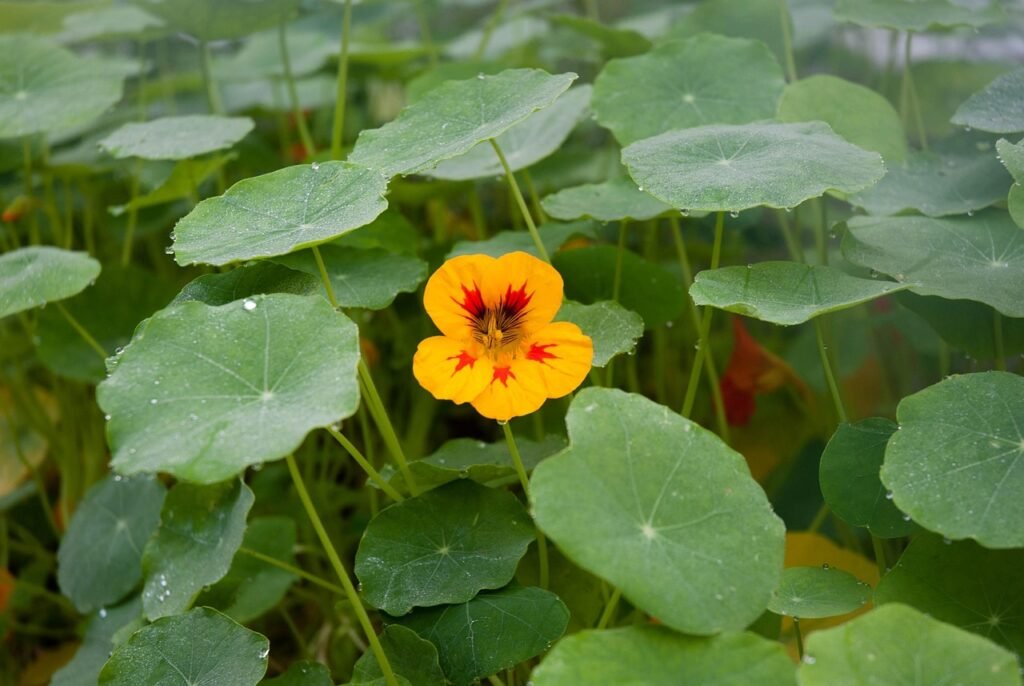
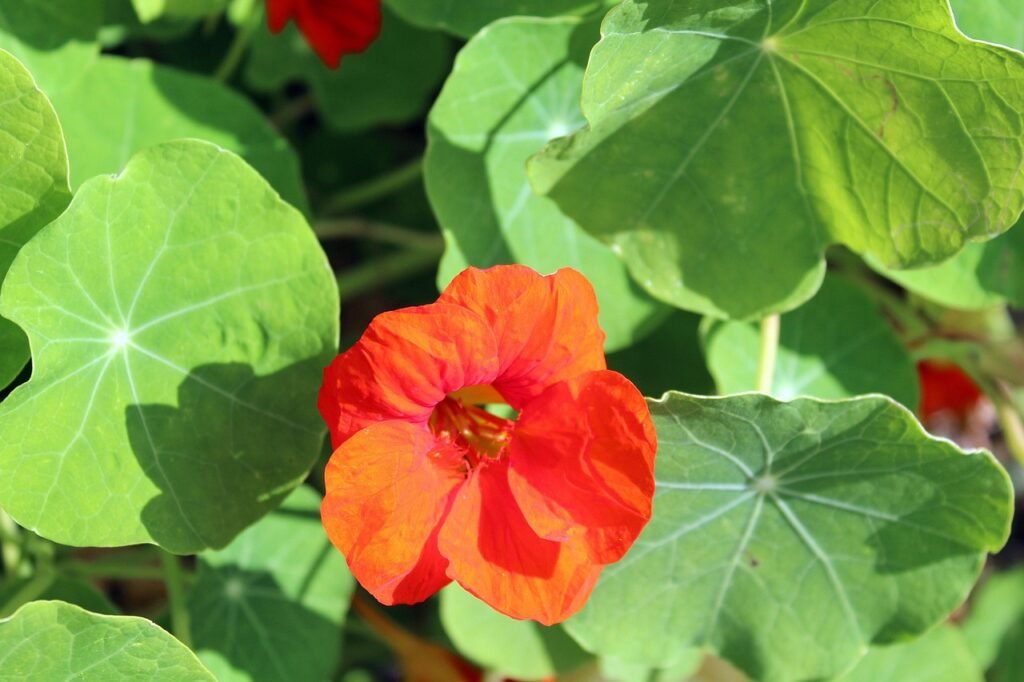
Long before pharmaceutical antibiotics existed, people across the world relied on plants with natural antimicrobial properties to help the body fight infection. One such plant—bright, peppery, and often overlooked—is nasturtium.
Though commonly grown today as an ornamental or salad flower, nasturtium has a long history as a medicinal food-plant, valued especially for its ability to support the immune system, lungs, and urinary tract. Appalachian mountain families, European herbalists, and Indigenous peoples all recognized its usefulness long before modern science explained why it worked.
This article offers a clear, beginner-level understanding of what nasturtium is, what compounds it contains, how it has been traditionally used, and simple ways to prepare it as food or folk remedy.
Botanical Overview
- Botanical name: Tropaeolum majus
- Family: Tropaeolaceae
- Plant type: Annual trailing or climbing herb
- Parts used: Leaves, flowers, seeds
Nasturtium is not related to watercress, despite sometimes being called “Indian cress.” It is fast-growing, easy to cultivate, and thrives in poor soil—traits that made it ideal for subsistence gardens.
Where Nasturtium Originated and Spread
Native Origins
Nasturtium is native to South America, particularly:
- Peru
- Bolivia
- Ecuador
- Colombia
Indigenous peoples cultivated it both as a food plant and medicine, valuing its warming and cleansing properties.
Spread to Other Regions
After European contact in the 1500s, nasturtium spread rapidly:
- Europe: Used as a lung and urinary herb; eaten as a spring tonic
- British Isles: Grown in cottage gardens; seeds pickled as “poor man’s capers”
- Germany & Central Europe: Included in traditional herbal medicine for respiratory infections
- Appalachia (U.S.): Adopted by mountain families as a garden remedy for colds and weakness
Today, nasturtium is grown worldwide but retains its strongest medicinal reputation in European folk herbalism and Appalachian traditional use.
Nasturtium in Appalachian Folk Healing (Not Used In Powwow)
Although nasturtium was widely used throughout the Appalachian Mountains, it was not a traditional Powwow (Braucherei) herb. Instead, it belonged to a broader stream of Appalachian folk healing—a practical, home-centered tradition shaped by necessity, garden knowledge, and lived experience rather than formal ritual.
Appalachian folk healing was not a single codified system. It was a working knowledge passed through families, especially through women, and adapted constantly to whatever plants grew well in mountain soil. When nasturtium became available through seed exchanges and homestead gardens in the 1800s, mountain families quickly recognized its value.
A Garden Remedy for Everyday Illness
Nasturtium earned its place in Appalachian gardens because it was:
- Easy to grow
- Available early in the season
- Edible as food
- Strong enough to “do something” when sickness came on
Appalachian folk healers understood the plant as a warming, cleansing green. Its sharp, peppery bite signaled usefulness in cases where the body needed to be “stirred” or “cleared out,” especially after long, damp winters.
It was commonly used for:
- Chest colds and lingering coughs
- Early signs of infection
- General weakness or fatigue
- Springtime cleansing after winter scarcity
The plant was not framed as a cure-all. Instead, it was used early, gently, and briefly, with the understanding that a little was enough.
Food and Medicine Were the Same Thing
One of the defining features of Appalachian folk healing is that medicine often came through food. Nasturtium fit naturally into this worldview.
Mountain families:
- Chopped fresh leaves into beans or greens
- Added flowers to spring salads
- Chewed a leaf or two during cold season
- Used simple teas rather than strong preparations
This approach reflected a belief that healing should support the body, not overwhelm it.
A Garden Plant With a Bite
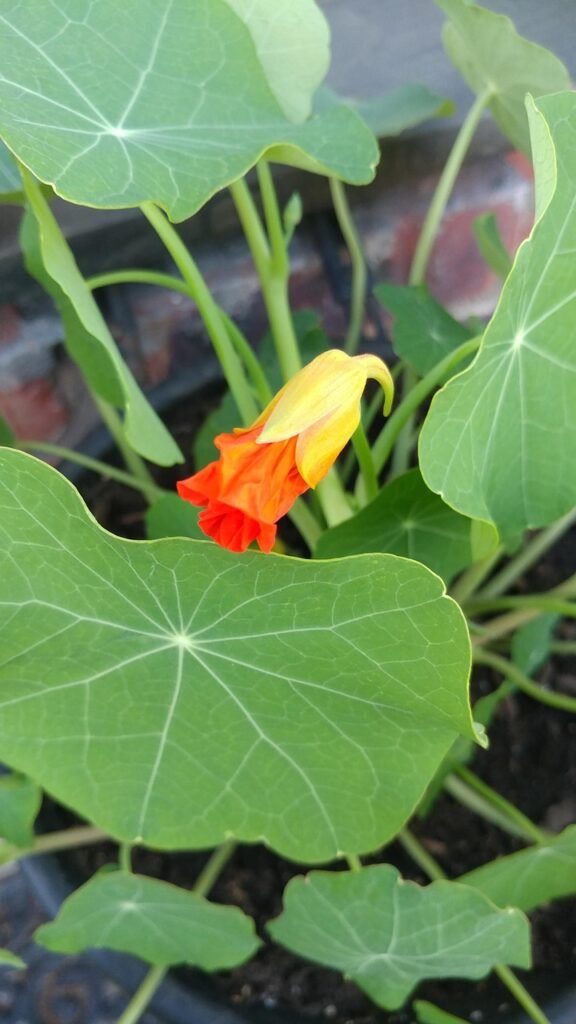
At first glance, nasturtium looks almost playful—round green leaves, trailing vines, cheerful orange and red blooms. But anyone who’s chewed a fresh leaf knows better.
That sharp, peppery taste?
That’s the plant telling you it means business.
Mountain people learned that plants with heat, bitterness, or sharpness often helped the body push back against illness. Nasturtium fit that rule perfectly.
Nasturtium was known among old-time healers as a “cleansing leaf.” It was used when someone felt:
- “Run down”
- Congested in the chest
- Prone to recurring sickness
- Sluggish after winter
It wasn’t about killing germs the way modern antibiotics do. Instead, nasturtium supported the body’s own defenses, especially the lungs, sinuses, and urinary system
Practical Use, Not Ritual Use
Unlike Powwow healers, Appalachian folk healers did not pair nasturtium with:
- Spoken Psalms
- Charms
- Ritual timing
- Spiritual diagnosis
Powwow (Braucherei) relied on a narrower set of symbolically charged herbs used alongside precise prayers. Nasturtium, with its South American origin and chemistry-driven action, did not belong to that system.
Instead, it lived squarely in the realm of common-sense mountain medicine—used when it helped, set aside when it didn’t.
A Quiet but Trusted Plant
Nasturtium never carried mystical status in the mountains. It was trusted because it worked. Appalachian folk healers valued results over reputation, and the plant’s role remained modest but consistent.
It stands today as an example of how Appalachian healing traditions absorbed useful plants without forcing them into ritual frameworks—a reminder that not all folk medicine was ceremonial, and not all healing required spiritual language.
Key Medicinal Components in Nasturtium
The power of nasturtium lies in a group of compounds that activate when the plant is fresh and crushed or chewed.
1. Glucosinolates
These are sulfur-containing compounds also found in mustard, horseradish, and cabbage.
- In nasturtium, the primary glucosinolate is glucotropaeolin
- When the plant is damaged (cut, chewed, crushed), enzymes convert it into isothiocyanates
Think of glucosinolates as stored potential—they become active medicine when used properly.
2. Isothiocyanates (Natural Antimicrobial Compounds)
These are the compounds most responsible for nasturtium’s reputation as a “natural antibiotic.”
They have been shown to:
- Inhibit growth of certain bacteria
- Support immune response
- Help the body resist infection rather than suppress symptoms
Importantly, they do not act the same way as pharmaceutical antibiotics. Instead of killing everything indiscriminately, they support the body’s natural defenses.
This is why traditional systems used nasturtium for early infections, prevention, and recovery, not advanced disease.
3. Vitamin C
Nasturtium is surprisingly rich in vitamin C, especially when fresh.
- Supports immune system function
- Aids tissue repair
- Contributes to its usefulness as a spring tonic
Historically, it was eaten to prevent scurvy and seasonal weakness.
4. Flavonoids and Antioxidants
These compounds:
- Reduce oxidative stress
- Support blood vessels and tissues
- Help explain nasturtium’s traditional use for inflammation
5. Volatile Oils (Mild)
The sharp, peppery smell and taste comes from volatile oils that:
- Stimulate circulation
- Warm the body
- Support respiratory function
This warming quality made nasturtium especially useful in cold, damp climates.
Traditional Uses Across Cultures
| Region | Traditional Use |
|---|---|
| South America | Infection support, cleansing food |
| Europe | Lung infections, urinary issues |
| Germany | Herbal antimicrobial support |
| Appalachia | Colds, weakness, spring cleansing |
| British Isles | Pickled seeds, tonic greens |
How Nasturtium Was Traditionally Used
Nasturtium was rarely used in isolation. It was part of daily life, not emergency medicine.
Common folk uses included:
- Early colds and chest congestion
- Urinary discomfort
- Post-winter weakness
- Supporting recovery after illness
Preparations for Beginners
1. Fresh Nasturtium Immune Tonic (Food-Medicine)
Best for beginners
Ingredients:
- 1–2 fresh leaves
- Optional: honey or apple
Use:
Chew slowly once daily during cold season or early illness.
Why it works: Crushing releases isothiocyanates.
2. Nasturtium Tea (Mild)
Ingredients:
- 1–2 fresh leaves or flowers
- 1 cup hot (not boiling) water
Instructions:
- Tear leaves by hand
- Pour hot water over
- Steep 5–7 minutes
Use:
Once daily for short periods (3–5 days).
3. Nasturtium Vinegar Extract (Beginner-Friendly Alternative to Tincture)
Alcohol extracts can be harsh. Vinegar was commonly used in folk practice.
Ingredients:
- Fresh chopped leaves and flowers
- Raw apple cider vinegar
Instructions:
- Fill jar loosely with plant material
- Cover completely with vinegar
- Cap and store 4–6 weeks
- Strain
Use:
½–1 teaspoon diluted in water.
4. Nasturtium Oil Infusion (For Salves)
Note: Nasturtium is strongest fresh. Dry slightly to reduce moisture.
Ingredients:
- Wilted leaves
- Olive oil
Instructions:
- Chop leaves finely
- Cover with oil
- Infuse 4–6 weeks
- Strain
5. Simple Nasturtium Salve
Ingredients:
- Nasturtium-infused oil
- Beeswax
Instructions:
- Warm 1 cup infused oil
- Add ~1 oz beeswax
- Stir until melted
- Pour into tins
Use:
External support only (not on open wounds).
Food Uses (Medicinal Nutrition)
- Leaves chopped into bean dishes
- Flowers added to salads
- Seeds pickled as caper substitute
- Butter or cream cheese blended with chopped leaves
Food was medicine—especially in spring.
Safety and Traditional Cautions
- Strong when fresh—use small amounts
- Avoid during pregnancy
- Avoid with kidney irritation
- Not for long-term daily use
Mountain wisdom always emphasized respect, not fear.
Why Nasturtium Still Matters
Nasturtium stands at the crossroads of folk wisdom and modern science. It teaches an older way of thinking—where food, medicine, and land were not separate things.
For beginners, it offers:
- A gentle introduction to herbal medicine
- A clear example of how plants support the body
- A reminder that healing doesn’t always come in a bottle
This humble leaf earned its place in gardens for good reason—and it still belongs there today.
If you enjoy stories like this, you’ll love the other life lessons & memories I’m sharing on The Appalachian Sage. …………And if you’re ever in the mood to browse something pretty, you can stop by my Etsy shop, The Appalachian Sage Shop, where I pour the same love and kindness into each design.