The Humble Groundcover That Nourishes, Heals, and Surprises
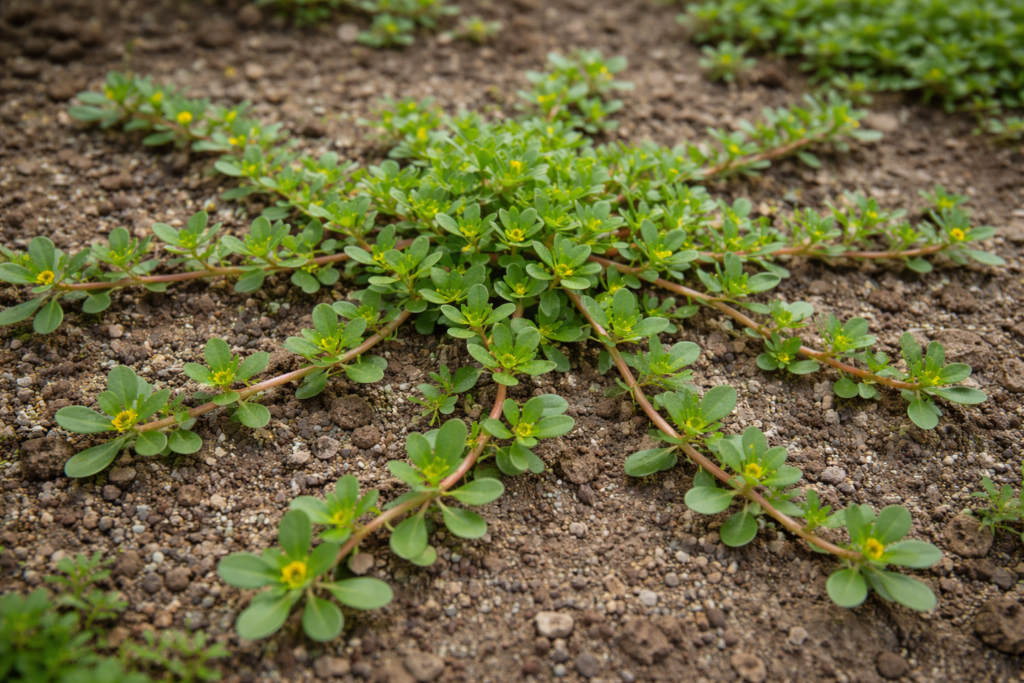
Purslane is one of the most misunderstood plants in Appalachia and beyond. Often pulled, cursed, and discarded as a nuisance, it is in fact one of the most nutrient-dense wild plants on earth — valued as both food and medicine across cultures for thousands of years.
Unlike dramatic forest roots or rare mountain herbs, purslane grows where people live, following human disturbance, footpaths, gardens, and field edges. Appalachian folk didn’t romanticize it — they used it.
This is a plant of daily nourishment, quiet healing, and resilience.
🌍 Origins & Cultural Use
Purslane is believed to have originated in India and Persia, spreading early through:
- The Middle East
- Mediterranean Europe
- Northern Africa
- Asia
- Eventually North America
It was known to:
- Ancient Greeks (Hippocrates wrote of it)
- Romans
- Chinese medicine
- Indigenous North American foodways
- Appalachian and Southern kitchens
Thomas Jefferson grew purslane deliberately — not as medicine, but as salad food.
🌱 Identification (Brief but Important)
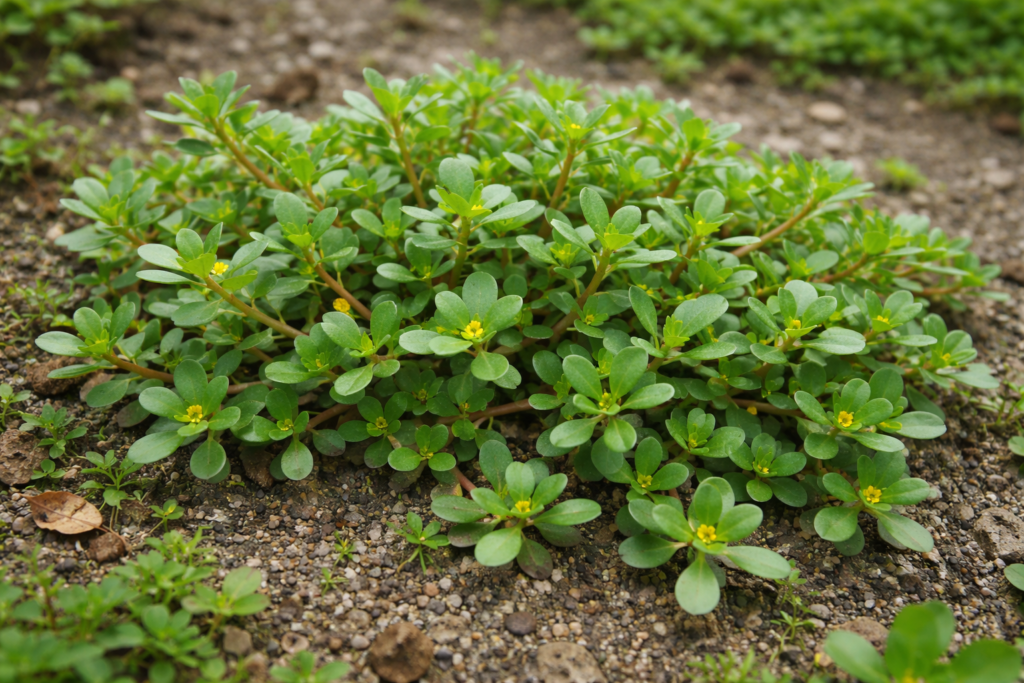
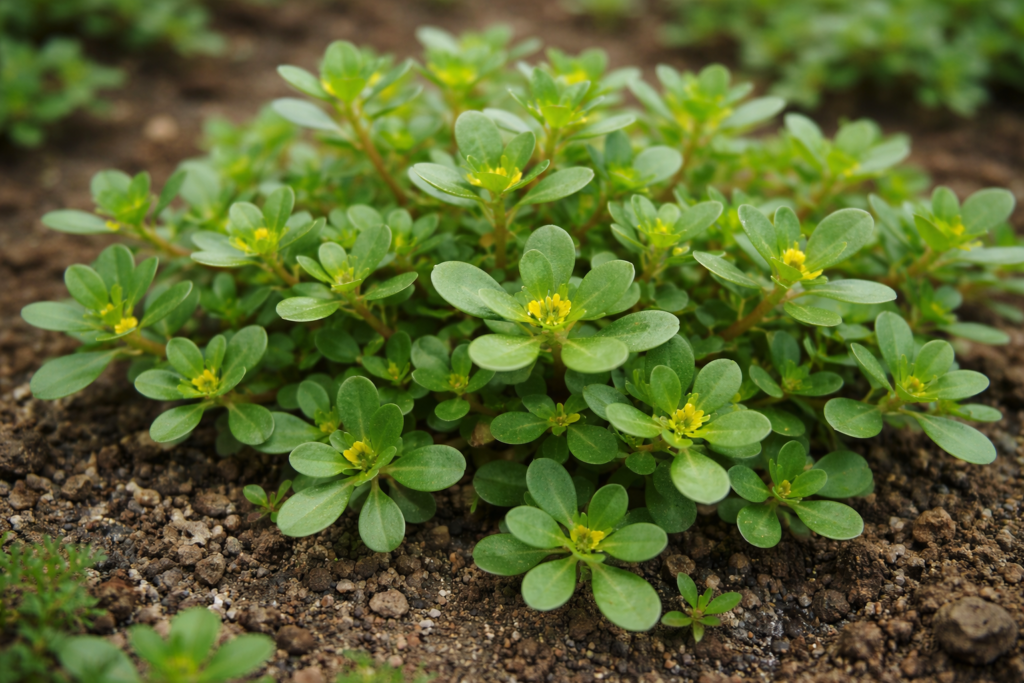
- Low-growing, creeping plant
- Smooth reddish stems
- Thick, succulent leaves (spoon-shaped)
- Yellow five-petaled flowers
- Slightly sour, lemony taste
This succulence is part of its medicine.
🧪 Component Breakdown — Why Purslane Works
Purslane is extraordinary because its chemical profile bridges food and medicine.
🔹 Omega-3 Fatty Acids (ALA)
Purslane contains more omega-3s than any other leafy green.
Effects:
- Anti-inflammatory
- Cardiovascular support
- Brain and nervous system nourishment
- Joint lubrication
- Hormonal support
This alone makes it medicinal food.
🔹 Mucilage (Soothing Polysaccharides)
These slippery plant compounds:
- Soothe irritated tissues
- Cool inflammation
- Protect mucous membranes
Effects:
- Gut lining support
- Urinary tract soothing
- Skin hydration
- Cooling internal heat
🔹 Flavonoids (Quercetin, Kaempferol)
Powerful antioxidants that:
- Reduce inflammation
- Support capillaries and circulation
- Protect cells from oxidative stress
🔹 Vitamins
- Vitamin A – skin, immune, vision
- Vitamin C – immune support, collagen
- Vitamin E – skin repair, antioxidant
- B-complex – energy metabolism
🔹 Minerals
- Magnesium
- Potassium
- Calcium
- Iron (plant-based)
These support:
- Muscle function
- Nerve conduction
- Hydration balance
- Fatigue recovery
🔹 Alkaloids & Betalains
Contribute to:
- Anti-inflammatory activity
- Cellular protection
- Detoxification pathways
🌿 Traditional Uses
Internally:
- Inflammation
- Digestive irritation
- Heat conditions
- Dehydration
- Joint stiffness
- Nutritional depletion
Externally:
- Burns
- Insect bites
- Skin irritation
- Rashes
- Dry or inflamed skin
Appalachian use focused more on food and poultice than tincture.
🌿 PREPARATIONS & FULL RECIPES
Below are complete, step-by-step preparations, not vague outlines.
🫖 Purslane Tea (Cooling Infusion)
Used for: inflammation, urinary irritation, heat, hydration
Ingredients:
- 1 cup fresh purslane (leaves + stems)
or 2 tablespoons dried purslane - 2 cups water
Method:
- Chop purslane coarsely.
- Bring water just to a simmer (not boiling hard).
- Add purslane, cover.
- Simmer gently 10–15 minutes.
- Remove from heat, steep an additional 10 minutes.
- Strain.
Use:
- Drink 1–2 cups daily
- Can be taken warm or cooled
- Mildly lemony, refreshing
🍯 Purslane Syrup (Internal Soother)
Used for: inflammation, dry cough, heat conditions
Ingredients:
- 2 cups fresh purslane
- 3 cups water
- Raw honey (equal volume to strained liquid)
Method:
- Simmer purslane in water 20 minutes.
- Strain and measure liquid.
- Add equal part honey.
- Warm gently to dissolve — do NOT boil.
- Bottle and refrigerate.
Dose:
- 1 teaspoon 2–3x daily
🌿 Purslane Tincture (Modern Use)
Not traditional Appalachian, but useful.
Ingredients:
- Fresh purslane, chopped
- 80–100 proof alcohol (vodka or brandy)
Method:
- Fill jar ¾ full with fresh purslane.
- Cover completely with alcohol.
- Seal, label, store dark 4–6 weeks.
- Shake daily.
- Strain and bottle.
Dose:
- 10–20 drops up to 3x daily
Best for people who don’t eat greens.
🧴 Purslane Oil & Salve (Skin Medicine)
Oil Infusion:
- Chop fresh purslane
- Dry slightly (to reduce moisture)
- Cover with olive oil
- Infuse 4–6 weeks (or low heat 4–6 hours)
- Strain
Salve:
- 1 cup infused oil
- 1 oz beeswax
Melt gently, combine, pour into tins.
Uses: burns, rashes, insect bites, dry skin, sun exposure
🌿 Purslane Poultice (Immediate Use)
- Crush fresh leaves
- Apply directly to skin
- Cover lightly
- Leave 20–30 minutes
Excellent for heat, bites, irritation.
🍽️ Purslane as Food (This Is Where It Shines)
Raw Uses:
- Chopped in salads
- Mixed with tomato, cucumber, onion
- Added to yogurt or sour cream dips
Cooked Uses:
- Sautéed with garlic and olive oil
- Added to soups and stews
- Folded into eggs or beans
Traditional Appalachian Style:
- Lightly wilted
- Salt, vinegar, bacon fat (sparingly)
🌿 Drying & Storage
- Air dry on screens
- Store in airtight jars
- Use within one year
Drying reduces omega-3s slightly but preserves minerals and mucilage.
⚠️ Safety Notes
- Very safe for most people
- Contains oxalates — moderation advised for kidney stone history
- Avoid harvesting near roads or sprayed areas
🌱 Why Purslane Matters
Purslane teaches an Appalachian truth:
“What keeps you alive isn’t always rare — it’s what grows where you stand.”
It feeds before it fixes.
It cools before it forces.
It heals quietly.
That’s not weakness.
That’s wisdom.
Purslane in Folk Magic & Witchcraft
The short truth
Purslane was used by folk witches, cunning folk, and household healers, but mostly for:
- protection
- cooling
- peace
- truth
- grounding
Not curses. Not domination. Not spectacle.
It was valued because it calmed things down — bodies, emotions, situations.
🧿 European Folk Witchcraft
In medieval and early modern Europe, purslane was associated with:
🔹 Protection
- Planted near doors or thresholds
- Believed to ward off harmful influences
- Used to “cool” hostile intentions
Pliny the Elder wrote that purslane could protect against:
“evil enchantments and poisonous influences”
That idea carried forward into folk magic.
🌿 Folk Belief & Old Sayings
In European folk tradition, purslane was believed to “cool hot blood and hotter tempers.” It was planted near doorways to discourage quarrels and was sometimes added to wash water to bring calm back into a household after conflict. Appalachian families didn’t speak of this as magic — they simply said purslane “settled things down.” Because it fed the body and eased inflammation, it was trusted to restore balance not just in health, but in home life as well.
That’s it.
No spells. No drama. Just observed wisdom.
🔹 Truth & Clarity
Purslane was linked with:
- Clear speech
- Honest dealings
- Settling disputes
Some folk traditions used it in truth charms or to prevent deception — especially in business or legal matters.
🌿 Cooling Magic (Very Important)
Purslane was considered a cooling plant in both medicine and magic.
That meant it was used when:
- Tempers were hot
- Arguments flared
- Emotions ran too high
- Illness was “hot” (fever, inflammation)
In magic terms, it was used to:
- Reduce anger
- Calm jealousy
- Ease grief
- Restore balance
This overlaps perfectly with how it works in the body.
🏔️ Appalachia & Granny Witch Traditions
In Appalachian folk practice, purslane was not commonly labeled “witchcraft.”
It fell under household wisdom.
But some quiet uses included:
- Added to wash water to calm a tense household
- Used in summer cooling teas
- Planted near homes for peace and protection
- Given to children for irritability and heat
No circles. No chants. Just practical magic.
Appalachian “granny witches” rarely separated:
food, medicine, and spiritual use
Purslane lived right at that crossroads.
🕯️ How It Might Have Been Used (Historically)
Not instructions — just context.
- Carried fresh to “cool the head”
- Laid near beds during fever or unrest
- Cooked into meals during conflict-heavy times
- Used in baths or washes during emotional strain
Its magic was preventive, not aggressive.
🌱 Why Purslane Was Trusted
Because it:
- Grows close to the ground (grounding)
- Spreads gently, not invasively
- Holds water (cooling)
- Nourishes rather than depletes
Folk belief follows observation.
A Key Distinction
Purslane was:
- ❌ not a hex plant
- ❌ not a vision-inducing plant
- ❌ not a ritual centerpiece
It was a keeper of balance.
That’s actually more powerful — and more Appalachian.
A Beautiful Closing Thought (true to tradition)
Old folk belief held that:
“Plants that feed you won’t betray you.”
Purslane fed people.
So it was trusted.
If you enjoy stories like this, you’ll love the other life lessons & memories I’m sharing on The Appalachian Sage. …………And if you’re ever in the mood to browse something pretty, you can stop by my Etsy shop, The Appalachian Sage Shop, where I pour the same love and kindness into each design.