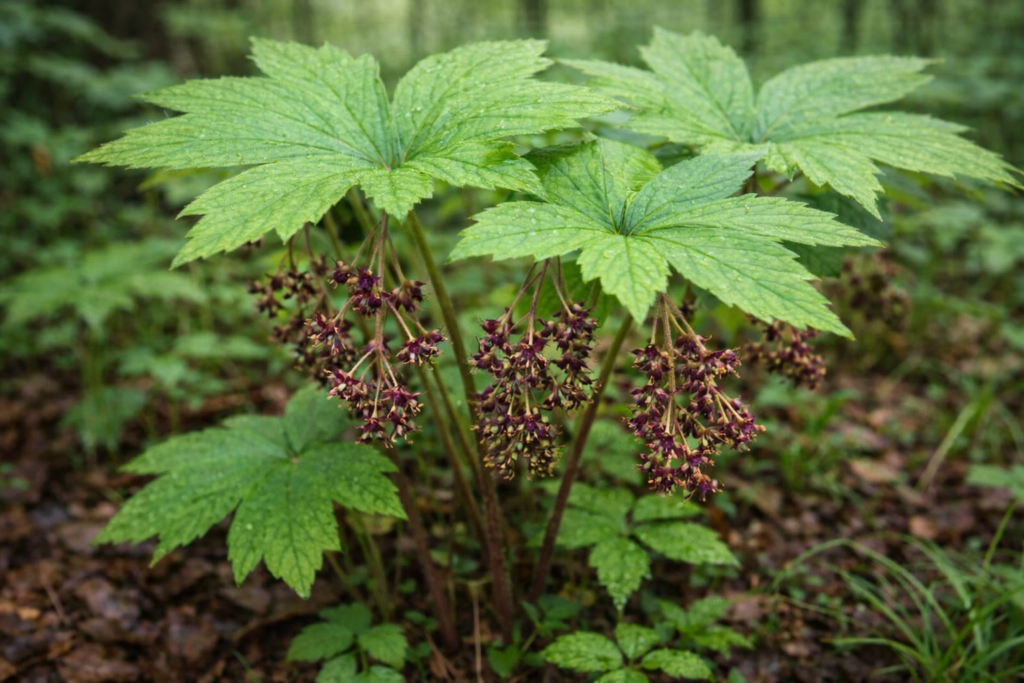
Xanthorhiza simplicissima
The Bitter Backbone of Appalachian Mountain Medicine
Yellowroot is one of the most respected — and most misunderstood — plants in Appalachian folk healing. Known for its intense bitterness, golden interior, and powerful cleansing nature, Yellowroot has long been used by mountain healers, Native American practitioners, and traditional herbalists as a short-term corrective herb, not a daily tonic.
This is a plant of discipline, restraint, and precision — a teacher as much as a remedy.
Yellowroot Botanical Origin & Natural Range
Yellowroot is native to:
- The eastern United States
- Especially abundant in Appalachia
- Found along wooded stream banks, moist forest slopes, and shaded ravines
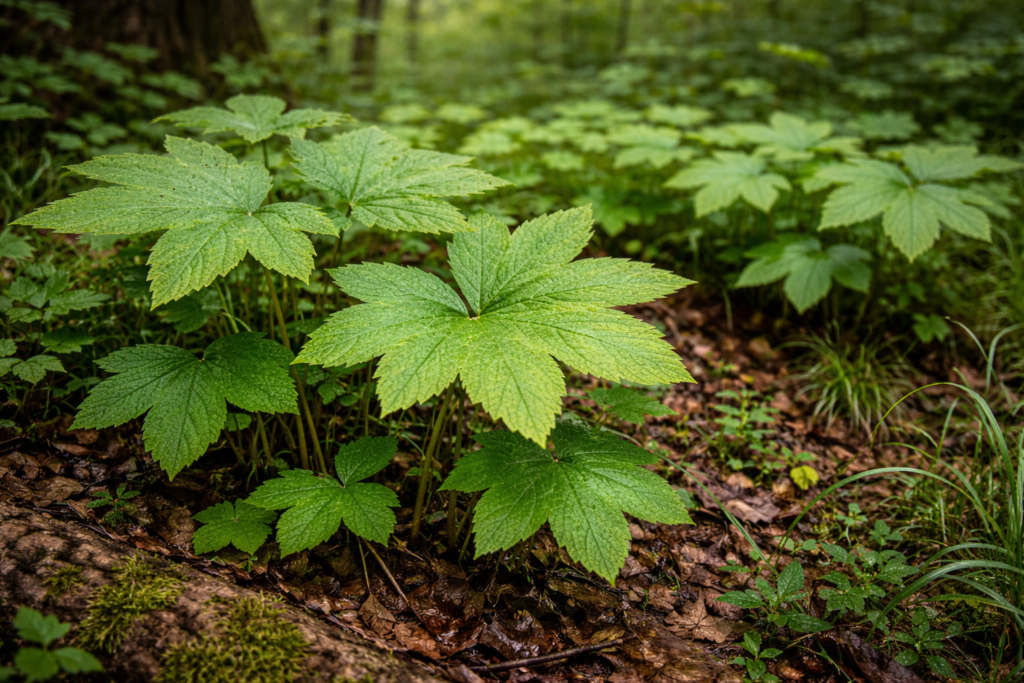
It grows low to the ground as a woody shrub, with:
- Thin, branching stems
- Lobed, maple-like leaves
- A bright yellow interior root that stains fingers when cut
Its color alone told mountain people everything they needed to know:
this plant moves bile, heat, stagnation, and infection.
Yellowroot Core Chemical Components
Yellowroot’s activity comes from a group of bitter alkaloids, primarily:
Berberine
Berberine is the dominant compound in Yellowroot and the main reason it is so powerful.
It is intensely bitter and:
- Stimulates bile flow
- Supports digestive secretions
- Influences gut microbial balance
- Affects blood sugar regulation pathways
- Acts strongly on mucous membranes
Berberine is not nourishing — it is corrective. This is why Yellowroot was never taken daily or long-term.
Palmatine
Palmatine works alongside berberine and has:
- Similar bitter digestive stimulation
- Supportive effects on liver and gallbladder function
- Mild antimicrobial activity
It contributes to Yellowroot’s reputation as a cleanser rather than a builder.
Jatrorrhizine
This alkaloid adds:
- Additional bitter toning effects
- Synergistic action with berberine
- Support for short-term internal cleansing protocols
Tannins
Yellowroot also contains tannins, which:
- Tighten tissues
- Reduce excess secretions
- Support wound and skin applications
- Make the plant useful externally for washes
This explains why Yellowroot was used both internally (briefly) and externally (more often).
Appalachian Folk Healer Uses For Yellowroot
In Appalachian practice, Yellowroot was used for:
- Digestive upset linked to liver stagnation
- Bitter tonic to “wake up” digestion after illness
- Skin washes for sores, rashes, and infections
- Mouth rinses for gum issues
- Short-term spring cleansing
Mountain healers were very clear:
“Yellowroot is strong medicine — you don’t stay on it.”
It was often taken:
- For a few days
- Then stopped
- Followed by nourishing herbs like burdock, nettle, or yellow dock
Native American Traditional Uses For Yellowroot
Several Southeastern tribes used Yellowroot similarly:
- As a bitter digestive aid
- For skin conditions
- As a wash for infections
- Occasionally as a ceremonial cleansing herb
It was respected, not abused — and never treated as food.
Is Yellowroot Eaten as Food?
No..…No…..NO……NO……NO
Yellowroot is not a food plant.
Why:
- Extremely bitter
- Alkaloid-rich
- Can irritate digestion if misused
- Not nutritionally supportive
It was never cooked into meals or used like dandelion or burdock.
Traditional Yellowroot Preparations & Recipes
Decoction (Traditional, Short-Term Only)
- ½–1 teaspoon dried root
- Simmered gently in water
- Taken in very small amounts
- Used for only a few days
Tincture
- Preferred modern form
- Allows precise dosing
- Taken in drops, not droppers
External Wash
- Decoction used on skin
- Mouth rinse (not swallowed)
- Washes for minor wounds or infections
Yellowroot in Modern Products
Today, Yellowroot or its alkaloids appear in:
- Digestive formulas
- Liver support blends
- Bitter tonics
- Herbal capsules (low dose)
- Mouth rinses and topical products
Often, the berberine itself is extracted and standardized.
Appalachian POWWOW & Granny Healers/Folk-Magic Uses For Yellowroot
In folk magic and mountain witchcraft, Yellowroot was associated with:
- Cleansing work
- Breaking stagnation
- Removing unwanted influences
- Boundary-setting spells
- Ending cycles that had “gone sour”
It was never used lightly or casually in magic.
Common symbolic uses:
- Carried in small amounts for protection
- Used in wash water for house cleansing
- Paired with prayers or psalms for release work 🌿 Yellowroot (Xanthorhiza simplicissima) + Powwow Psalm Pairing
Traditional Powwow Focus of Yellowroot
Yellowroot is a bitter purifier. In Appalachian and Pennsylvania German practice, bitter yellow roots were used to:
Cleanse the blood
Drive illness out rather than suppress it
Correct imbalance in digestion and liver function
Remove lingering sickness after fever, flu, or infection
Spiritually: cut through stagnation, corruption, and lingering evil influences
In Powwow, bitterness is not punishment—it is correction.
📖 The Psalm That Matches Yellowroot
Psalm 51 — Cleansing, Purification, and Restoration
This is the most historically appropriate Psalm to pair with Yellowroot.
“Wash me thoroughly from mine iniquity,
and cleanse me from my sin.”
— Psalm 51:2 (KJV)
Why Psalm 51 fits Yellowroot perfectly:
Yellowroot cleanses the body
Psalm 51 cleanses the inner man
Both work by removal, not masking
Both are used when something is deeply rooted
In old Powwow, Psalm 51 was used not only for moral matters, but physical sickness, especially when illness lingered or “would not leave.”
🌿 How Yellowroot & Psalms Were Used Together (Historically Accurate)
For Illness That “Hangs On”
An Appalachian healer might prepare:
A weak Yellowroot decoction (very bitter, small dose)
Read Psalm 51 once, slowly, before drinking
Read it again after, giving thanks
The belief was:
“The root does the work God assigned it, and the Psalm opens the way.”
🕯️ Spoken Powwow Formula (Traditional Style) For Yellowroot & Psalm 51
This would be spoken plainly, not theatrically:
“As this root is bitter and clean,
so may this sickness be drawn out and removed.
Wash me, and I shall be clean.
Restore me unto health, by God’s will. Amen.”
Then Psalm 51 is read in full (always KJV in traditional Powwow).
🔥 When NOT to Use Yellowroot + Psalm 51
Historically avoided if:
The person is very weak or frail
Pregnancy (Yellowroot is contraindicated)
The illness needs soothing, not cleansing
In those cases, healers switched to marshmallow, mullein, or oatstraw, paired with Psalm 23 or 91 instead.
✨ Optional Secondary Psalm (Advanced Use)
For stubborn conditions with emotional weight:
Psalm 38 (sickness, pain, burdened body)
Used after Psalm 51, never before
🌲 Appalachian Granny Wisdom (Plainspoken Truth)
“Yellowroot doesn’t lie.
It tells the body the truth,
and the Psalm tells the soul to listen.”
Because of its bitterness, it symbolized:
Truth, clarity, and endings — not comfort.
Why Yellowroot Fell Out of Everyday Use
As herbal knowledge became more standardized, practitioners recognized:
- Risk of overuse
- Potential strain on gut flora
- Need for precise dosing
Today, ethical herbalists emphasize:
- Short-term use only
- Never daily
- Never long-term
- Always followed by nourishing herbs
A Plant With Boundaries
Yellowroot teaches an important lesson:
Strong medicine demands strong respect.
It is not trendy.
It is not gentle.
It is not forgiving of misuse.
But when used properly — briefly, wisely, and with intention — it remains one of Appalachia’s most powerful botanical teachers.
⚠️ Disclaimer
This article is for educational and traditional reference only. Yellowroot is a potent medicinal plant and should not be used casually or long-term. Always consult a qualified herbal practitioner or healthcare professional before internal use.
If you enjoy stories like this, you’ll love the other life lessons & memories I’m sharing on The Appalachian Sage. …………And if you’re ever in the mood to browse something pretty, you can stop by my Etsy shop, The Appalachian Sage Shop, where I pour the same love and kindness into each design.