By Hannah Cedars — The Appalachian Sage
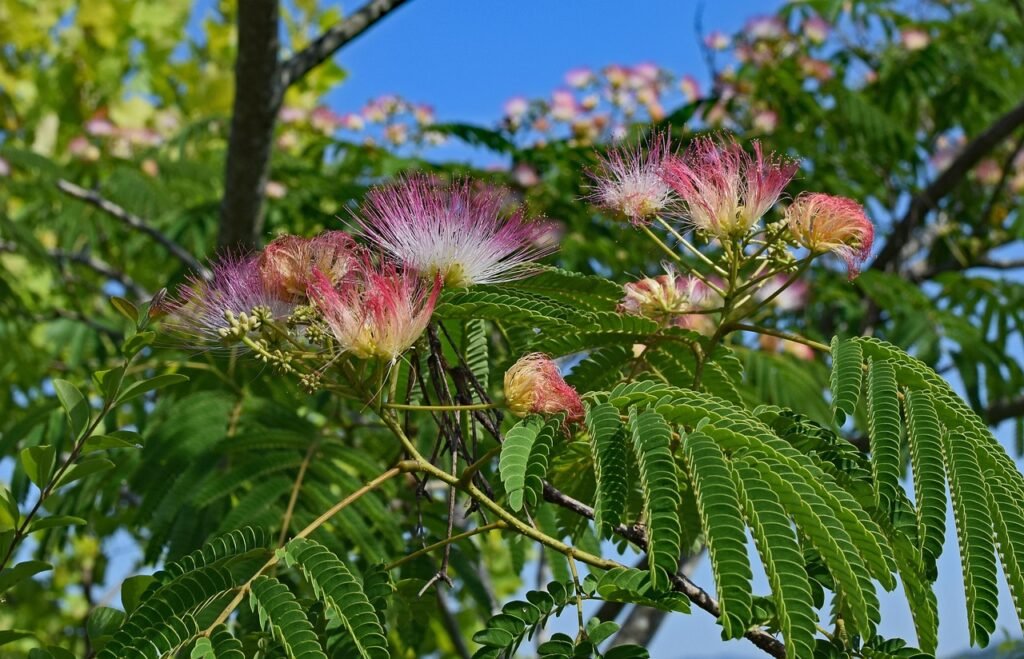
Some trees simply grow. Others glow. Among all the trees that grace the Appalachian summer, few shine with the soft, shimmering beauty of the Mimosa (Albizia julibrissin). For children, it is a fairy tree — with blossoms like pink powder puffs drifting through the air like silk. For adults, it is a living reminder of gentleness, joy, and the sweetness of warm evenings. For healers across centuries, East and West, the Mimosa tree
has been known as the Tree of Happiness, a healer of heavy hearts, a companion to the spirit, and a source of medicinal promise from root to blossom.
The Mimosa tree traveled far before it found its home in America’s mountains. Native to ancient Persia, India, China, and Korea, the tree carried an exotic grace that early settlers immediately adored. By the 1800s it had become a beloved ornamental in the American South, planted near porches, garden walks, and old homesteads where its feathery leaves would open with the dawn and fold gently at dusk — a daily rhythm that seemed almost alive.
Children in rural towns watched hummingbirds dance through its blossoms, while mountain women gathered the flowers and bark for teas, tinctures, and calming tonics. Today, modern herbalism confirms much of what ancestral healers instinctively knew: the Mimosa tree offers emotional comfort, nervous system support, wound-healing potential, and even mild anti-inflammatory action.
This tree is beauty, medicine, memory, and meaning — all carried in the soft sway of pink blossoms in summer light.
The Ancient Roots: How Mimosa Was Used in Old World Medicine
Long before it arrived in Appalachia, Mimosa had a powerful healing reputation across Asia. Chinese medical texts dating back more than 2,000 years describe Mimosa flowers and bark as medicines that “lift the spirit,” “calm the heart,” and “relieve sorrow.” It was prescribed for:
- Grief
- Anxiety
- Insomnia
- Restlessness
- Emotional shock
- Poor memory
- Minor pain and swelling
In Traditional Chinese Medicine (TCM), Mimosa is called He Huan Hua (flowers) and He Huan Pi (bark), meaning “the collective happiness flower/bark.” It was considered a Shen tonic — a restorer of the spirit. Practitioners believed Mimosa could mend emotional wounds as surely as it mended physical ones.
Across Persia and India, Mimosa was associated with peace, harmony, fertility, and joy. Its fragrant blossoms were used in perfumes, teas, ceremonial garlands, and mood-lifting remedies.
When the tree arrived in the American South in the 1700s, Appalachian folk healers recognized its emotional medicine immediately. Its calming tea became a quiet ally for nervousness, melancholy, and sorrow, especially among women who depended on simple, accessible remedies from their own backyards.
For me, personally, the Mimosa tree is my favorite tree, even above the Weeping Willow and Palm trees… I was attracted to Mimosa early in my teenage years when I saw it growing by the road on my Dad’s family farm. I didn’t know at the time that someone probably planted it there. In fact, I found out later that where it stood was the front yard of my grandparents house before the state put the road through there. At the time, I thought it was a native tree to this area of KY….. I’ve got photographs of so many Mimosa trees, from Hawaii to Appalachia. This is a tree that is simply gorgeous to me.
The Medicinal Components of Mimosa: Why It Works
Nearly every part of the Mimosa contains active compounds with healing potential. Modern research has identified several key constituents:
Flowers (He Huan Hua)
- Flavonoids (quercetin, kaempferol) – antioxidant, anti-inflammatory, calming to the nervous system
- Saponins – mood-lifting, supports neurotransmitter balance
- Volatile aromatic oils – relaxing and uplifting
- Triterpenoids – mild analgesic properties
Bark (He Huan Pi)
- Alkaloids – grounding, mild sedative qualities
- Tannins – astringent, wound-healing, anti-inflammatory
- Saponins – emotional balancing
- Lignans – antioxidant and neuroprotective
Leaves
- Mildly aromatic
- Lightly astringent
- Used occasionally as a poultice for minor wounds or inflammation
Roots
- Stronger astringent
- Historically used in poultices, washes, and spiritual purification practices
Emotional Medicine
Mimosa is most famous for its effect on the Shen — the heart-spirit. Herbalists often describe it as:
- Joy-lifting
- Calming
- Comforting
- Soothing in grief or emotional heaviness
Many modern practitioners call Mimosa “herbal sunshine for the heart.”
Decorative & Commercial Uses of Mimosa
1. Ornamental Beauty
The Mimosa quickly became one of the American South’s favorite ornamental trees due to its:
- Tropical appearance
- Fast growth
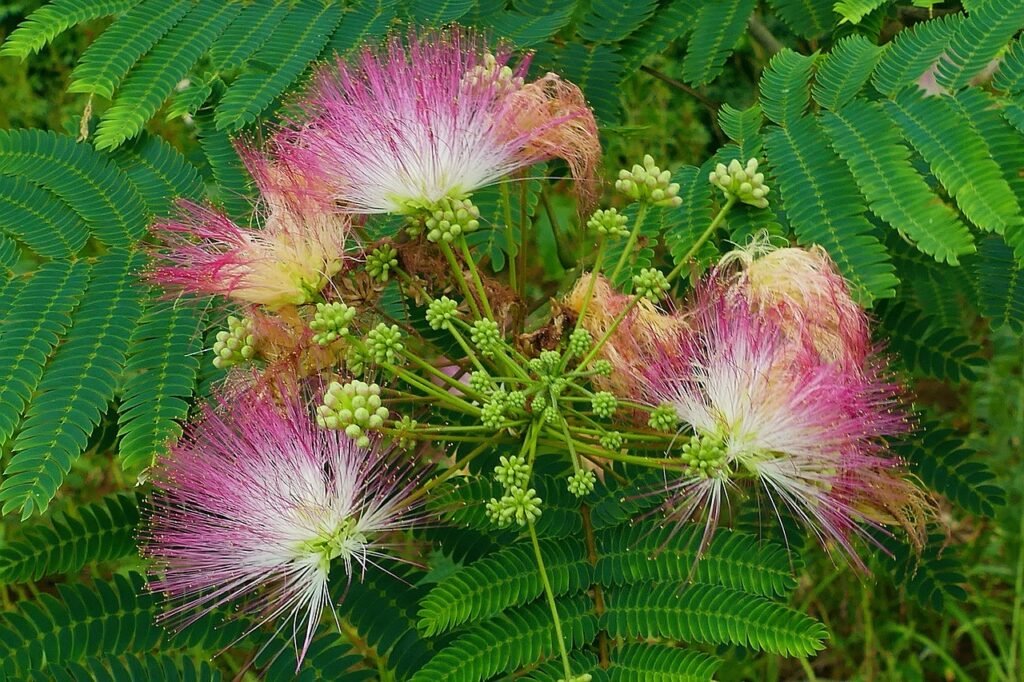
- Delicate, fern-like leaves
- Pink “silk” blossoms
- Hummingbird and butterfly attraction
It remains a cherished yard tree across Appalachia, despite being labeled “invasive” in some regions.
2. Fragrance & Craft Uses
- Blossoms are used in potpourri, perfume extraction, and natural dye work.
- Dried flowers retain a soft scent reminiscent of rose and honey.
3. Wood & Bark Uses
- Mimosa wood is lightweight, used in carving small decorative items.
- Bark has commercial use in herbal supplements aimed at mood support.
4. Honey Production
Mimosa nectar is prized by honeybees, producing a fragrant, light honey in regions where large groves exist.
Traditional & Modern Mimosa Recipes
These recipes reflect a blend of old-world tradition, Appalachian folk practice, and modern herbal understanding.
1. Mimosa Flower Tea (for Calm & Emotional Balance)
Ingredients:
- 1 tablespoon dried Mimosa blossoms
- 1 cup hot water
Instructions:
Steep for 8–10 minutes. Strain and sweeten lightly if desired.
Uses:
- Calms worry and restlessness
- Lifts the mood
- Soothes emotional heaviness
- Supports gentle sleep
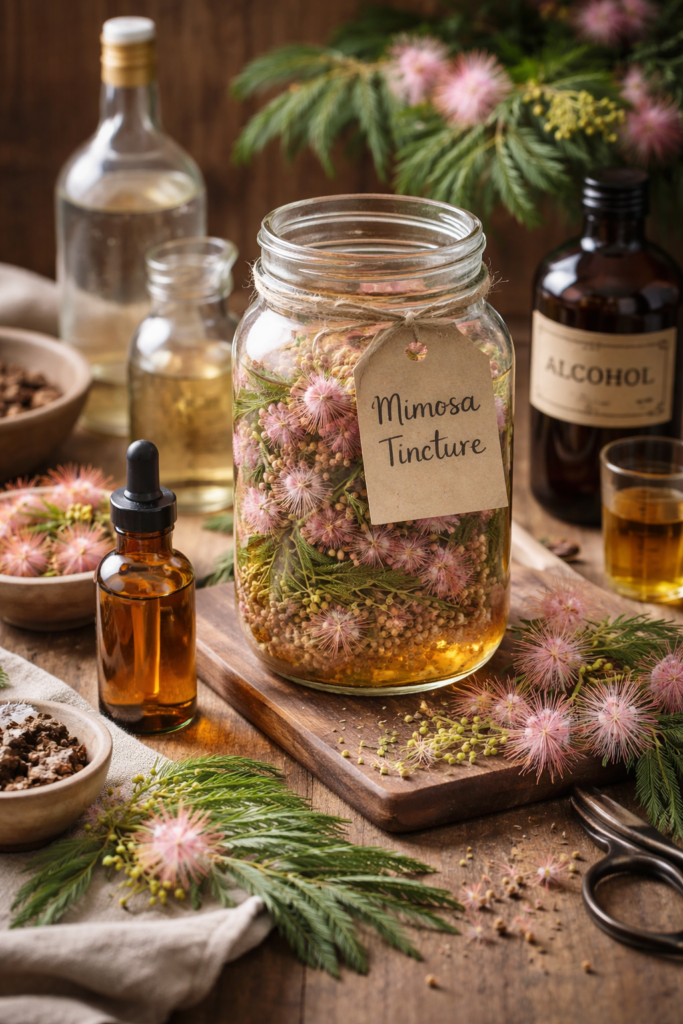
2. Mimosa Tincture (Flowers)
Ingredients:
- Fresh Mimosa blossoms
- 80–100 proof vodka or brandy
Instructions:
Pack a jar loosely with blossoms, cover with alcohol, seal, and store for 4 weeks. Shake daily.
Strain and bottle.
Uses:
- Emotional support
- Stress reduction
- Restless sleep
- Daytime mood-lifting tonic
Standard dose: 10–30 drops, up to 3 times daily.
3. Mimosa Bark Tincture (Deeper Nervous System Grounding)
Ingredients:
- Clean inner bark (shavings, not chunks)
- 80–100 proof alcohol
Instructions:
Fill jar halfway with bark; cover with alcohol. Steep 4–6 weeks.
Uses:
- Grief
- Anxiety
- Shock or emotional trauma
- Nighttime nervousness
Dose: 10–20 drops, 1–2 times daily.
4. Mimosa Salve (Flowers for Skin Healing & Emotional Comfort)
Ingredients:
- Dried Mimosa flowers
- Olive oil
- Beeswax
Instructions:
Infuse flowers in warm oil for 4–6 hours (double boiler on lowest heat). Strain.
Melt beeswax (1 part wax to 4 parts infused oil). Pour into tins.
Uses:
- Calming chest rub
- Soothing balm during grief or stress
- Mild anti-inflammatory skin salve
- Comforting nighttime ritual
5. Mimosa Flower Honey (Uplifting & Soothing)
Ingredients:
- Fresh Mimosa blossoms
- Raw honey
Instructions:
Layer blossoms in a jar, cover with honey, remove air bubbles, and cap. Let sit 2–4 weeks.
Uses:
- Tea sweetener with mood-lifting effects
- Gentle remedy for anxious or restless hearts
- Aromatic culinary treat
6. Bark Decoction (Traditional Old-World Method)
Ingredients:
- 1 teaspoon dried bark shavings
- 2 cups water
Instructions:
Simmer gently for 20–30 minutes. Strain.
Uses:
- Grounding the nervous system
- Calming irritation
- Mild digestive support
- Folk remedy for emotional fatigue
Spiritual & Emotional Folklore
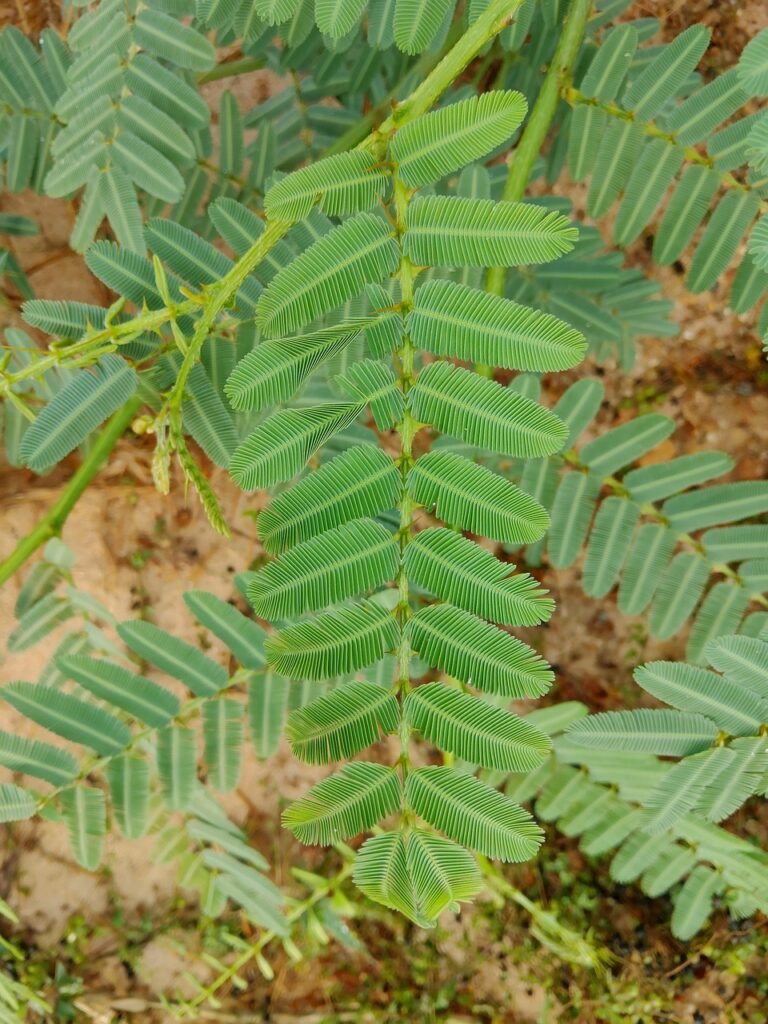
Ancient healers believed Mimosa to be a bridge between the outer world and the inner heart. The feathery leaves that open with the sun and close at night symbolized:
- Sensitivity
- Awareness
- Emotional resonance
- Inner renewal
In Appalachia, many families simply called Mimosa the “joy tree,” saying its blossoms “lift the heart like a prayer.”
Some mountain sayings included:
“Keep Mimosa near where sorrow sits.”
“Bloom like the Mimosa: softly, sweetly, without apology.”
Closing Thoughts
The Mimosa tree holds a rare blend of beauty and medicine — a tree that heals not only the nerves and tissues of the body, but the emotions and spirit that carry us through life. Its blossoms shimmer like silk in summer wind; its bark quiets the restless mind; its flowers soothe the weary heart. For generations across continents, Mimosa has offered its gentle medicine to anyone who paused long enough to notice its grace.
In the Appalachian hills, this tree stands as a reminder that sometimes the most powerful healing comes in soft petals, delicate leaves, and simple moments of beauty. Mimosa has always been — and will always remain — a tree of joy.
If you enjoy stories like this, you’ll love the other life lessons & memories I’m sharing on The Appalachian Sage. …………And if you’re ever in the mood to browse something pretty, you can stop by my Etsy shop, The Appalachian Sage Shop, where I pour the same love and kindness into each design.