Excerpt:
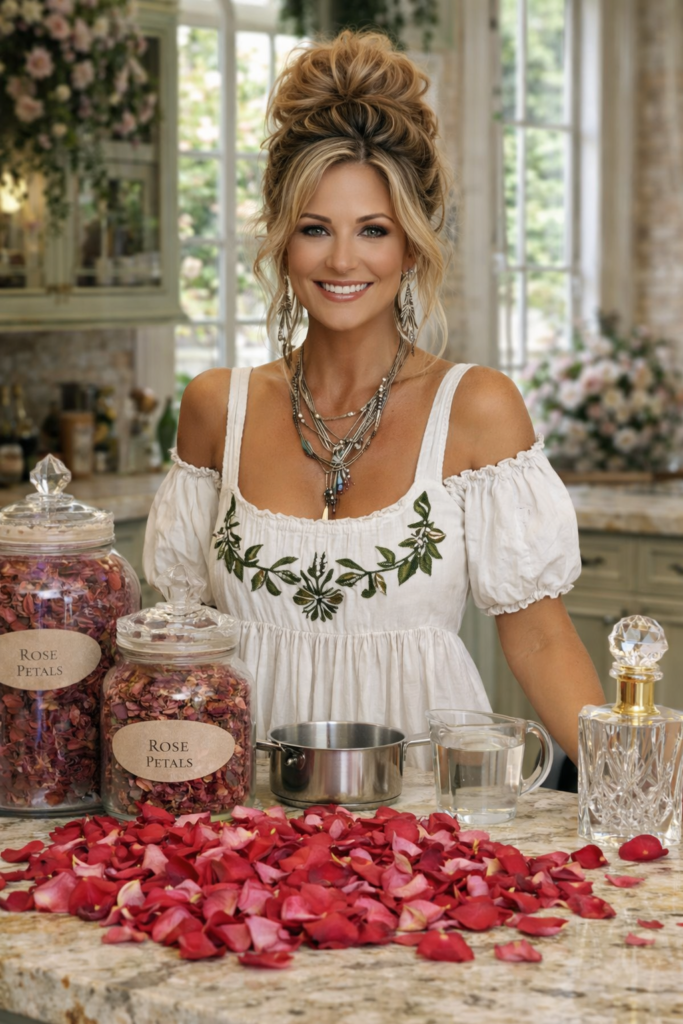
Rose water is one of those gentle old-fashioned beauties that still feels lovely today. In this article, we explore how women used rose water in earlier times, how it may have been used in Appalachia, the difference between roses then and now, and how to make a stronger homemade version today.
Rose water is one of those soft old-fashioned things that still feels beautiful now.
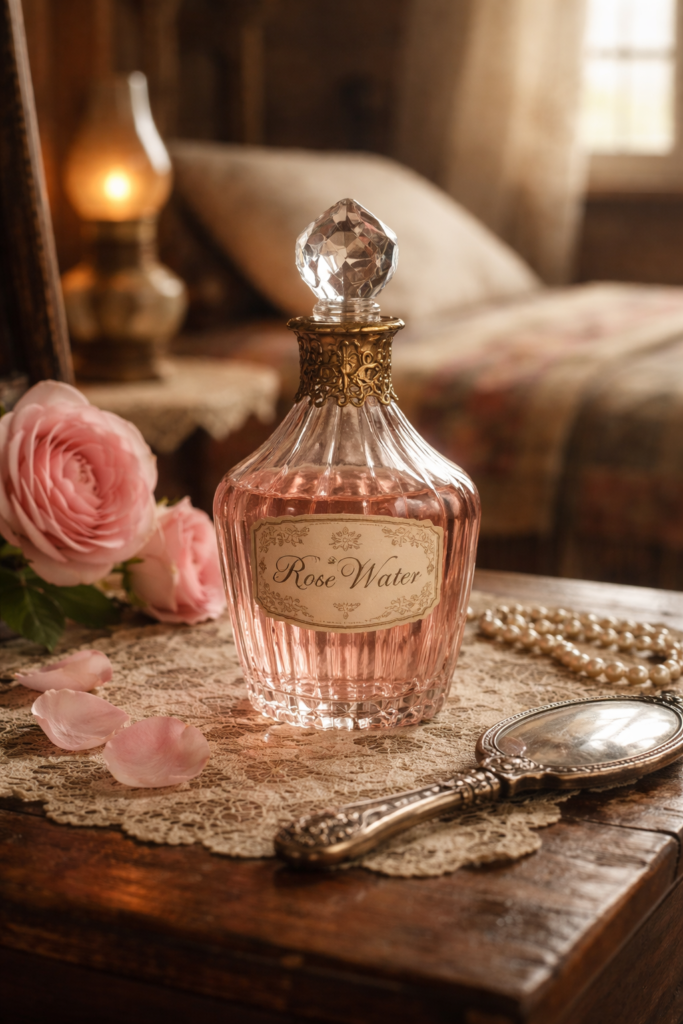
Moreover, long before shelves were crowded with body sprays and perfume bottles, women were making scented waters from flowers, herbs, and what they had close at hand. One of the loveliest of them all was Rose Water. It was simple, feminine, useful, and quietly elegant — the kind of thing a woman might keep on her dressing table, dab onto a handkerchief, or carry with her to church or visiting.
Here at The Appalachian Sage, I love the old ways that live somewhere between beauty and practicality, and rose water sits in exactly that place.
What Rose Water Was
In fact, rose water is simply water scented with roses, though the finest versions in earlier times were often made through distillation rather than simple steeping. Distilled rose water was known and valued in older perfumery traditions, but many everyday women would have made a gentler homemade version by warming rose petals in water, covering the pot, and straining the liquid into a bottle.
That home version may not have been as concentrated as formal perfumers’ rose water, but it was still lovely and useful.
How Women Used Rose Water in Earlier Times
Rose water was more than perfume.
Women used it as:
- a face freshener
- a light body scent
- a little splash for the hands
- a way to scent handkerchiefs and linens
- a pretty addition to the dressing table
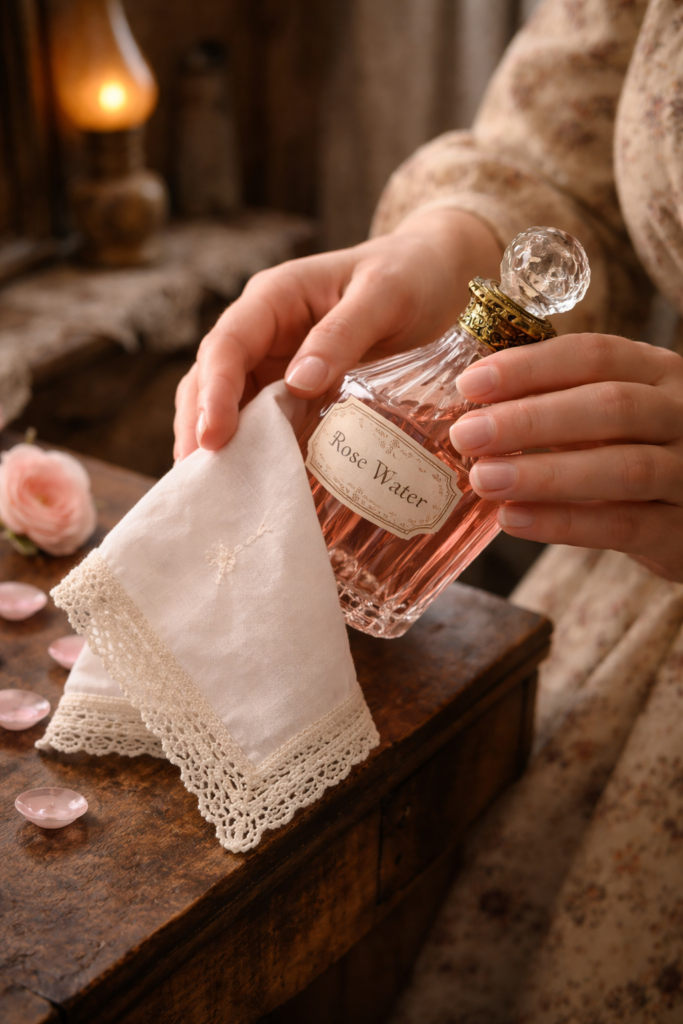
Back then, women often carried fragrance in a subtler way than people do today. Rather than spraying themselves all over, they might dab a little rose water onto a clean handkerchief and tuck it into a purse or reticule before heading to church, visiting, or town.
A woman might also touch a little to her wrists, neck, or bodice — just enough to carry sweetness close to her, not enough to overwhelm a room.
Rose Water and Appalachian Women
Appalachian women were practical women. They made use of what they had, and they knew how to turn garden beauty into household usefulness.
If roses grew by the yard, the fence line, or near the porch, it makes perfect sense that women would have used them in simple home beauty ways. Rose water would have fit beautifully into mountain life: easy to make, gentle to use, and feminine without being wasteful or showy.
In a town setting, a more refined woman or shopkeeper might have bought prepared rose water or alcohol-based toilet waters from a druggist. But at home, the simpler version could be made from petals, water, a covered pot, and a little patience.
That is part of what makes rose water feel so fitting for Sage — rooted in old ways, but still beautiful now.
What Kind of Women Used It?
Rose water was not only for wealthy women or fancy ladies in the city.
It could belong to:
- a churchgoing woman who liked to keep herself fresh and neat
- a young woman courting or preparing for a special social visit
- an older woman who preferred a soft floral water over strong perfume
- a town lady with a proper toilet table
- a country woman who loved the scent of her own garden
It was modest, respectable, and widely appealing — a small beauty that did not have to be extravagant to matter.
The Bottles Women Used Back Then
Women did not keep rose water in plastic mist bottles or modern spray pumps.
Instead, it would have been kept in:
- little glass stopper bottles
- corked scent bottles
- small toilet bottles on the dressing table
- cut-glass perfume bottles
- decorative bottles meant to be handled and poured carefully
In earlier times, rose water was more often dabbed, poured, or touched on with cloth or fingers than sprayed.
That is why an old-fashioned image of rose water feels so lovely: a small bottle, a folded handkerchief, a handful of petals, and a quiet morning light across the room.
Roses Then vs. Roses Now
This is one of the most important things to understand if you want your homemade rose water to smell beautiful.
Many old-fashioned roses were bred heavily for fragrance. Damask roses and other heirloom varieties were especially prized for their rich, deep scent. Many modern roses, by contrast, have been bred more for color, disease resistance, repeat blooming, or landscape performance than for perfume.
That means a woman making rose water long ago may have had access to roses with a stronger natural scent than many people have in their yards today.
So if your homemade rose water seems lighter than expected, that may not be your fault at all — it may simply be the rose variety.
How to Retain More Scent in Homemade Rose Water
If you want a richer-smelling rose water today, these little details matter:
1. Use the freshest petals possible
Pick roses while they are fresh and fragrant, not wilted or fading.
2. Gather them after the dew has dried
Too much surface moisture weakens the strength of the infusion.
3. Keep the pot covered
That helps hold the scent inside instead of letting it drift off into the kitchen air.
4. Use just enough water to barely cover the petals
Too much water dilutes the scent.
5. Double-infuse for a stronger result
After making your first batch, strain it and pour that scented water over a fresh batch of petals. Warm gently again and strain. This helps deepen the fragrance.
6. Choose fragrant roses whenever possible
Heirloom and old garden roses usually give a richer scent than many modern landscape roses.
Sage’s Rose Water Recipe
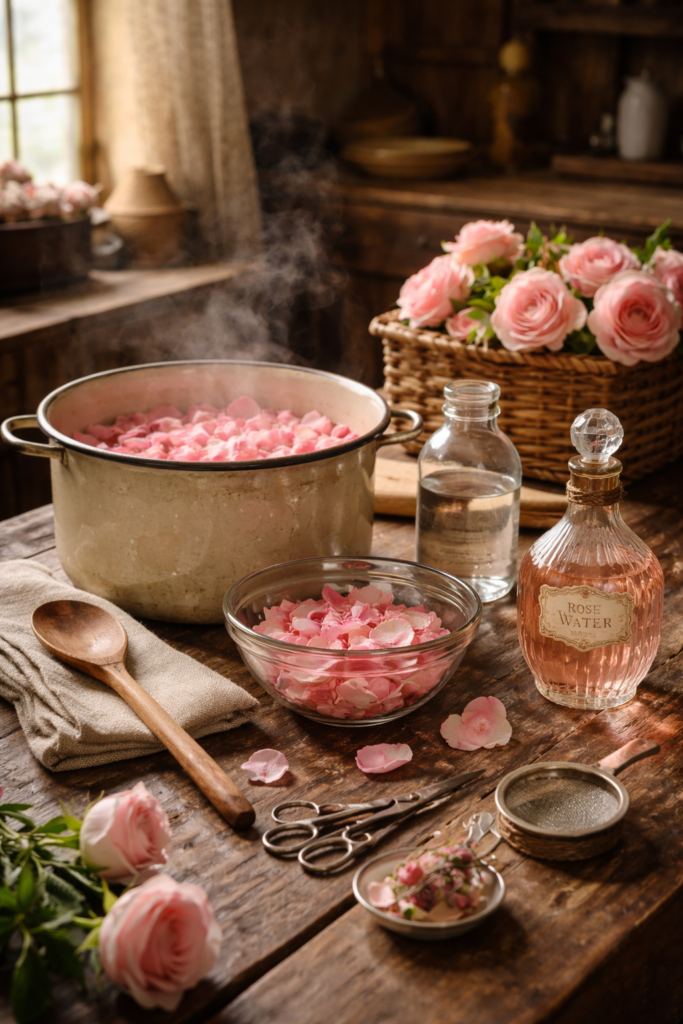
This is the simple kitchen version — easy, pretty, and inspired by old-fashioned home methods.
What You’ll Need
- 2 to 4 cups fresh rose petals
- distilled water
- a pot with a lid
- a fine strainer or cheesecloth
- a clean glass bottle or jar
How to Make It
- Place the fresh rose petals in a pot.
- Add just enough distilled water to barely cover them.
- Put the lid on.
- Warm very gently on low heat until the petals lose much of their color.
- Let the mixture cool with the lid still on.
- Strain well through a fine strainer or cheesecloth.
- Pour into a clean bottle or jar and refrigerate.
To Make the Scent Stronger
For a stronger rose scent, strain the first batch and pour that rose water over a fresh batch of petals. Warm gently again, cool, and strain.
How to Use It
Rose water may be used as:
- a light body splash
- a face freshener
- a linen mist
- a little scent dabbed onto a handkerchief
- a soft floral water for quiet daily use
Because this is a fresh homemade version, it is best kept in the refrigerator and used within several days.
Download the Printable Recipe Card
A Gentle Old Beauty Worth Keeping
There is something deeply lovely about old-fashioned things that were made by hand and used with care.
Rose water is one of those things.
It is not loud.
It does not need to announce itself.
It lingers softly — on the skin, in the handkerchief, in memory.
And maybe that is why women kept making it for so long.
Because for all its simplicity, it carries the scent of care.
— Hannah Cedars
The Appalachian Sage
If you enjoy stories like this, you’ll love the other life lessons & memories I’m sharing on The Appalachian Sage. …………And if you’re ever in the mood to browse something pretty, you can stop by my Etsy shop, The Appalachian Sage Shop, where I pour the same love and kindness into each design.