Some afternoons I sit on the porch with a glass of sweet tea and a couple lemon cookies, listening to the cicadas hum. Just recently I was thinking about how far a single leaf can carry a soul. Folks who visit The Appalachian Sage know I was raised around gardens and Mason jars, around people who believed the Lord stocked His own medicine chest right out in the yard. I always believed it too—but it hadn’t really hit home until my own life was on the line.. It took losing my health and nearly losing my life to truly understand the potency in nature that God created for all of us..
It all started when I read a book written by a Methodist preacher who was also a medical-school professor. So, he was a science-minded person, but one rooted in faith. He wrote about the “Healing Oils of the Bible.” Something in his words struck a match in me. I was lying in bed, too weak to do much of anything, when I looked over at a few tiny bottles sitting dusty on my dresser. A Tennessee doctor had sold them to me a year earlier, and I had never touched them. That evening I was weary from such devastating health issues, I was ready to move on if that’s what God wanted for me….. I slid off the side of the bed, knelt on the floor, and whispered, “Either He’ll let me live or He’ll take me home—but I’m turning the rest over to God and nature.”
Dan helped me, steady as always. I asked him to massage the oils into my skin each day while I took a few drops in small empty capsules. We didn’t know what would come of it; we only knew faith had to move first. Through those long months I began to notice how creation meets us halfway when we reach for it. I’d grown up with herbs and salves, but this time I wasn’t just following old habits—I was fighting my own way back to the living.
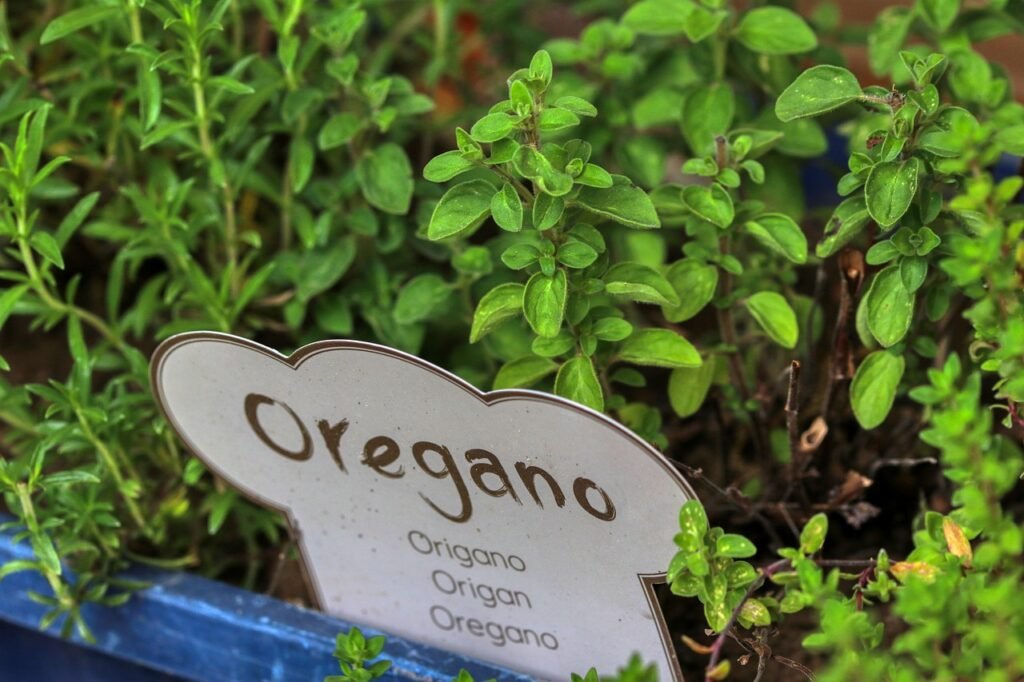
One oil in particular stood out—oregano. Its scent was sharp and fiery, like a spark still alive under a big heap of ashes. When I began to read more about oregano, I learned that the warmth that rises from those tiny leaves comes from a natural compound called carvacrol. Scientists classify it as a phenol, but I think of it as the spark of the plant’s spirit—the element that makes oregano smell like sunshine after rain and gives it that clean, resinous bite when you crush a leaf between your fingers.

Carvacrol occurs in many herbs, but oregano carries it in generous measure. Not all oregano is the same, though. The common kitchen kind we sprinkle on pizza is milder. Through constant research, I found out about the wild oregano that grows on rocky hillsides in the Mediterranean—especially in Greece—well, let’s say that’s the blessing that didn’t stop giving. Greek oregano develops far higher concentrations of carvacrol. It endures wind, drought, and heat, and the hardship seems to press the fire deeper into its oil. Maybe that’s why I felt drawn to it; I knew what it was to be weathered by struggle and still hold warmth inside.
I ordered my first bottle of oregano straight from Greece. When I finally opened that small bottle of wild Greek oregano oil, the aroma filled the room—earthy and clean, with a trace of something ancient. I didn’t think of it as medicine; I thought of it as prayer in liquid form. Each time I inhaled that scent, it felt like a reminder: the same hand that shaped the mountains shaped the leaves that grow upon them.
Over that periiod of time I gained a whole new reverence for nature’s design. The more I learned, the clearer it became that every plant carries a lesson about endurance and grace. Oregano’s lesson was fire and faith—how heat can purify rather than destroy. I began to see my own trial that way: pain as a forge, not a punishment.

These days, when I write about Appalachian herbs, I often think back to that night on the bedroom floor. It was the moment my heritage became personal. I had always known the stories—my grandmother hanging herbs in bunches, my people trusting what the earth provided—but that was the night I knew it; a point that far outweighs believing it… My suffering became my teacher, and nature became the classroom God built for me. That’s why I feel called to share my experiences with others. I want them to KNOW too.
Now, when visitors ask about oregano, I tell them what I know in plain speech: that carvacrol is one of the aromatic gifts hidden inside the leaf of oregano, and that some varieties—especially those from the stony Greek hills—carry it in greater measure, and that it’s one of the reasons oregano smells like courage. Beyond that, I make no claims. I just give thanks.
For those who feel called to travel a little deeper down that path, I’ve written a forthcoming book on oregano that explores its history, folklore, and the chemistry that makes it such a remarkable creation. It’s my way of honoring the leaf that found me when I was nearly lost.
Sometimes, late in the evening, I’ll open that same small bottle and breathe in its fire. The porch light glows, the whip-poor-will calls, and I whisper again,
“Carvacrol… God’s quiet gift in a tiny little leaf.”
Until next time, may your hands stay busy, your heart stay kind, and your porch light never go out.
With love and gratitude,
— Hannah Cedars
The Appalachian Sage
If you enjoy stories like this, you’ll love the other life lessons & memories I’m sharing on The Appalachian Sage. …………And if you’re ever in the mood to browse something pretty, you can stop by my Etsy shop, The Appalachian Sage Shop, where I pour the same love and kindness into each design.