Boneset is not a gentle herb.
It is not subtle, sweet, or meant for casual sipping.
Boneset (Eupatorium perfoliatum) is a medicine herb, historically reserved for moments when the body was overwhelmed—by fever, infection, deep aches, or exhaustion brought on by illness. Its name comes not from folklore exaggeration, but from lived experience: people used it when their bones ached so badly they felt as though they might break.
This plant earned its place in the apothecary by doing one job extremely well—helping the body move through illness rather than suppressing it.
Botanical Overview
- Botanical name: Eupatorium perfoliatum
- Family: Asteraceae (daisy family)
- Common names: Boneset, Thoroughwort, Agueweed
- Native range: Eastern and central North America
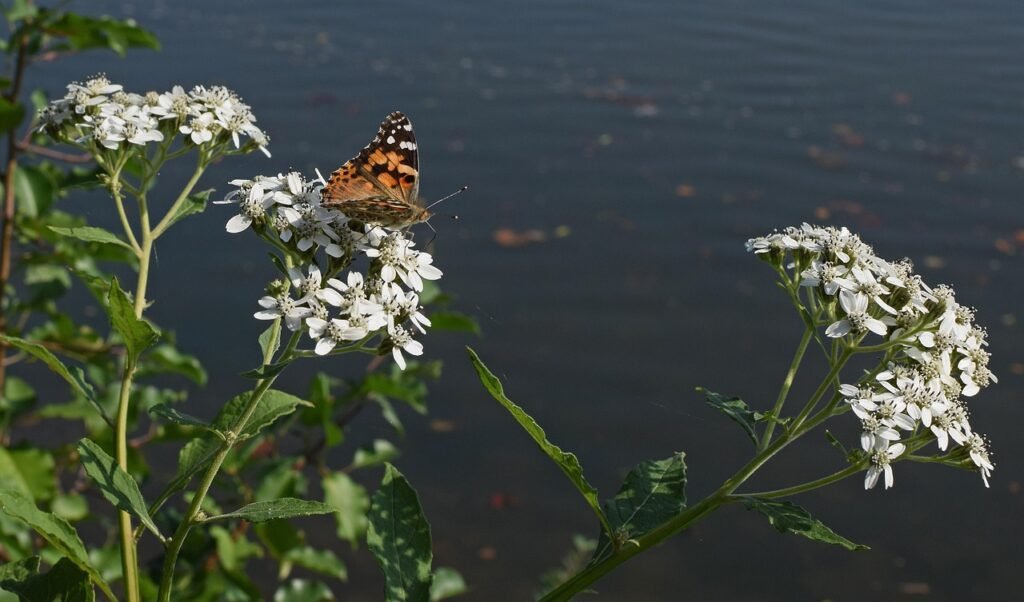
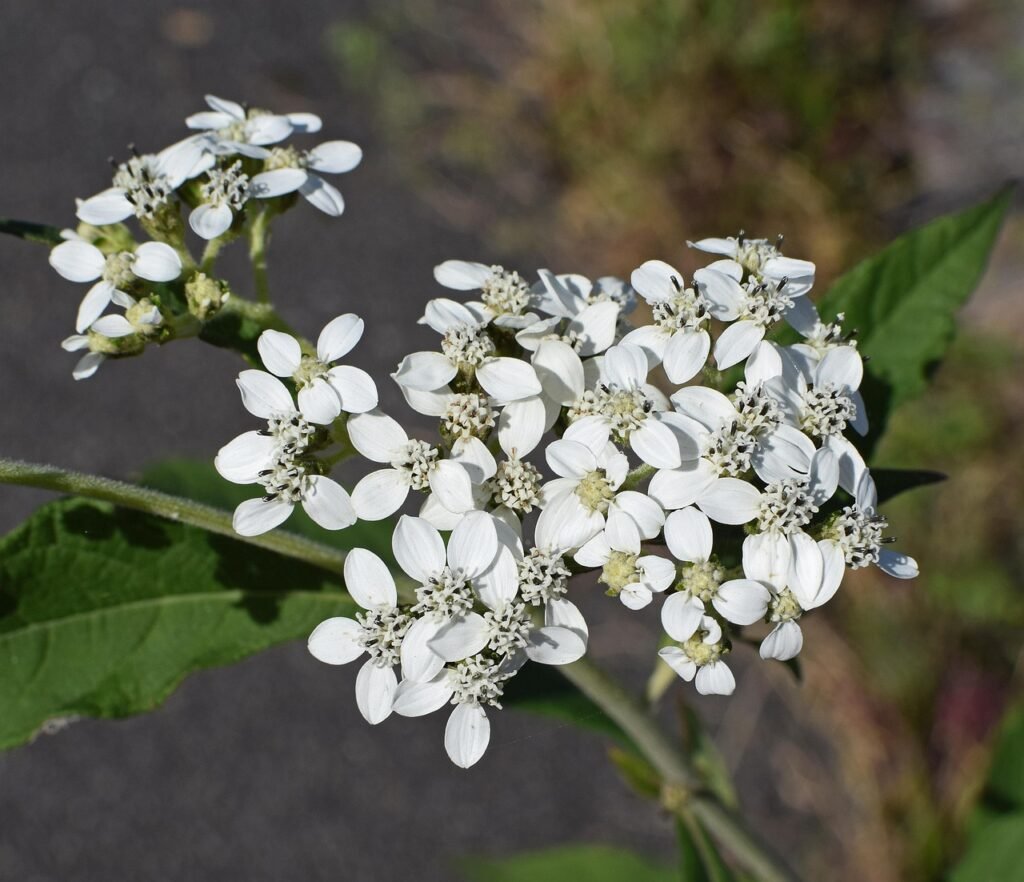
Boneset thrives in moist meadows, wetlands, creek edges, and low fields. It is easily identified by its opposite leaves that appear fused around the stem—called perfoliate leaves, a key identification feature.
Boneset in Kentucky
Scientific name: Eupatorium perfoliatum
Status: Native perennial
Common in: Central and Eastern Kentucky
Where you’ll find it growing
In Kentucky, Boneset prefers:
- Moist meadows and low pastures
- Creek and stream banks
- Wet ditches and floodplain edges
- Open woodland margins
- Old fields with decent moisture
You’ll often see it in late summer, standing tall (3–5 feet), with its unmistakable leaves fused around the stem — that perfoliate look is the giveaway.
Kentucky + Appalachian use
Boneset was:
- A classic fever herb in Kentucky folk medicine
- Used during influenza outbreaks (“breakbone fever”)
- Known for easing deep body aches, chills, and flu-type pain
- Often combined with elderflower, yarrow, or peppermint
Many Kentucky families didn’t call it “Boneset” — they called it fever weed.
Harvest timing in Kentucky
- Aerial parts: Late summer to early fall, just as flowers open
- Best potency: Right before or at early bloom
One important note
Because Boneset is strong and bitter:
- It was traditionally used short-term
- Not taken daily or long-term
- Avoided during pregnancy
Traditional Use & Cultural Context
Indigenous Use
Native American tribes—including Cherokee, Iroquois, and Algonquin—used Boneset primarily for:
- Fevers
- Influenza-like illness
- Malaria-like agues
- Severe body aches
- Respiratory infections
It was often combined with rest, sweating, and warmth to support the body’s natural fever response.
Early American & Appalachian Use
Boneset became one of the most relied-upon fever remedies during:
- 18th–19th century epidemics
- Influenza outbreaks
- “Breakbone fever” (a historical term describing intense bone pain during illness)
This plant was not taken daily. It was taken with intention.
Key Medicinal Actions
Boneset is traditionally classified as:
- Diaphoretic – promotes sweating
- Febrifuge – reduces fever by helping the body release heat
- Immunomodulating – supports immune response
- Anti-inflammatory
- Bitter tonic (strongly so)
Boneset does not “kill” illness.
It moves it through.
Chemical Components
Boneset’s strength comes from a combination of bitter compounds, volatile oils, and polysaccharides that act on the immune, inflammatory, and nervous systems.
1. Sesquiterpene Lactones
These are the primary bitter compounds in Boneset.
What they do:
- Stimulate immune response
- Modulate inflammation
- Trigger sweating
- Activate bitter receptors that influence digestion and immunity
Why they matter:
Bitter receptors don’t just exist in the mouth—they exist throughout the gut and immune system. These compounds help “wake up” immune signaling when the body is sluggish during illness.
2. Flavonoids (Quercetin derivatives)
Flavonoids contribute to Boneset’s anti-inflammatory and antioxidant effects.
They:
- Help reduce inflammatory signaling
- Protect tissues from oxidative stress during fever
- Support vascular stability during illness
This helps explain why Boneset can reduce discomfort without suppressing the immune response.
3. Polysaccharides
These complex carbohydrates are important for immune support.
They:
- Support macrophage activity
- Enhance immune coordination
- Help regulate inflammatory response rather than overstimulating it
Polysaccharides are one reason Boneset is often described as immune-strengthening but not immune-forcing.
4. Volatile Oils
Volatile (Essential) Oils Identified in Boneset
Eupatorium perfoliatum
Boneset does not contain a large essential oil fraction like thyme or peppermint, but the small amount it does contain is pharmacologically meaningful, especially in acute illness.
Primary Volatile Oil Constituents
1. β-Caryophyllene
- Class: Sesquiterpene
- Actions:
- Anti-inflammatory
- Analgesic (pain-modulating)
- Immune-modulating
- Why it matters:
β-caryophyllene interacts with CB2 receptors (immune-related cannabinoid receptors), which helps explain Boneset’s ability to reduce deep bone and muscle pain without suppressing immune response.
2. Germacrene D
- Class: Sesquiterpene hydrocarbon
- Actions:
- Anti-inflammatory
- Mild antimicrobial
- Why it matters:
Germacrene D supports the body during infection by reducing inflammatory stress while allowing immune activity to continue.
3. δ-Cadinene
- Class: Sesquiterpene
- Actions:
- Antimicrobial
- Anti-inflammatory
- Why it matters:
Contributes to Boneset’s historical use in infectious fevers and respiratory illness.
4. α-Humulene
- Class: Sesquiterpene
- Actions:
- Anti-inflammatory
- Appetite-suppressing (minor relevance here)
- Why it matters:
Helps explain why Boneset reduces inflammation-related pain and swelling during febrile illness.
5. Caryophyllene Oxide (trace amounts)
- Class: Oxygenated sesquiterpene
- Actions:
- Antimicrobial
- Antifungal
- Why it matters:
Supports Boneset’s use in infections and helps preserve infused preparations.
Important Context for Herbalists
- Boneset’s volatile oils are not the primary medicine — the sesquiterpene lactones (bitters) are.
- The volatile oils support the bitter compounds by:
- Enhancing anti-inflammatory effects
- Supporting respiratory and immune pathways
- Adding mild antimicrobial action
This is why hot infusions (tea) were preferred traditionally — heat releases what little volatile oil is present alongside the bitter constituents.
Why Boneset Is Not Distilled as an Essential Oil
- Oil yield is extremely low
- Therapeutic action depends on whole-plant synergy
- Distillation would remove the bitter compounds that do most of the work
Boneset is meant to be infused, not distilled.
Taste as Medicine
Boneset is extremely bitter. This is not a flaw—it is the medicine.
Bitterness:
- Stimulates digestion
- Triggers immune pathways
- Signals the body to mobilize resources
Historically, if a batch of Boneset tea wasn’t bitter, it wasn’t considered effective.
Preparations & How They’re Used
🌿 Boneset Tea (Primary Traditional Use)
Used during active fever or flu.
Method:
- 1 teaspoon dried aerial parts
- 1 cup hot water
- Steep 10–15 minutes
Drink warm to encourage sweating.
This tea is intentionally bitter and not meant for casual enjoyment.
🌿 Boneset Tincture
Best for those who cannot tolerate the tea.
- Alcohol extracts bitter compounds efficiently
- Allows smaller doses
- Useful at first sign of illness
Traditionally used short-term only.
🌿 Boneset Salve (External)
Less common, but used for:
- Muscle aches
- Post-fever body soreness
- Joint discomfort
Often infused in oil and combined with warming herbs.
Food Use (Important Clarification)
Boneset is not a food herb. TAKEN WITH MEDICINAL INTENTION ONLY…NOT FOR EATING CASUALLY.
Unlike dandelion or shepherd’s purse:
- It is too bitter
- It is too active
- It is not used culinarily
Any sources claiming Boneset as a food green are historically inaccurate.
Safety & Use Notes
Boneset is:
- Acute-use only
- Not for daily or long-term use
- Avoided during pregnancy
- Used cautiously in those sensitive to strong bitters
This plant is meant for days, not seasons.
Why Boneset Still Matters Today
In a world focused on suppressing symptoms, Boneset teaches a different lesson:
Sometimes the body doesn’t need to be stopped.
Sometimes it needs to be supported while it does the hard work.
Boneset doesn’t lower fever by force.
It helps the body complete the fever process and recover stronger.
Final Reflection
Boneset is a plant of endurance.
It shows up when illness is heavy, the body aches deeply, and strength feels far away. It asks for trust, patience, and respect—and in return, it offers relief that feels earned rather than imposed.
This is not a plant for every day.
It is a plant for the day you truly need it.
If you enjoy stories like this, you’ll love the other life lessons & memories I’m sharing on The Appalachian Sage. …………And if you’re ever in the mood to browse something pretty, you can stop by my Etsy shop, The Appalachian Sage Shop, where I pour the same love and kindness into each design.