
Willow (Salix spp.) is one of the oldest recorded healing plants in human history. Most of us from the South call it Weeping Willow. Its actually my favorite tree….one of the top 3. Nothing like sitting under the weeping willows all around the pond and fishing on a lazy Saturday afternoon…. Nothing nicer to me than porch furniture made from Weeping Willow branches…. I fill those weeping willow seatee’s, chairs, swings, & chaise lounges absolutely full of colorful cushions and they just make a porch cozy & inviting …..magazine ready…. However, the medicinal properties of willow are very important…..and let’s get back to the healing side of Willow. I get side tracked so easily…. lol… 🙂
Ya see, long before the invention of modern aspirin, long before pharmaceutical chemistry isolated salicylic acid, people across continents turned to the willow tree for relief from pain, fever, swelling, and spiritual imbalance. From the riverbanks of Europe to the mountains of Appalachia and the ancient medicinal practices of China and India, willow has earned its place as one of the most respected natural healers.
This article explores the deep medicinal history of willow, the chemical components that make it so powerful, the Native American and global uses, the magical and ritual associations, the craft and utilitarian applications, and the modern scientific understanding that connects ancient wisdom to present-day medicine.
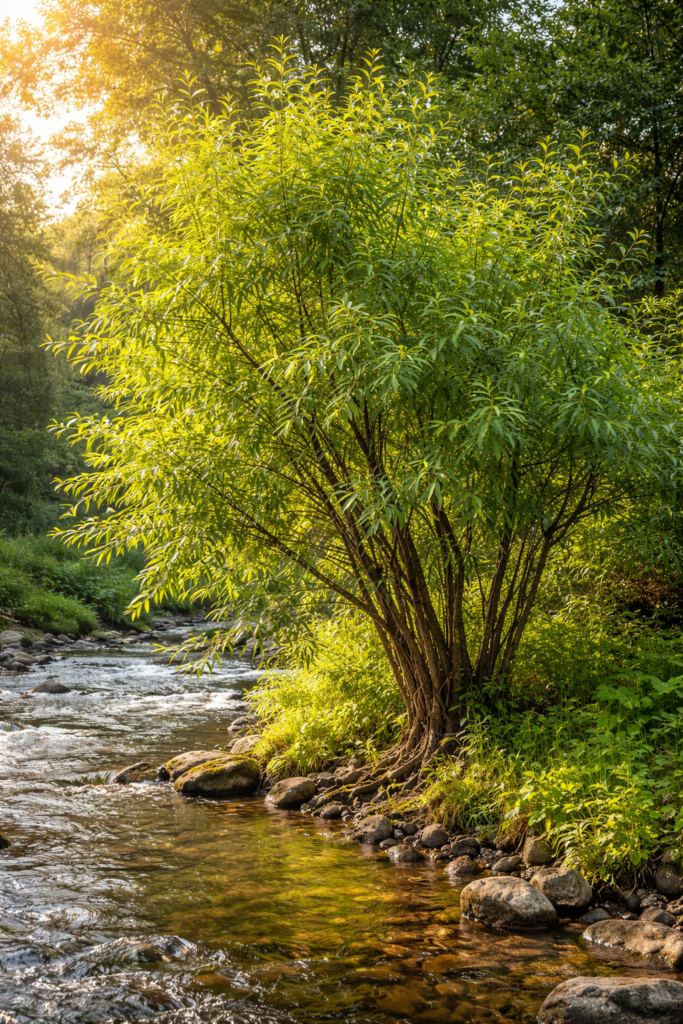
WHERE WILLOW GROWS
Willow trees are found across nearly every temperate region of the world. With more than 400 species, the genus Salix includes small shrubs, medium-sized trees, and the iconic Weeping Willow beloved in landscapes.
Primary regions where willow naturally grows:
- North America (United States, Canada, Indigenous lands across the continent)
- Europe (Britain, Scotland, Ireland, France, Germany, Eastern Europe)
- Asia (China, India, Nepal, Siberia, Japan)
- Middle East (Turkey, Israel, Iran)
- Northern Africa
- Appalachian Mountains and Eastern U.S. river systems
- The cold northern climates of Scandinavia and Russia
Willow thrives where water is plentiful:
- Riverbanks
- Creeks
- Lakesides
- Wetlands
- Floodplains
- Moist valleys and hollers
Because willow is one of the fastest-rooting trees in the world, it spreads quickly and stabilizes erosion-prone soil — one reason ancient farming communities honored it.
1. WE HAVE MANY TYPES OF WILLOWS — NOT JUST THE WEEPING KIND
Here are the most common ones you’ll find in the South, Appalachia, and North America:
🍃 Weeping Willow (Salix babylonica)
- The iconic, drooping branches
- Romantic, emotional, graceful
- Grows fast
- Loves water
- Not the strongest medicinal species, but still contains salicin
This is the willow everyone recognizes.
🍃 Black Willow (Salix nigra)
THIS is the main medicinal willow in the United States.
Used by:
- Native American tribes
- Appalachian herbalists
- Powwow practitioners
- Early European settlers
Black willow grows wild along:
- Rivers
- Creeks
- Swamps
- Lowlands
It has thinner leaves than Weeping Willow and a straighter form.
🍃 White Willow (Salix alba)
- The primary medicinal willow in Europe
- Contains the highest salicin levels
- Used historically by Greeks, Romans, and medieval healers
This is the willow that inspired pharmaceutical aspirin.
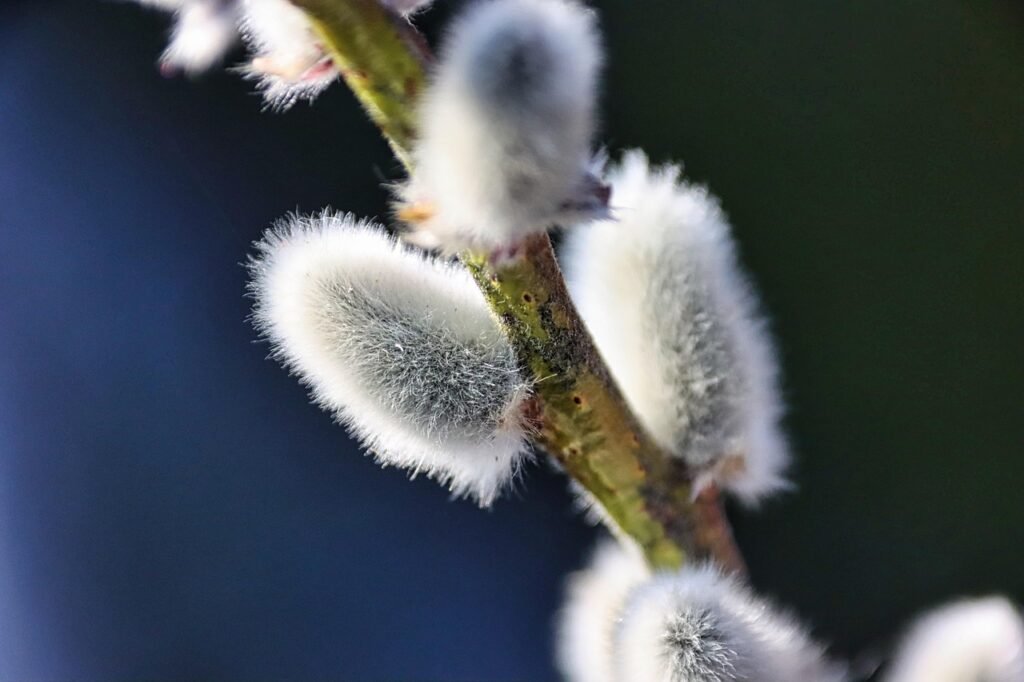
🍃 Pussy Willow (Salix discolor)
- Famous for its catkins (“pussy toes”)
- Not heavily medicinal
- Used more in crafts and springtime decoration
🍃 Crack Willow (Salix fragilis)
Named because its branches “crack” loudly when bent.
Grows near water just like others.
2. DO ALL WILLOWS LOVE WATER?
YES — Almost every willow species prefers wet ground.**
This is one of the defining traits of the genus Salix.
✔ All willows have:
- Aggressive, moisture-seeking root systems
- The ability to stabilize wet soil
- A natural preference for creek banks, rivers, wetlands, floodplains
✔ Even willows planted in yards will:
- Send roots toward drains, septic lines, or wet soil
- Grow extremely fast with a nearby water source
✔ This is why:
- Willows are used to stop erosion
- They thrive in swampy places
- They can grow from a stick stuck in damp dirt
So yes:
Every willow shares that deep “water bond” that people associate with the classic Weeping Willow.
3. WHY SOUTHERNERS CALL THEM ALL “WEEPIN’ WILLOWS”
Because:
- It’s the most recognizable
- It’s the prettiest and most dramatic
- It’s the one storytellers, songs, and folklore mention
- Most folks never see the bark chemistry difference
- It grows near ponds and creeks like the others, so people lump them together
If you say “Weeping Willow,” almost everyone knows EXACTLY the tree you’re talking about, even if what they’re looking at is actually:
- Black willow
- White willow
- Coastal willow
- River willow
It’s a cultural shorthand — and it’s not wrong.
4. SO WHICH WILLOW DO HERBALISTS USE?
⭐ In the U.S. South & Appalachia:
Black Willow (Salix nigra) is the most common medicinal species.
⭐ In Europe:
White Willow (Salix alba) is the classic medicinal tree.
⭐ Weeping Willow?
Contains salicin, but in lower amounts.
It can be used, but traditionally wasn’t the top pick.
BOTTOM LINE
✔ There are MANY kinds of willow.
✔ Every one of them loves water.
✔ The “weepin’ willow” name is culturally correct in the South.
✔ The strongest medicinal willow is usually NOT the weeping one.
✔ Black willow is your Appalachian medicine tree.
THE CHEMISTRY OF WILLOW — WHY IT WORKS
Willow’s healing strength comes from its complex phytochemistry, which works synergistically.
Major active components include:
1. Salicin
- Breaks down into salicylic acid in the body.
- The natural ancestor of aspirin.
- Provides pain relief, reduces inflammation, and lowers fever.
2. Flavonoids
- Quercetin, kaempferol, rutin.
- Strong antioxidants that reduce cellular damage.
3. Tannins
- Astringent compounds that help reduce swelling and tighten tissues.
4. Polyphenols
- Support cardiovascular health and overall inflammation reduction.
5. Phenolic Glycosides
- Work to enhance the effects of salicin.
This natural combination produces a slower, gentler, longer-lasting pain relief compared to synthetic aspirin, often without the stomach irritation typical of modern pills.
NATIVE AMERICAN (INDIAN) USES OF WILLOW
Willow was revered across Indigenous tribes of North America and considered a sacred medicine tree.
Medicinal Uses Among Native Tribes
Different tribes — including the Cherokee, Navajo, Ojibwe, Iroquois, Lakota, Apache, and Creek — used willow for:
• Pain Relief & Inflammation
- Tea or decoction from bark for headaches, toothaches, joint pain, and menstrual cramps.
• Fever and Cold Treatment
- Willow bark tea to lower fever and ease respiratory discomfort.
• Stomach and Digestive Aid
Used to:
- Settle stomach upset
- Treat diarrhea
- Reduce intestinal inflammation
• Wound Care
Poultices from leaves or inner bark used for:
- Cuts
- Bruises
- Swelling
- Minor infections
• Calming and Emotional Medicine
Some tribes used willow spiritually for:
- Grief
- Emotional pain
- Restoring balance to the heart
• Sacred and Ritual Uses
Willow branches were used:
- In sweat lodges
- For purification
- As switches to sweep negative energies from a space
- In ceremonial fires
The Navajo even used willow in cradleboards to calm infants, believing the spirit of the tree brought protection and peaceful sleep.
WILLOW ACROSS THE WORLD — CULTURAL AND MEDICINAL USES
Traditional Chinese Medicine (TCM)
Willow (especially Salix alba) was used for:
- Joint pain
- Swelling
- Fever
- Rheumatism
- Skin abrasions
- Clearing “heat” from the body
TCM considered willow cooling, cleansing, and beneficial for the liver.
India & Ayurvedic Medicine
While not a classical Ayurvedic herb, willow grew in northern India and the Himalayan foothills, and was used traditionally for:
- Headaches
- Joint swelling
- Gout
- Fever
- Menstrual discomfort
Indian folk healers recognized its similarity to other anti-inflammatory herbs and treated it as a cooling, pain-relieving plant.
Europe
In medieval Europe, willow bark was a physician’s staple, used for:
- Agues (fevers)
- Joint disorders
- Toothache
- Wound dressings
It was also a symbol of mourning, seen in Christian art and folklore.
Middle East
Willow was mentioned by early Arab physicians, including Ibn Sina (Avicenna), who recommended it for:
- Fevers
- Inflammatory skin conditions
- Stopping bleeding
- Soothing headaches
Its bark and leaves were used as poultices.
WILLOW IN APPALACHIAN POWWOW & GRANNY WITCH MEDICINE
In Appalachian folk practice — including powwow, braucherei, and granny-witch herbalism — willow was a powerful multipurpose tree.
Healing Uses
- Tea for fever, aches, and “settling the blood.”
- Bark added to woodsman tonics for back pain.
- Poultices for sprains and bruises.
Magical Uses
- Branches placed over doorways for protection.
- Willow switches used to “whip away” negative energy.
- A willow charm given to grieving widows (symbol of the sorrowing heart).
- Used in divination rods and dowsing for water.
Spiritual Associations
Willow was believed to:
- Bend without breaking → symbol of emotional resilience
- Absorb sorrow → comfort in grief
- Bring dreams → used in dream sachets
Women healers called it a tree of mourning and mending.
WILLOW IN CRAFTWORK — WHY THE WOOD IS SO USEFUL
Willow wood is incredibly flexible, making it ideal for early Appalachian and European craftsmanship.
Why Willow Bends Easily
- High water content
- Long fibers
- Elastic structure
- High cellulose, low lignin
This blend allows willow branches to be shaped when steamed, soaked, or even bent green (fresh-cut).
Traditional Uses Include:
- Basketry
- Chair frames
- Cradles
- Hurdles and wattle fencing
- Bentwood furniture
- Tool handles
- Fish traps
- Willow whistles carved for children
Willow wattle fencing was used for centuries as:
- Garden borders
- Animal enclosures
- Walls for homes (wattle and daub)
HOW TO PREPARE WILLOW MEDICINALLY
1. Willow Bark Tea (Decoction)
Ingredients:
- 1–2 teaspoons dried willow bark
- 8 oz water
Simmer 10–15 minutes.
Use for headache, fever, menstrual cramps, back pain, or inflammation.
2. Willow Tincture
Fill a jar half-full with bark.
Cover with 80–100 proof alcohol.
Steep 4–6 weeks.
Dose:
15–30 drops in water every 4–6 hours.
3. Poultice
Crushed fresh bark or leaves + warm water.
Apply to:
- Sprains
- Bruises
- Swollen joints
4. Willow Oil or Salve
Infuse bark in warm oil for several hours.
Used for:
- Joint pain
- Back discomfort
- Bruising
⚠️ SAFETY & WARNINGS
Avoid willow if you:
- Are allergic to aspirin
- Take anticoagulants (blood thinners)
- Have ulcers or stomach bleeding
- Have asthma sensitive to NSAIDs
- Are pregnant or breastfeeding
Children with viral illnesses (flu, chickenpox) should NOT use willow bark due to Reye’s syndrome concerns — same as aspirin.
MODERN SCIENCE CONFIRMS ANCIENT WISDOM
Today we know:
- Salicin is a natural anti-inflammatory.
- Willow bark works more slowly but lasts longer than aspirin.
- It contains dozens of compounds working together, reducing side effects.
Modern herbalists consider willow bark one of the most reliable natural pain relievers.
THE SYMBOLISM OF WILLOW
Across cultures, willow is associated with:
- The moon
- Dreams and intuition
- Emotional healing
- Resilience under pressure
- Grief and release
The tree bends — but does not break.
It stands as a reminder that healing often involves flexibility, rest, and the ability to surrender what no longer serves us.
CONCLUSION
Willow is far more than a tree — it is a global healer that has served humanity for thousands of years. From Native American medicine lodges to European monasteries, from Appalachian granny healers to ancient Chinese physicians, from moonlit folklore to the rise of modern aspirin, willow remains one of the most powerful healing plants on earth.
Whether used for aches, fever, grief, crafting, or ritual work, willow is a tree that touches every layer of human experience — physical, emotional, and spiritual.
If you enjoy stories like this, you’ll love the other life lessons & memories I’m sharing on The Appalachian Sage. …………And if you’re ever in the mood to browse something pretty, you can stop by my Etsy shop, The Appalachian Sage Shop, where I pour the same love and kindness into each design.